

Kenya’s ruling United Democratic Alliance (UDA) has accused sections of the media of abandoning professional journalism in favour of sensationalism, political activism and the publication of unverified information.
UDA says biased reporting has eroded public trust and undermined national cohesion.
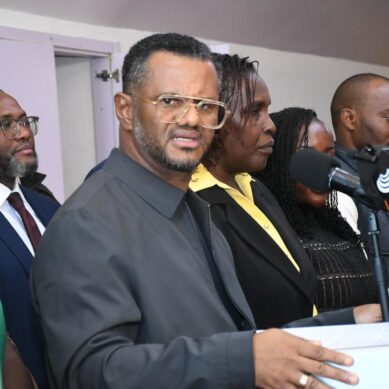
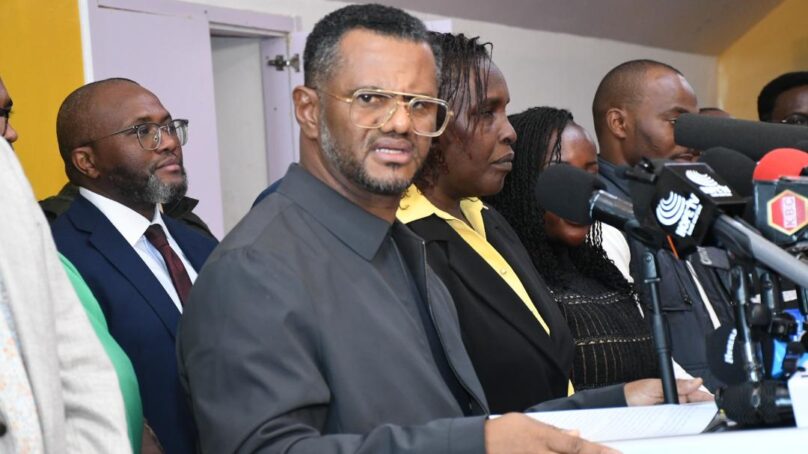
Speaking to the media on Friday, the party’s Secretary General Hassan Omar Hassan said that, while the party is committed to constitutional freedoms, including media freedom, journalists must exercise that freedom responsibly.
“Media freedom carries an important responsibility to uphold the highest standards of accuracy, fairness, impartiality and professional ethics. We have been taken aback and are increasingly concerned and astonished by instances where sections of the media appear to prioritise sensationalism over verification, commentary over facts, speculation over responsible reporting and politicisation masked as free media,” Omar said.
He reminded journalists that they have a professional and ethical obligation to publish verified, accurate and balanced information while clearly distinguishing facts from opinion and speculation. According to the UDA chief spokesman, the growing circulation of unverified claims, misleading headlines and opinion presented as fact threatens public confidence in the media and weakens informed national discourse.
Omar, though, did not substantiate his claims against the media. The media has in recent past censured President William Ruto or unfilled promises and “launch” of non-existent projects designed to hoodwink the citizenry about the performance of his administration.
To the chagrin of the general public, the president has gloated over fight against runaway corruption. Recent profiling of excesses – with irrefutable evidence – and violations of human rights that includes abductions of youths and disregard of court decisions has many times angered the president.
“The growing circulation of unverified claims, misleading headlines and opinion presented as fact risks eroding public trust, deepening polarisation and undermining informed national discourse. Journalism should contribute to national development by informing citizens objectively, scrutinising institutions fairly and facilitating constructive public debate,” he said.
Omar singled out sections of the media, including some mainstream media houses, accusing some editors, producers, anchors and reporters of abandoning objectivity in favour of partisan political interests.
He alleged that the decline in editorial independence and professional ethics had diminished the credibility of journalism by placing ratings, political narratives and commercial interests above rigorous fact-checking and responsible reporting.
The secretary general further criticised what he described as the increasing involvement of media personalities in politics, arguing that the practice compromises journalistic integrity.
“Media personalities have chosen to actively participate in civil society politics, journalistic gymnastics and outright street activism. We invite those responsible to resign from their media roles and join the political arena if they wish to engage in politics. We are ready to square it out in a political duel rather than hiding behind the veil of the freedom of the media,” he said.
Former Nairobi Governor Evans Kidero said the media has a constitutional responsibility not only to inform the public but also to educate citizens and promote national cohesion through factual and balanced reporting.
Dr Kidero – a former managing director of Nation Media Group – cautioned against sensational reporting, saying unverified reports have the potential to create fear and undermine public confidence.
“Nairobi is the country’s economic hub, accounting for the largest share of Kenya’s economy and hosting millions of residents. As leaders, we have a duty to ensure that information shared with the public promotes peace, stability and national development,” he said.
He maintained that security agencies have a constitutional obligation to protect lives and property whenever public order is threatened, adding that allegations concerning missing persons or abductions should be formally reported to the relevant authorities to facilitate investigations.
Kidero urged Kenyans to support government efforts for peace and strengthening national unity. Omar defended the party’s commitment to human rights, saying its support for constitutional freedoms and socio-economic rights remains unwavering.
He cited constitutional guarantees on housing, healthcare, sanitation, water and education as central to the party’s governance agenda.
Responding to questions on the relationship between the government and the media, Omar said Kenya remains committed to protecting press freedom while emphasising that journalism should be exercised responsibly and within the law.
The Kenyan media has nothing to fear. What is important is responsible journalism that serves the interests of the public and contributes to peace and national cohesion, he said.
On governance, Omar said the government respects court decisions and will comply with judicial pronouncements, including recent rulings touching on the composition of the Cabinet, adding that constitutional processes would continue to guide decisions made by the Executive.
- A Tell Media / KNA report / By Zipporah Odionyi and Aron Kinyamasyo


About author