

Kenya’s President William Ruto’s excesses are increasingly eliciting comparisons with founding President Jomo Kenyatta, whose revulsion for liberation ideology, which manifested in the form of detention without trial, extrajudicial killings and assassination saw the likes of historian Guyanese historian Walter Rodney and Martinique psychiatrist Franz Fanon, slammed brakes on their wish to settle in the country.
The Mau Mau freedom struggle inspired political liberation in Africa and Black diaspora and movements such as Black Consciousness and Black Lives Matter in the US have a good dose the liberation movement in Kenya. In Jamaica, Blacks looked up to Kenya for inspiration.
Today, Kenya finds itself almost in similar situation as it was in the 1960s and 1970s when opposition to incumbent regime was crushed brutally. On June 25, Kenya marked the third anniversary of the 2025 Gen Z uprising against totalitarian regime that is anything but respecter of human rights, the constitution and rule of law, according to the opposition.
Instead in Kenya, Prof Rodney migrated to Tanzania and became a lecturer at the University of Dar es Salaam. Fanon settled in Algeria, where he played a leading role in Algerian war of independence.
According an online biography, “Frantz Fanon, a psychiatrist and philosopher from Martinique, remains one of the most influential thinkers on the psychological effects of colonialism. His work delved deep into the ways in which oppression shapes not only political and economic structures but also the very identities and self-perceptions of the colonised.”
For Rodney, Kenya had been the dream home of Guyanese historian. The historian and political activist was motivated to migrate to Kenya for several reasons. He sought to reconnect with his ancestral roots and found a place where his dark skin colour was not a source of suspicion but a mark of shared heritage.
According to an online biography, Rodney’s desire to move to Kenya was also influenced by the need for a better quality of living life and the opportunity to escape from the systemic racism he experienced in the United States. He aimed to find a community where he could thrive and where he could be seen as an African American without the fear of being shot or facing discrimination based on his skin colour.
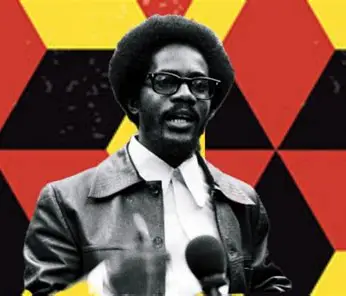
In 1968, a historian was treated like a national threat because he taught poor Black people to know their worth. His name was Walter Rodney, and the thing that made him dangerous was not a gun, a gang or an army, but a mind that refused to leave the poor in darkness.
He was only 26 years old but he carried himself with the seriousness of a man who understood what history could do. In Jamaica, he entered the classroom as a lecturer but he walked into the streets as a brother.
Walter Rodney had come from Guyana with a scholar’s training and a revolutionary’s concern for ordinary people. He had studied Africa deeply, not as a dead place in old books but as a living source of memory, pride, and resistance.
At the University of West Indies, Mona, students came to hear him speak about slavery, empire and the deep wounds left behind by colonial rule. But Rodney was never satisfied with keeping truth trapped inside a lecture room.
The liberation ideology finds echoes in Fanon’s psychiatric analysis of colonialism and by extension extreme impoverishment the Ruto regime us visiting on Kenya, according to political activists who joined the Gen Z protests on June 25.
Similar, in Black Skin, White Masks, Fanon explores the lived experience of being Black in a white-dominated world. He analyses the psychological impact of racism (read: tribalism) and the ways in which Black individuals are forced to navigate a society that constantly devalues them. He describes the phenomenon of striving to emulate the coloniser (read: dynasty that Ruto campaigned against), attempting to “whiten” oneself through language, behaviour and even romantic relationships (the way Ruto held his wife Rachel’s hand on White House lawn), as a desperate attempt to escape the imposed inferiority.
This attempt, however, is ultimately futile, leading to a sense of profound alienation and self-hatred, Fanon argues.
Rodney’s influence in Jamaica went beyond the campus gates. He sat with the poor, spoke with workers, reasoned with the unemployed and listened to Rastafari people who were treated like outcasts in their own country.
That was one of the things that made him different. He did not look at the poor like a problem to be solved, and he did not look at Rastafari like people to be mocked. He treated them as thinkers. He saw people who had been pushed to the side of Jamaican society still holding tight to Africa, still refusing to bow their heads to colonial shame.
In those conversations, Rodney did not speak down to anyone. He reasoned, argued, listened and helped people put words to feelings they had carried for years. He reminded them that Africa was not something to be ashamed of.
He taught that Black history did not begin in chains, and that the poor were not poor because they were lazy, backward, or cursed. That message was powerful because Jamaica had become independent only six years earlier. The flag had changed, the anthem had changed, and the speeches sounded new, but many poor Black people still felt the old weight pressing on their necks.
They could hear leaders speak of freedom while they still struggled for bread. They could watch the upper class celebrate the nation while the poor remained trapped in lanes, yards, markets, docks, and police stations where respect was still hard to find.
Rodney touched that wound directly. He helped people see that political independence without dignity, land, education, food and respect could still leave a nation unfinished. That was not the kind of truth powerful people wanted spreading. A professor who stayed in the university could be ignored, but a professor who carried African history into poor communities became something else.
He became a bridge between the campus and the street. He became proof that education did not have to belong only to the children of the comfortable.
To the students at Mona, Rodney made learning feel urgent. He made them feel that history was not just something to pass in exams but something that could explain why their society looked the way it did.
To the poor, he brought a rare kind of respect. He did not come to pity them, he came to stand beside them and say that their suffering had a history and their lives had meaning.
To Rastafari, his presence carried even deeper meaning. At a time when many were ridiculed, harassed and brutalised, Rodney treated them as people with insight, culture, memory and spiritual strength.
That alone disturbed the social order. In a society still shaped by colonial ideas of respectability, a young Black scholar sitting with Rastafari was enough to make some people uncomfortable. The government watched him closely. Those in power understood that Rodney was not only teaching dates and names, but changing how people saw themselves.
That is what made him frightening. He was not making people violent, he was making people conscious.
Once poor people begin to ask why they are poor, the old excuses start to break. Once Black people begin to love the Africa they were taught to despise, the old shame loses its grip.
In October 1968, Rodney travelled to Montreal for a Black writers gathering. While he was away, the Jamaican government under Prime Minister Hugh Shearer declared him persona non-grata and blocked him from returning.
His wife and children were still in Jamaica. His students were still waiting for him, and the communities he had touched were left with the insult of seeing a man punished for standing too close to them.
According to Wikipedia, an online encyclopaedia, “The decision to ban Rodney from ever returning to Jamaica and his subsequent dismissal by the University of the West Indies, Mona, caused protests by students and the poor of West Kingston that escalated into a riot, known as the Rodney riots, resulting in six deaths and causing millions of dollars in damages.
The riots, which began on October 16, 1968, triggered an increase in political awareness across the Caribbean, especially among the Afrocentric Rastafarian sector of Jamaica, documented in Rodney’s book The Groundings with my Brothers, published in 1969.
In 1969, Rodney returned to the University of Dar es Salaam. He was promoted to senior lecturer there in 1971 and promoted to associate professor in 1973. The encyclopaedia documents that Rodney worked at the university until 1974 when he returned to Guyana. He was promised a professorship at the University of Guyana in Georgetown but the Forbes Burnham government rescinded the offer when Rodney arrived in Guyana.
The government may have believed it was removing a problem. Instead, it showed the whole island how afraid it was of a teacher.
News of the ban moved across Mona like fire through dry grass. Students understood that this was not just about one lecturer losing his job, but about a government deciding which Black ideas were too dangerous to be heard.
The campus could not stay quiet. On October 16, students began marching from Mona toward Kingston, carrying anger, disbelief, and the feeling that something larger than a university appointment had been violated.
As the march moved toward the city, it became bigger than student protest. Poor people, workers, Rastafari and ordinary Jamaicans saw in Rodney’s ban a reflection of their own rejection.
They knew what it meant to be treated like a threat for refusing humiliation. They knew what it meant to be watched, judged, silenced and told to stay in their place. Kingston was already carrying years of pressure. The ban simply gave that pressure a name.
The streets filled with anger because many people felt that independence had not reached them in any real way. They had been asked to love a country that still allowed old class power and colonial thinking to decide who mattered.
This is why the Rodney Riots were never only about Walter Rodney. They were about a nation being forced to look at the people it had left behind.
They were about students realising that education without courage becomes decoration. They were about poor Jamaicans realising that their hunger, shame and police harassment were not private failures but public wounds.
They were about Rastafari people, long mocked and mistreated, seeing that someone with a doctorate had dared to sit with them as brothers. That small act of respect carried more power than the government understood.
Rodney had not been in Jamaica for many years, but he had reached places some leaders had never truly entered. He had entered the mind of the poor, the anger of the youth and the spiritual pride of those who still looked toward Africa.
After the protests, the state could count damaged property, write reports and speak of order. But what it could not measure was the number of people who had started to see themselves differently.
That was Rodney’s real victory. He had helped people understand that they were not born to be silent spectators in a country built from their labour. The government could keep his body out of Jamaica. It could not remove the questions he left behind.
Who benefits when the poor are told they are ignorant? Who gains when Africa is treated as shame? Who becomes powerful when Black people forget their own history? Who gets nervous when the people at the bottom finally learn to look up and ask why they are there?
Those questions did not disappear after the streets quieted. They kept moving through classrooms, yards, meetings, books, music and memory.
Walter Rodney would go on to become one of the most important Pan-African thinkers of his generation. But in Jamaica, his short time at Mona had already shown what happens when knowledge leaves the safety of the university and sits down among the people. That is why October 1968 still matters. It was the moment a government tried to close a door and accidentally revealed how many people were already standing outside it.
Walter Rodney was treated like a threat because he gave dignity to the people society had insulted. He made the poor feel seen, made Rastafari feel respected and made students understand that history was not dead.
They banned him from Jamaica, but they could not ban the awakening. Long after the smoke cleared from Kingston, the most dangerous thing Rodney left behind was still alive in the people: the knowledge that they were never as small as the system needed them to believe.
Fanon’s later work, The Wretched of the Earth, written during the Algerian War of Independence, offers a more radical perspective. He analysed the psychological impact of colonial violence and argued that, in certain contexts, violence could be a necessary tool for liberation. It’s important to understand that Fanon did not glorify violence for its own sake. He saw it as a potential means of breaking the psychological chains of colonialism, a way for the colonised to reclaim their agency and humanity.
- A Tell Media report / Source: Black History


About author