
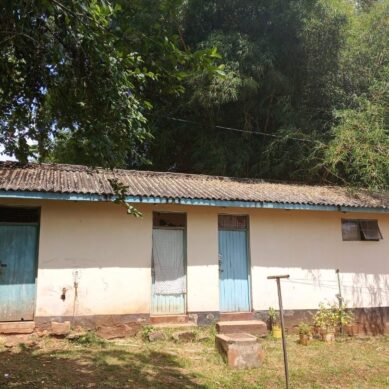


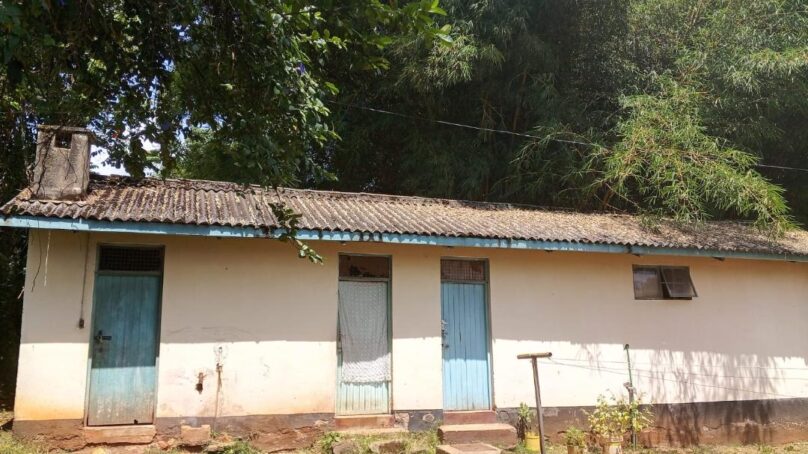
National Environment Management Authority (NEMA) is stepping up efforts to eliminate use of asbestos in all premises in Kakamega County. Consequently, the regional authority has unveiled plans to start demolition of structures roofing with asbestos material.
While the decision to rid the county of asbestos is welcome, there are fears of high risks of cancer explosion in a region with high population density.
When President William Ruto announced last year that the country was gearing up for removal of asbestos, concerns immediately were raised about imminent explosion of cancer as a consequence. NEMA quietly raises concerns about the presidential directive, describing it as a political order with far-reaching health and environmental policy ramifications.
Kakamega County Environmental Officer Nathaniel Mutuku says that laws and legislations that regulate asbestos management in Kenya are comprehensive and would give the law enforcers a foundation to act upon.
“All environmental protection measures are founded on the right to a clean and healthy environment as provided in the Constitution of Kenya 2010,” he said.
Other relevant laws include the Occupational Safety and Health Act, 2007, which requires employers to train and supply personal protective equipment to those who work with asbestos, and the Public Health Act, Cap 242, which covers public health issues regarding hazardous materials.
However, a manager at NEMA headquarters in Nairobi who spoke to Tell Media off the record fearing retribution, admits asbestos is a health hazard, but warned the issue has to be addressed scientifically, not politically, to achieve the desired outcome.
“Asbestos is associated with carcinogenic (cancer-casing or oncogenic) agents and it was promoted many years back. Now, it has come to our realisation that it is behind the upsurge in cancers we are witnessing in the country. In addition, the water from asbestos roofs can never be used because it is poisonous. But how aware is the community that the water is toxic?” the manager says.
Public education and level of awareness on the dangers posed by that material are low. The low awareness level is attributed to staffing numbers, as “we are very few on the ground and the responsibility bestowed upon us is gargantuan. The numbers are a tiny fraction of what is needed,” the manager says.
Interviewed by Tell Media, a construction economic and management specialist at the Tshwane University of Technology in Pretoria, South Africa, Prof A. A. Talukhaba, concurred that the existence of asbestos products in buildings poses a danger to human health. The wear and tear of the asbestos products, due to age, allows trapped fibres to escape into the environment.
It is even more hazardous when old buildings that have asbestos components are demolished. The release of asbestos fibres increases, he explains.
Asked about the Kenya government directive to NEMA, Prof Talukhaba, pointed out, “Asbestos cannot be demolished the same way we do under normal circumstances. It has to be removed in a proper and controlled way such that the process does not create health hazards to people. If the process is on a large scale where many people are involved then evacuation is an option. The other option is to provide personal protective equipment (PPE) to the workers as well as the affected populace. A massive campaign is necessary to inform people about the dangers. It might be a combination of options. Hence, to protect the affected people to international standards, it will not be an easy task and neither will it be cheap.”
The senior NEMA manager warns that the presidential directive is going to unleash dangerous material that will have impact similar to the disposal toxic nuclear waste in Marsabit in the 1980s that is linked to current disproportionately high cancer incidence in northern Kenya. In addition, the experts fear, the country is likely to witness a sharp rise in miscarriages pregnancy. The manager says NEMA, which is the body mandated to handle such tasks with far-reaching economic, s
“Asbestos removal is a hazardous process that must be carried out with strict adherence to health and safety regulations. The removal of asbestos roofing from a housing estate requires careful planning, professional execution and proper disposal,” a London-based Kenyan railway engineer Lawson Kamau Mbuguss explained to Tell Media.
Dr Kamau warned: “Asbestos roofing sheets (often made of asbestos cement) were widely used due to their durability and fire resistance. However, when disturbed, asbestos fibres become airborne and can pose severe health risks.”
He noted that health hazards of asbestos exposure include mesothelioma: a rare, aggressive cancer that affects the lining of the lungs, abdomen or heart. In the case of asbestosis, it causes scars of the lung tissue, leading to breathing difficulties. It also causes lung cancer, which is directly linked to asbestos exposure. Asbestos also causes pleural thickening that manifests as inflammation and thickening of the lung lining, restricting lung function.
“Since asbestos-related diseases often take years or decades to manifest, proper removal procedures are critical to preventing long-term health complications,” he explained.
In addition, “Through ongoing enforcement, public education and the cooperation of the county and national governments, Kakamega is poised to make a significant impact in decreasing the amount of this hazardous material and safeguarding the health of its citizens for generations.”
Asbestos is a mined mineral and is considered hazardous since it causes cancer and other serious respiratory diseases.
Senior staff at National Environmental Management Authority, including the director-general, are reportedly peeved that President Ruto and his Cabinet Secretary for Health Adan Duale, who in the past directed the authority and county governments to demolish all asbestos-roofed buildings did so without due considering the health, economic, social and environmental imminent ramifications.
Beyond the borders, civil engineering experts in Britain and South African warn that Kenya is hurtling towards a disaster that might last a century to reverse and suspect land-grabbers are feigning asbestos toxicity to get an excuse to hive off public land.
“As it is at present, asbestos poses no immediate threat. For as long as it in situ, it cannot harm people because it is not disturbed. What President Ruto and Duale are doing will unleash a chain reaction that is going to be felt for decades,” warns Mbuguss, a London-based structural engineer and economist.
Nairobi, Mombasa, Kisumu, Nakuru, Thika towns and former provincial capitals (now county headquarters) have disproportionately higher numbers of government houses lined up for demolition to create room for the controversial affordable housing programme.
Kamau observes, “Asbestos roofing sheets (often made of asbestos cement) were widely used due to their durability and fire resistance. However, when disturbed, asbestos fibres become airborne and can pose severe health risks. The health hazards from asbestos exposure include mesothelioma – a rare, aggressive cancer affecting the lining of the lungs, abdomen or heart. There is also asbestosis, which is the scarring of the lung tissue, leading to breathing difficulties. Lung cancer is directly linked to asbestos exposure. Pleural thickening, described as inflammation and thickening of the lung lining, restricting lung function. Since asbestos-related diseases often take years or decades to manifest, proper removal procedures are critical to preventing long-term health complications.”
He says in London – where lives – there are asbestos-roofed buildings that over 100 years old.
“Even my offices have asbestos roofing. Should need arise to demolish them, the neighbourhood within five-kilometre radius will be evacuated. The residents are then accommodated in safe houses and provided with the basic amenities for up to six month,” says Kamau.
According to Kakamega NEMA County Director of Environment Johana Ouma in June 2025, the then Cabinet Secretary for Environment, Climate Change and Forestry Aden Duale issued a gazette notice for all government and private buildings having asbestos roofing to remove them in one year.
“This directive has given a definite time frame for compliance and to date, NEMA expects all the affected facilities to have asbestos cleared by the end of 2026. The directive covers public institutions as well as private entities,” he added.
County Environmental Officer Collins Indimuli said the county office has been doing its best to make sure that all the facilities in Kakamega are in compliance with the directive.
To environmental scientists, the biggest challenge is the cost of removing asbestos and purchasing replacement materials. During normal enforcement visits NEMA officers often find facility owners willing to comply, but give financial constraints as their main challenge.
The other challenge is lack of awareness regarding asbestos to property owners and occupants.
Indimuli observed that many of the facilities have asbestos roofing, but the owners were totally unaware that it posed any danger. Another challenge, he added is that Kakamega County lacks an asbestos dumping area.
“There is no specific licensed landfill site in Kakamega for the disposal of asbestos, and facilities wishing to dispose of asbestos will need to either transport asbestos to licensed landfills in the coastal area or apply for an on-site disposal license,” he explained.
However, he said the transportation of asbestos material to designated dumping sites is not only expensive, but logistically challenging because asbestos must be carried in a special vehicle equipped with air suspension.
- A Tell Media / KNA report / By Godfrey Wang’anya and Annlinda Simiyu


About author