

A Kenyan public transport strike over steep fuel price hikes triggered by the Iran war was called off on Tuesday afternoon after the government reached an interim agreement with associations representing bus and minibus owners.
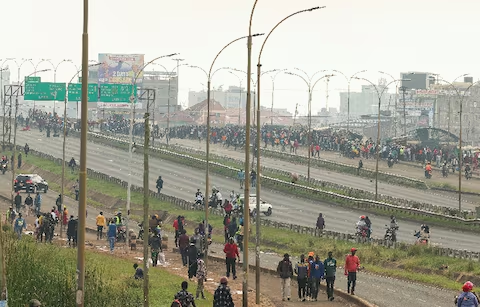
On Monday, five people were killed and about 30 injured, Interior Minister Kipchumba Murkomen said, in nationwide protests linked to the strike as public anger spread over the rising cost of living.
Mr Murkomen told a joint press conference with the transport groups that the strike had been suspended for one week to allow for more talks between the government and transport operators.
Negotiations on Monday, the first day of the strike, failed to reach an agreement despite the government agreeing to lower the diesel price by about 10 shillings a litre.
Transport operators had sought a deeper 46-shilling-per-litre reduction in the price of diesel, the main fuel they use.
Energy Minister Opiyo Wandayi told reporters that the 10-shilling-a-litre reduction would cost the government Ksh2.7 billion ($20.79 million) in lost revenue.
Bus and minibus services were still disrupted across Kenya on Tuesday morning and some schools shut, though after the press conference the transport associations urged their members to return to work.
Kenya imports nearly all its fuel products from the Middle East via government-to-government deals – that have n recent months been questioned – with Gulf suppliers.
Fuel price hikes in the past two months have sharply raised transport costs and pushed up the cost of basic goods, deepening pressure on households already struggling to make ends meet.
There were heavy police deployments in the capital Nairobi on Tuesday, a day after protesters blocked roads and clashed with security forces who fired tear gas to disperse them.
Ian, a commuter who did not give his last name, said he normally paid Ksh100 to get to work but on Tuesday he had to pay five times that.
“It took a lot of time to get a vehicle. I ended up paying a private vehicle to help me get to town and that means I have parted with Ksh500,” he said. “That is the biggest challenge.”
($1 = 129.8500 Kenyan shillings)
- A Reuters report


About author