


Tanzanian president finally ‘remembers’ to ‘express sympathy’ for 10,000 civilians killed by police and internet blackout but no apology
However, President Suluhu Hassan did not out-rightly apologise for the reported 10,000 unarmed civilians killed by the police and military during the post-election violence. The president did not address concerns that the civilians shot dead security forces were buried in mass graves.

Tanzania president grappling with accusations she killed more than 10,000 civilians in election violence
Independent human rights experts appointed by the UN Human Rights Council said in December that “disturbing reports” indicated security personnel were given “shoot to kill” orders during an enforced curfew, without saying where that information came from.

Genocide: CNN details how Tanzania president masterminded extrajudicial killing of youth, dumping bodies in mass graves
Additionally, satellite images and videos show recently disturbed soil consistent with reports of mass graves in the Kondo cemetery, north of the East African country’s main city of Dar es Salaam. Two human rights groups and witnesses interviewed by CNN say the bodies of protesters killed in the past few weeks have been buried there.

Tanzania announces formation of commission of inquiry to investigate election protests killings
Young people in Tanzania began demonstrating on Election Day on October 29 to protest the exclusion of presidential candidates from the two main opposition parties. President Hassan was declared the winner with more than 97 per cent of the total votes.

What to know about Tanzania president’s ‘white collar hit squad’ after bloody chaos
President Samia Suluhu Hassan, who took office in 2021 after the death of her predecessor, took more than 97 per cent of the vote, according to an official tally. Her main rivals, Tundu Lissu of Chadema and Luhaga Mpina of ACT-Wazalendo, were barred from running.

How election thievery became democracy: Paradox of Africa with world’s youngest population is ruled by oldest presidents
The trend points to deeper structural problems with Africa’s underlying political environment, said Jeffrey Smith, executive director of democracy-focused Vanguard Africa non-profit. He said all three countries feature incumbents leveraging state resources to stay in power, partisan security forces as well as flawed legal processes.

Coup in the offing? Tanzania sinks further into abyss as military appears sympathetic to protesters
A similar situation to what is happening in Tanzania is also currently unfolding in Cameroon where 92-yar old Paul Biya – in power since 1982 – was early this week declared winner, sparking protests that have since received the support of the military. Like President Suluhi Hassan, President Biya – who spends more than 80 per cent of his time in France – had used the courts, police and electoral commission to arbitrarily lock out opponents.
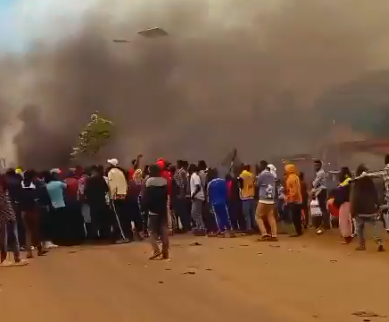
Protests in Tanzania enter day two as 10 reportedly killed, EU calls for ‘firm stand in the defence of democracy and human rights’
The ruling Chama Cha Mapinduzi or CCM, which has been in power since independence in 1961, sought to extend its rule in Wednesday’s election, with presidential candidates from the two main opposition parties barred from running.
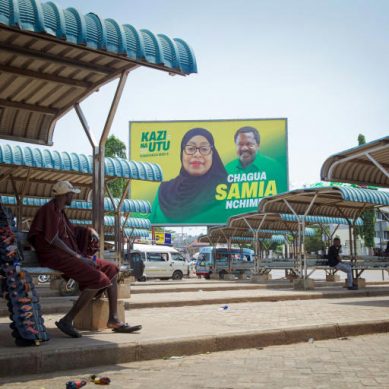
Empty polling stations as voters in Tanzania give Suluhu Hassan ‘coronation’ a wide berth
Humphrey Polepole, a former CCM spokesman and ambassador to Cuba, went missing from his home this month after resigning and criticising Hassan. His family found blood stains in his home.
Domino effect: Arrest and release of Tanzania opposition leaders linked to youth protests in Kenya
“We won’t provide a chance to a few criminals to destroy peace by copying what is happening in neighbouring countries,” police commissioner Awadh Haji said late on Monday, a likely reference to weeks of youth-led protests in Kenya this year which inspired demonstrations in Nigeria and Uganda.