


In Uganda the line between ‘riots and protests’ is burred: both are met with state brute force
The truth is that most governments are fearful of gatherings of any kind because their “captors” believe the gatherings can easily result in challenge, even change of power. The citizens are collectively perceived as enemy-number-one of the state, especially in Africa, where governments frequently arm themselves to the teeth against the citizens.

Buganda Kingdom holds key to democracy in Uganda: Electing Museveni translates to extension tyranny, family dynasty
Buganda has always had an advantage over other regions of Uganda in that it is physically centrally positioned. This is the reason why in the colonial times it was referred to as Central Province. Besides, the seat of power and capital of Uganda are in Buganda. Also, in Buganda is the main state house of the president of Uganda

How Uganda’s long history of political defections undermined ideological pluralism and democracy, went a tad higher under Museveni
There have been many prominent shifts during NRM rule. The most memorable are probably those of Anne Anita Among and Thomas Tayebwa, who were former members of the Forum for Democratic Change (FDC) that crossed to the National Resistance Movement (NRM) and rose to become Speaker and Deputy Speaker of Parliament, respectively
Gun legacy: How President Museveni thrives on political violence that’s turned Uganda into huge assassination theatre
The normalisation of violence erodes trust in institutions, inviting international scrutiny while emboldening repression.

Kenya’s IEBC features in Uganda’s presidential election fraud allegations as it is accused of training NRM agents to rig in Museveni
In Uganda, signs of democratic backsliding include restrictions on freedoms, weakened accountability and increasingly opaque governance.

Understanding why Uganda’s political dinosaur Museveni is whining as Bobi Wine drains country’s moral and economic swamp
Bobi Wine’s rise as a populist leader in the 21st century has, of course, been catalysed by his viral political, effective social media presence and crowd dynamics, heavily driven by young people. Most of these are in their 20s and 30s, who have grown under and seen only President Tibuhaburwa Museveni.

Why discipline, time management and sociality became critical ingredients of success in Uganda’s pioneer institutions of higher learning
Discipline is critical because without it we cannot set and achieve goals, develop good habits, overcome challenges, improve time management, and enhance family and community growth and development. In a sentence, we cannot be successful.

Dear Ugandans, a university degree is healthy pursuit but it’s not a licence or right to complacency
Degrees will be good not necessarily in the equation of AI. We should all prepare to accommodate AI as tool that will improve the way we do things for the benefit of humanity. It is wisdom to do so. Rote political thinking and action in leadership and governance will soon be a thing of the past.
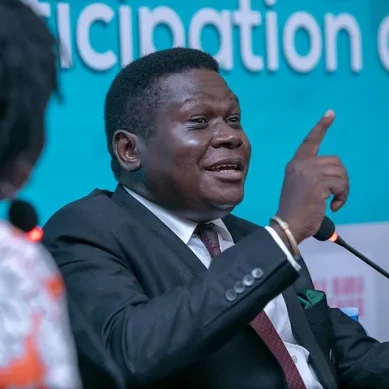
Academic ageism, intellectual death and decline of public intellectualism: The making of Uganda intellectual cemetery
Professors, as they expand the age range, point to positive aspects of ageism, which reflects that increasing age is not associated with negative aspects in the work environment. The aging professor is positively positioned as he is inserted in more postgraduate programmes.
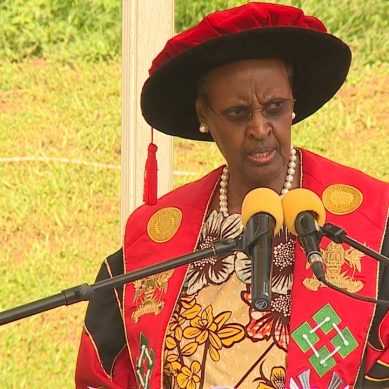
Needed: Alternative scholarship in alternative universities to resuscitate public intellectualism in Uganda
The current politically-oriented leadership of Makerere University is not aware of the fact that interdisciplinarity, crossdisciplinarity, transdisciplinarity and extradisciplinarity are growing movements within academia globally. It seems to be satisfied leading a university buried in the past, superimposing disciplinarity and multidisciplinarity on a society that should be benefitting from integrative and integrating academic and intellectual processes.