



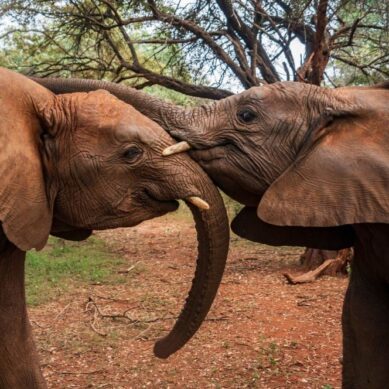
Next-door neighbour: How Kenyans learnt to live with elephants as an environmental and economic resource
Safari has also become increasingly popular among young Chinese travellers, with phrases such as “saving up for a trip to Kenya” and “go on safari at least once in a lifetime” frequently appearing on Chinese social media. But beyond the safari routes lies a more complicated relationship between people and elephants.

Human-wildlife conflict: Kenya Wildlife Service starts relocation of 56 rogue hippos from Nyandarua Dam
According to the cabinet secretary, KWS has deployed technical personnel with the expertise needed to safely capture, transport and release the animals while minimising stress to the wildlife and ensuring the safety of nearby communities.

Human-wildlife conflict concerns resurface in Kibwezi as leaders tell state to fence off Tsavo National Park
In the recent past, area residents have raised concern over frequent destruction of crops and property. They accuse KWS of neglect and failure to take action.

Uganda records rise in wildlife populations but lion numbers diminished by cultural demand for skins
The report noted mixed trends across species. Lion numbers have declined from an estimated 373 in 2020 to 291 in the 2022/2023 census, a drop linked to poisoning related to livestock predation, snaring, illegal trade in lion parts and cultural demand for lion skins, habitat degradation and encroachment.

Human-wildlife conflict: Leopards kill 25 dorper sheep valued at $2,900 in Kajiado
The herder estimated his losses at about Ksh375,000, noting that livestock farming is his only source of income.

Human-wildlife conflict takes dangerous turn as communities on Kenya-Tanzania border resort to poisoning
Authorities said the poisoning was deliberate and illegal, noting that it also posed risks to livestock, people and the wider environment. Barely a week later on January 7, four lionesses strayed into residential areas in Oloosirkon-Sholinke Ward within the Athi-Kapiti Conservancy near Nairobi National Park.

‘Our children are growing up in a part of Kenyan city, Nairobi, where lions roam free’
Although human-wildlife conflict has existed for as long as humans have, predator attacks are likely to rise as space for Kenya’s lions shrinks and their hunting opportunities diminish.

Bees: An army of tiny security guards that’s keeping marauding elephants away from farms in Kenya
Sesame plants produce a scent that actively repels elephants, so for 70-year-old Gertrude Jackim, swapping out maize and green grams for sesame was a no-brainer. “Look at me, I’m aging, so I can’t fend off the elephants or chase them away,” she says.