



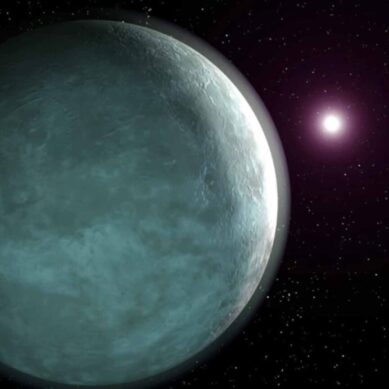
Scientists discover new super-Earth 101 trillion kilometres from Earth, can take 17,000 years to reach it
It circles every 50.8 days and has at least six times Earth’s mass. That makes it one of the closest known worlds where liquid water might be possible, if it has a stable atmosphere.
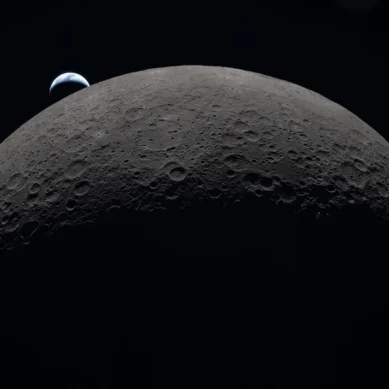
Artemis II astronauts: We really wished in our soul we could for just a moment pause the world and remember that this is a beautiful planet
Integrity began its fiery descent when the spacecraft hit Earth’s atmosphere at about 24,000 miles per hour, entering a communication blackout and decelerating from friction as its heat shield reached temperatures of roughly 3,000 degrees Fahrenheit.

Mission possible: Artemis II’s record-breaking journey around Moon ends with dramatic splashdown
The triumphant moon-farers – Commander Reid Wiseman, pilot Victor Glover, Christina Koch and Canada’s Jeremy Hansen – emerged from their bobbing capsule into the sunlight off the coast of San Diego.
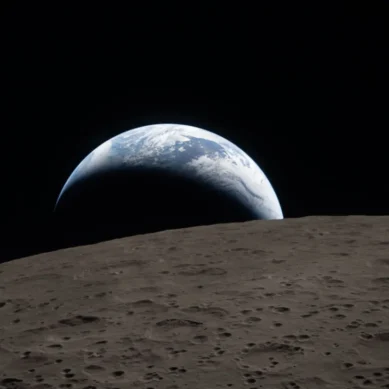
The first-ever ‘Earth-set’ marks another Artemis II milestone that mirrors ‘Earth-rise’ of 1968
A crescent of Earth hangs over the horizon of the moon, as the planet sets. The brown moon foreground is pocked with craters. An Artemis II astronaut captured the crescent Earth setting behind the moon at 6:41pm Eastern Time on April 6, 2026, as the Orion spacecraft flew around the...

How NASA’s Artemis II crew captured earth-rise and earth-set similar to sunrise and sunset during Moon flyby
During the lunar flyby, the crew documented impact craters, ancient lava flows and surface fractures that will help scientists study the Moon’s geologic evolution. They monitored colour, brightness and texture differences across the terrain, observed an earth-set and earth-rise and captured solar‑eclipse views of the Sun’s corona.
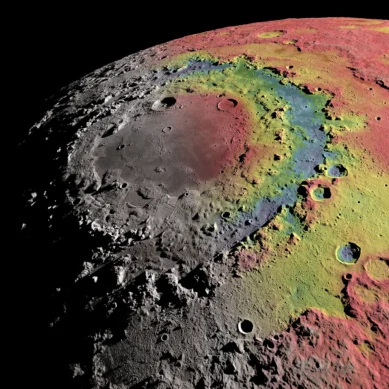
What astronauts aboard NASA’s Artemis II mission saw when they flew around the far side of Moon
Orion launched into space from Florida on 1 April, and after orbiting Earth to check out the spacecraft’s systems, the astronauts on-board ignited its engines and set course for the Moon the next day.
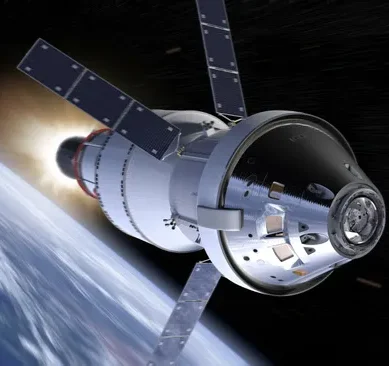
NASA’s Artemis II: Understanding America’s first crewed flight around the Moon since Apollo in 1972
All roads to the cosmos naturally lead through the Moon, making it ideal for NASA to test new technologies and figure out how to sustain human life far from Earth, thereby preparing for future missions to Mars and beyond, Swope wrote in a commentary on the think tank’s website.