


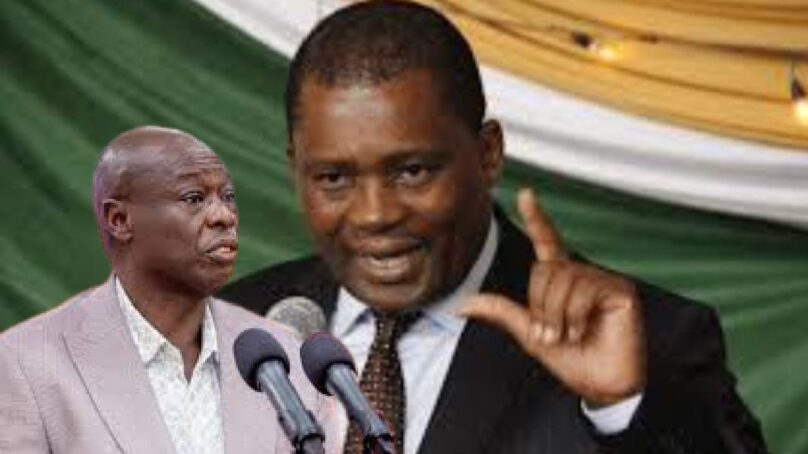
Reports linking Burundians refugees in Kenya to a “letter” to the Directorate of Criminal Investigations (DCI) calling for the arrest and detention of three opposition leaders, has kicked up a storm amid fresh fears the state is plotting violence to intimidate them and their supporters.
The alleged letter says the refugees have also petitioned President William Ruto to issue them with Kenyan national identity cards in exchange for voting for him in 2024.
While the allegations sound scurrilous, they immediately sparked strong response from the politicians in question who described them as intended to cover up state-sponsored crimes using foreigners.
The United Nations too has weighed in too with concerns that Kenya is hurting towards self-destruction and endangering the security of foreigners. Kenya has a population of nearly one million refugees.
While Tell Media could not reach Gachagua’s camp for comment, despite multiple calls and messages to DCP deputy party leader Cleophas Malala, Muturi was categorical that the refugees are innocent and attributed the sensational claims to the National Intelligence (NIS), which he says is long-running discordance. Muturi accused NIS of doing the dirty job for President Ruto at the expense of domestic and external threats to national security.
“I have information that our intelligence service is in total disarray. The discordance is serious. Our intelligence service is in total confusion. It is in shambles. It has become like Ruto administration where if you don’t agree with the boss, you are side-lined. When you offer an alternative opinion to anything – as long as you are not singing praise of Noordin Hajji – you are side-lined,” Muturi said and described the allegations as “farfetched”.
He explained that the letter – if it exists at all – could be the work of disgruntled NIS officers out to germ at back Hajji.
Hajji, a former Director of Public Prosecutions, was appointed Director-General of NIS in 2023.
Muturi, former attorney general and speaker of the national assembly, points out: “If you have this kind of situation, then you cannot trust the quality of intelligence reports. NIS is now considered a political outfit (for Ruto). They have gone back to the dark era of Special Branch.”
It is unknown if the police actions are linked to the “letter” by the refugees. The refugee’s “letter” cited by vihiga.top “allegedly demanded the immediate arrest of Gachagua, Kalonzo Musyoka and Justin Muturi, stating that the arrests should be done by “Monday morning (February 16).”
The refugees, in addition, says the report, appealed to President William Ruto facilitation their acquisition national identity cards so they can vote for him in 2027.
Muturi also claimed that the reason Inspector General of Police Douglas is indifferent to rising crime is the president’s vesting a lot powers and trust in his deputy, Eliud Lagat – an unpopular personality in the police service.
While the authenticity of the blog is suspect, and possibly gossip planform, United Nations offices in Nairobi are not taking allegations lightly against the backdrop of past electoral violence and the 2024 and 2025 extrajudicial killings, which the public and civil society organisations deem were authorised by the state.
The United Nations consultant cited above said the allegations were fraught with serious inconsistencies and ramifications, and demanded evidence from the police to verify the requests by the refugees to enable the agency to take appropriate action.
However, the state through the Ministry of Interior spokesman told Tell Media earlier in the week that the ministry has not been formally notified of any imminent danger on Wiper Patriotic Front (WPF) leader Kalonzo Musyoka, Democracy for Citizen Party (DCP) Rigathi Gachgua and Muturi, who leads Democratic Party of Kenya.
“Surprisingly, the group also asked President Ruto for help in obtaining Kenyan National IDs. In return, they promised to vote for him in the 2027 elections. They further called for a constitutional amendment to allow President Ruto to remain in office “for several more years,” the refugees allegedly demand.
Attempts to reach DCI Director-General Mohammed Amin for comment were met with silence. At the ministry headquarters, Cabinet Secretary Kipchumba Murkomen’s Spokesman Julius Sigei said the minister “had not received a formal report from DCI.”
“This is vexatious. The minister cannot comment at the moment as it is preposterous,” Segei said and referred Tell Media to DCI Spokesman John Marete.
However, calls and messages to Marete drew blanks. His robotic response was a flat: “Can’t talk now? What’s up?” for nearly a week since the request for comment was lodged, there was still no reply or even acknowledgment of the questions sent by WhatsApp to the DCI spokesman.
The UN consultant, who raised the red flag declined to go on record, said the world body doubts the authenticity of the letter and viewed it as a ploy by Kenyan authorities to launch arbitrary crack down on opposition under the pretext of flushing out rogue foreigners.
“However, we would love to know who these Burundians are sending such messages, which most likely will badly backfire against all Burundians, and first of all against innocent and vulnerable refugees from Burundi. We demand full disclosure of the letter and the senders,” the consultant said in a message to Tell Media on Sunday evening.
The Burundian refugees’ request though, has drawn parallels with a recent one by Health Cabinet Secretary Adan Duale. Their demand for Kenyan nationality comes on the back of earlier demands by Somali leaders from north-eastern to reopen the Kenya-Somalia border.
Duale in particular, who spoke on behalf of his colleagues from frontier counties also wants a revision of their ethnic community’s census upwards in preparation for 2027 General Election.
In July 2025, security specialist in the office of the president told Tell Media that when Daule first requested reopening of the border, he was met stiff reprimand by President Ruto, who was visiting Chatham Institute in Britain.
“The president had been told Duale was on mission to ensure that he attains a critical mass of Somali population in preparation to succeed Ruto in 2032,” the security specialist said.
A few months after the allegation, Duale was moved from Ministry of Defence to Environment.
Duale’s demand, though, is likely to create apprehension after Muturi, speaking to Tell Media, claimed MPs and leaders from frontier counties have been importing Somali citizens to build the numbers that would in foreseeable future control of Kenya’s economy.
Early last year, a security expert George Musamali warned that the health minister – then charge for defence – was clandestinely ‘importing’ foreign national, who are then ferried Kakuma Refugee Camps through Uganda. Once in the camp, they learn basic Kiswahili and secretly given Kenyan identity cards.
Dr Musamali, who is Managing Director of Personal Security Services, warned that Kenya is “hurtling towards self-destruction following the embedment of foreign criminals in government.”
The opposition in Kenya has often cited repression and oppression as President Ruto’s mudus operandi. On several occasions Ruto tactics have come under stinging criticism from the European Union, United States, United Nation and Britain, for deploying police to opposition events to stave off political challnges that threaten his grip on power.
Against this backdrop Muturi said it is doubtful Burundian refugees are the actual authors of the ultimatums to DCI.
Duale and senior NIS officials have in the past been adversely mentioned in the Westgate and Dusit terrorist attacks, but were cleared of criminal offences. They were at some point implicated in the facilitation of terrorists who attacked Westgate Mall. Duale denied allegations and promised to name the perpetrators he said were senior government officials. To-date, he has not named them.
The other officials said to be behind the parallel passports office was tapped from the diplomatic world and was reportedly building a war-chest to run for a gubernatorial seat Uasin Gishu in 2027.
Further, Dr Musamali says, the disbandment of border security committees by President Ruto provides a field day for transnational criminals to roam the Kenyan territory unhindered, a senior official at the immigration office says.
He says border security committees help to weed out aliens. The powers of the committees have been transferred to National Intelligence Service, which lacks the wherewithal to determine nationality, according to the officers at the registrar of persons and immigration offices in western Kenya.
“We are under pressure to fast-track travel documents for foreigners. In April 2024, for instance a principal secretary (name withheld) came in the office with 1,200 passport applications by aliens and gave orders that they should be ready in three days. Once done, he went with the passports to Eldoret. The names on the passports were not Kenyan,” the officer says.
It is recalled that the activities of the principal secretary, who has since been moved to different were brought to the attention of then line minister Kithure Kindiki. Prof Kindiki became vice president in a cabinet reshuffle in the same year.
In December, a senior official in the citizens’ registration department that falls under the office of the president questioned the unprecedented number of ID applications by Somali nationals. The official identified Kakamega as leading in ID applications, followed by Eldoret, Bungoma, Kitale and Lodwar – all in western Kenya.
Kakuma Refugee Camp in Turkana County has been turned into a holding ground for aliens before they are processed as Kenyan citizens or facilitated to travel out the country on Kenyan passports. On the other hand, Kakamega leads in registration of aliens seeking national identity cards, followed by Mandera and Garissa.
A senior officer at the registrar of person’s office in Nairobi explained that the choice of Kakamega and Kakuma to facilitate the stay of aliens in Kenya is strategic: they minimise suspicion of a crime. Mr Musamali concurs and explains that Burundians, Ugandans, Congolese, South Sudanese, Rwandans and Central Africa Republic citizens prefer western Kenya as entry points.
“Take note that all ministries and state departments that handle the security of the nation are headed leaders from border communities. It is difficult to vet applications because it is processed by one officer from the National Intelligence Service (NIS). Most of the NIS staff lack the capacity to do what was previously done by Supkem, immigration, local leadership, the church and police. The number of national documents we are processing for foreigners is massive. They are given priority over deserving Kenyans because they hefty sums of money, sometimes as high Ksh400,000 per application,” says the official.
Tell Media is in possession an intelligence report of how perpetrators of human trafficking and passport ‘brokers’ use government facilities.
On October 7, 2024 for instance, 13 Ethiopians and Eritreans who entered the country via Moyale border and were being ferried to Kakuma – over 1,000 kilometres apart – to start the process of ID card and passport acquisition. Shown the list, the senior interior official revealed that the list is one of the many Kindiki has received in intelligence that implicate his senior staff and cabinet colleagues. The intelligence report reads:
- A Tell Media report / by Juma Samini


About author