


Kenya government has clarified President William Ruto’s recent directives on illegal immigrant workers in small-scale trade in the country by assuring them that the measures are meant to facilitate their legal status as immigrants.
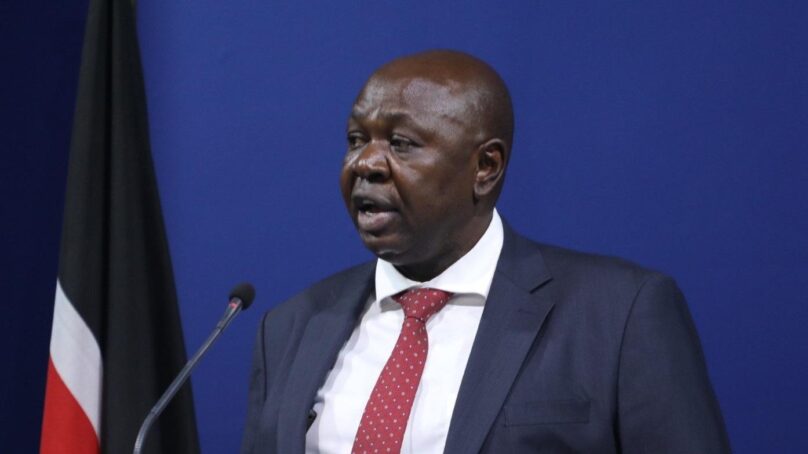
Government Spokesperson Charles Owino said the directives by President Ruto on September 2, 2026, were intended to regulate small-scale retail and informal trade while protecting local livelihoods and vulnerable sectors of the domestic economy.
The government statement coincided with unverified reports that Kenyan-owned businesses in Burundi had suffered retaliatory attacks as Bujumbura blamed Nairobi for stirring animosity between citizens of the two Est Africa Community member-states.
In Nairobi, businesses owned by foreigners were attacked and looted, raising tensions akin to the kind witnessed earlier this year in South Africa after Pretoria launched a crackdown on illegal immigrants.
Owino said the measures were in line with the proposed Local Content Bill (2025), which seeks to balance economic interests with structured trade and protection of local businesses. He acknowledged that a number of East African nationals, including Burundian citizens, live and operate in Kenya without complete documentation, exposing them to risks such as exploitation, difficulties accessing essential services and possible harassment by law enforcement agencies.
The government, he said, appreciates the contribution of East African nationals to Kenya’s economy, culture and social fabric and remains committed to maintaining the country’s reputation as a welcoming destination.
“To address documentation challenges, the government is establishing a formal Documentation and Registration Window for undocumented East African Community nationals residing in Kenya,” Owino said.
Under the initiative, undocumented EAC nationals, particularly Burundian citizens, have been urged to present themselves to their respective embassies or high commissions for formal registration. Owino said the Ministry of Foreign Affairs would work closely with the Embassy of Burundi and other regional partners to facilitate the documentation and regularization process.
Those undergoing registration will, during the designated period, be presumed to be legally present in Kenya, allowing them to access essential services including healthcare, banking and legal protection, without fear.
Owino said further administrative details on the registration process would be communicated through the respective foreign missions. In the meantime, the government spokesperson issued a strong warning against harassment, intimidation and xenophobia targeting foreign nationals.
Owino directed security agencies, local authorities and the business community to ensure that no foreign national, whether documented or undergoing registration, is subjected to arbitrary harassment or discrimination.
He warned that individuals seeking to exploit the recent directives to promote xenophobic sentiments or mistreat Kenya’s regional neighbours would face the full force of the law.
Owino explained that the government is also working with civil society organisations and humanitarian agencies to strengthen monitoring of migrant safety, particularly in urban centres.
According to Owino, the regularisation process would be undertaken in close consultation with regional partners, reaffirming Kenya’s commitment to regional cooperation and the East African Community integration agenda.
Owino disputed reports that suggested that the new measures amounted to a blanket ban or hostile action against foreign nationals, particularly citizens of the East African Community. He expressed concern over what he termed misinterpretation of the measures by some media outlets, including international publications.
“The Kenyan government is committed to the East African Community Common Market Protocol. Citizens of neighbouring countries are regarded as partners in the region’s shared economic and social development,” Owino said.
“Kenya remains an open, hospitable and law-abiding home for all members of our East African family,” he said.
- A Tell Media / KNA report / By Joseph Ng’ang’a


About author