
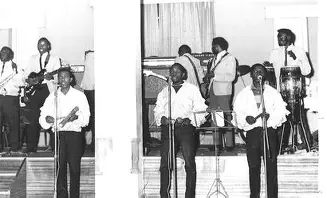
Before Spotify playlists, before YouTube recommendations, before DJs became celebrities, East Africa already had its own musical empire. At the centre of that empire stood one legendary orchestra – Nuta Jazz Band.
For many older East African music lovers of the 1970s and 1980s, the mention of Nuta Jazz instantly brings back memories of Voice of Kenya Radio (VoK) – which later changed Kenya Broadcasting Corporation or KBC – crowded social halls, stuffy and smoky discos, wooden radio cabinets, moonlit village dances and long nights, where Swahili rumba ruled everything.
Founded in 1964 shortly after Tanzania’s independence, Nuta Jazz was established under the National Union of Tanganyika (Nuta) – the country’s workers’ union. But what started as a government-sponsored workers’ band soon transformed into one of the most influential musical institutions East Africa has ever seen. Might never see… again!
At the time, Tanzanian music was heavily inspired by Congolese rumba from bands like TP OK Jazz. But Nuta Jazz did something unique – they Africanised the sound further with Swahili storytelling, rich brass sections, rhythmic guitar work and lyrics that spoke directly to ordinary people.
The result? A sound that became the heartbeat of East African dance culture.
Nuta Jazz Band may not have documented albums in the modern commercial sense the way today’s artists release studio projects, but the band produced a rich catalogue of classic muziki wa dansi songs that circulated widely on vinyl records, radio broadcasts, live recordings and compilations across East Africa during the 1960s, 1970s and 1980s.
Many of their songs later appeared under the band’s later mutations – Juwata Jazz, Ottu sJazz alias Msondo Ngoma.
Some of the best-known songs associated with the Nuta/Juwata/OTTU musical lineage include:
Ewe Dada/Ikiwa kama hunitaki – Two of the band’s memorable classics, known for their rich brass arrangements and emotional storytelling style.
Usiku wa manane – A beloved old-school rumba track that captured the romantic late-night atmosphere common in Tanzanian dance music.
Bahati ya mjini – A socially conscious song reflecting urban struggles and changing lifestyles in East African cities.
Dada Asha – One of the songs that showcased the band’s smooth guitar interplay and lyrical storytelling.
Mama Regina – A classic example of the emotional Swahili rumba style that later influenced bands like DDC Mlimani Park.
Penzi la mashaka – A relationship-themed rumba piece exploring trust and heartbreak — common themes in muziki wa dansi.
But Nuta Jazz’s greatest contribution may not have been its own music alone. Its biggest legacy was the musical giants it produced.
When the band split… East African music exploded!
As musicians moved, disagreed, experimented and branched out, Nuta Jazz gave birth – directly and indirectly – to some of the greatest bands in Swahili rumba history. And each offshoot carried a piece of the original Nuta DNA.
Dar International Orchestra – The giants of emotions
When legendary musicians such as Muhiddin Maalim Ngurumo and Abel Balthazar moved on, they helped shape Dar International Orchestra into one of Tanzania’s most beloved bands.
Dar International became famous for emotionally powerful songs and deeply poetic Swahili lyrics that connected with every day struggles and romance. Some of their unforgettable classics include: Asha Baraka, Mwanaidi, Njaramba and Salaam
Ngurumo (who lost one of his eyes at the age of eight from an illness), with his unmistakable voice and dramatic stage presence, became one of East Africa’s greatest rumba icons. Many fans still remember how the crowd would go silent when he began singing in his deep baritone, only to explode into dance moments later.
DDC Mlimani Park Orchestra – Kings of nostalgia
Then came the orchestra that many East Africans still associate with pure nostalgia – DDC Mlimani Park. This band perfected the art of emotional Swahili rumba.
Their songs were slower, richer and more reflective, often telling stories about heartbreaks, betrayal, migration, love triangles, family life and social life.
For many people across Kenya, Tanzania, Uganda, Rwanda and Burundi, DDC Mlimani Park songs became part of family memory itself. Their legendary songs include: Dunia kigeugeu, Baba ni Baba, Mwana wa nyoka, Mapenzi hayana dawa, Pesa ni sabuni ya roho and Usinisahau.
To this day, listening to one of these songs in a matatu (public service vehicle), beach bar or wedding instantly transports listeners back in time.
Many younger listeners wonder why the music feels so emotional compared to modern productions. The answer is simple: these bands sang stories, not just lyrics.
The guitars cried.
The horns spoke.
The vocals carried pain, joy, wisdom and humour all at once.
Msondo Ngoma – Keeping the flame alive
As the surviving continuation of Nuta Jazz, Msondo Ngoma carried the old-school dansi tradition into newer generations.
Known for their disciplined instrumentation and classic Tanzanian rumba structure, the band continued producing songs that honoured traditional East African dance music.
Their performances still attract loyal fans who believe modern music can never fully replace the golden age of live orchestra rumba. What made these bands special was not just melody – it was storytelling.
At a time before social media, East Africans used music to: express heartbreak, discuss social issues, celebrate love, counsel young people, rebuke greed and curate culture.
The songs became subjects of community conversations. That is why decades later, many East Africans still become emotional when they hear these orchestras. In many ways, Nuta Jazz Band did not just create music. It created the soundtrack of East African memories.
- A Tell Media report / By Peter Orengo Okumu


About author