


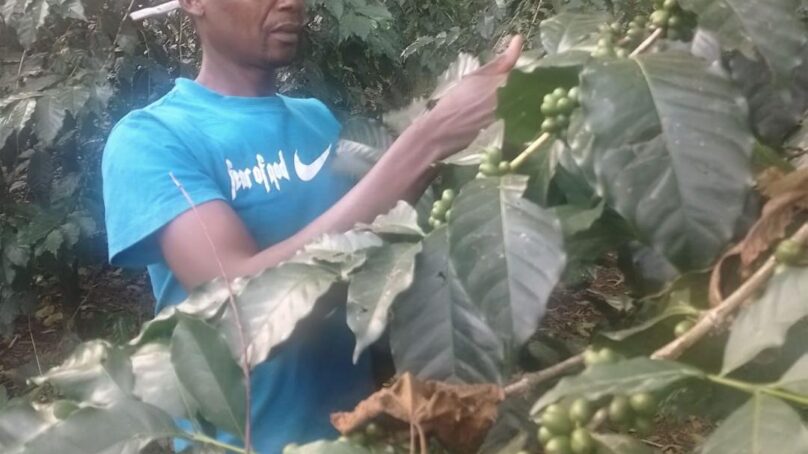
Farmers in Trans Nzoia County have embraced coffee farming to diversify income and hedge against unpredictable maize harvests and market fluctuations.
Trans Nzoia produces almost a third of the 60 million bags of maize Kenya requires per year.
Traditionally known as Kenya’s food basket, the region is witnessing a shift in crop choices as farmers allocate part of their land to coffee alongside maize, beans and dairy.
Coffee farmer Francis Khati of Kiminini Constituency, who grows coffee on three acres, said diversification had improved his income.
“For many years we depended almost exclusively on maize farming but the returns have not always been reliable due to fluctuating prices and unpredictable weather. I decided to venture in coffee as an additional enterprise and I believe it has great potential if managed well,” Khati said.
However, he reminded that coffee requires patience as it takes time to mature, but urged farmers not to depend on a single crop.
“Agriculture is changing. Farmers should not put all their hopes on one crop. Having coffee alongside maize or dairy farming helps cushion families whenever one enterprise performs poorly,” he said.
Trans Nzoia County Chief Agronomist Paul Wenya said coffee presented a viable diversification option with government support.
“Coffee is a good venture. As a national government project, we have witnessed the revival of coffee cooperatives and the deployment of Coffee Ward Champions, with two extension officers in every ward working alongside the New Kenya Planters’ Cooperative Union (NKPCU) to support farmers,” Wenya said.
He added that most farmers preferred the Ruiru 11 variety despite research showing Batian also performs well under good agricultural practices.
“Most farmers are convinced that Ruiru 11 is the variety suited for his region, yet Batian also performs very well. The demand for Ruiru 11 seedlings is currently higher than supply, while certified seedlings remain scarce because the county lacks enough certified nurseries,” he said urging farmers to conduct soil testing to improve coffee productivity.
Farmer Evans Pepela said high transport costs and labour shortages were hampering coffee production.
“Our biggest challenge is that the coffee factory is located kilometres away as far as Mahanga in Bukwo, making it costly to transport our produce. During harvesting, finding people to pick coffee is also a problem because few people are willing,” Pepela said.
He pointed out that parchment coffee was currently fetching about Ksh300 per kilogramme but high costs of maintenance, transport and labour were cutting into earnings.
“If collection centres are brought closer to farmers and more support is provided, more people in Trans Nzoia would be encouraged to venture into coffee farming,” Pepela said.
Farmers said improved market access, fair prices, better infrastructure and government support were key to unlocking the potential of coffee farming in the county.
- A Tell Media / KNA report / By Isaiah Nayika and Oscar Nalyanya


About author