

Museveni’s sterile policies: Uganda continues to export raw coffee, minerals and cheap labour while richer countries sell finished goods, control trade
The foundation of this system lies in what Karl Marx termed “primitive accumulation” – the original theft that precedes capitalist exploitation. In Uganda’s case, this is not a historical phenomenon confined to colonialism but an ongoing process. The deceptively rich have acquired their wealth not through hard work or productive enterprise but through the systematic theft of public funds.

Endangered sea turtles in Tanzania’s Zanzibar revive through community-led conservation
The lagoon, naturally formed by tidal flows, provides a safe environment for rehabilitation. Visitors can observe the turtles up close, feed them seaweed, and even swim alongside them under supervision, an experience designed to foster appreciation for marine life while supporting conservation funding.

Kizza Besigye: Case study in military justice and President Museveni’s rescindment of judiciary
Following the Supreme Court’s January 2025 ruling, Besigye’s case was transferred to a civilian court. The military charges were dropped and replaced with treason charges in the civilian system. Yet by the end of 2025, Besigye had been denied bail four times and had spent over a year on remand.
East African Community to mark first Lake Victoria Day as environmental concerns rise
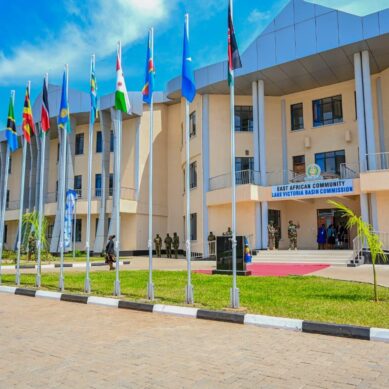
Cultural performances by troupes drawn from across the region will form part of the celebrations, showcasing East Africa’s diversity and strengthening regional unity, while local artisans will display eco-friendly products to promote sustainable livelihoods and tourism.
Way Museveni’s abstract policies rendered indigenous Maragoli and other communities stateless in Uganda, nativised refugees
More fundamentally, the very presence of this parallel system enables the government to neglect its obligations to indigenous children, knowing that international sympathy will ensure refugee children are not entirely abandoned.

Same forest, different monkeys: Understanding Uganda’s stalled independence from colonialism
These fifteen nations – Buganda, Bunyoro, Toro, Ankole, Busoga, Bukedi, Bugisu, Teso, Lango, Acholi, Alur, West Nile (containing multiple ethnicities), Karamoja, Kigezi and Sebei – each possessed sophisticated systems of governance, distinct cultural identities and established mechanisms for maintaining peace and security among their peoples. The British did not come to develop these nations; they came to conquer, control and exploit them.

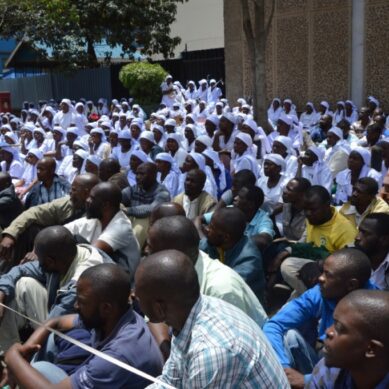
Residents of informal settlements in Kenya’s capital brace for political violence as President Ruto and opposition trade out insults
Since the restoration of political pluralism in 1992, the informal settlement that straddles four constituencies – Westlands, Dagoretti North, Dagoretti South and Kibra, has predictably been theatre of politically triggered inter-ethnic violence.

How tai chi, a variant of kung fu, has taken root in Rwanda and Kigali residents are loving it
For many Rwandans, tai chi is more than just movement – it is a personal journey. Emile Ndagijimana, a tai chi teacher, shared a deeply rooted story of passion that began in childhood with Xinhua. “I started practicing kung fu at the age of nine,” he recalled.
Arrival of ‘Viking Sky’ cruise vessel at Mombasa Port lifts KWS Cruise-to-Park initiative for wildlife tourism
Kenya Ports Authority (KPA) Manager for Security Services Tony Kibwana, representing Managing Director Captain William Ruto, welcomed the vessel, noting it marks the second call by Viking Sky, following its maiden visit on March 19, 2025.

Legacy of Mwalimu Nyerere in $137 million ‘sovereignty’ war: How latter-day regimes made Tanzanian businesses vulnerable to foreign banks
The High Court cleared the way for the EADB’s properties in Dar es Salaam to be auctioned and their bank accounts at Standard Chartered to be frozen to pay the businessman.