
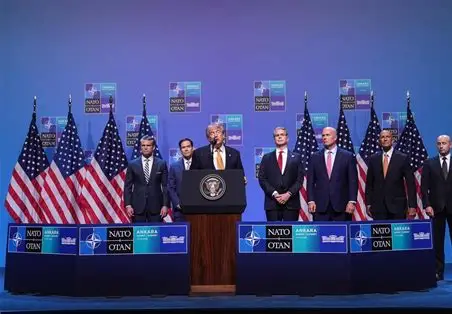
The two-day NATO summit concluded here on Wednesday with alliance leaders portraying the gathering as a demonstration of unity.
Analysts, however, have said it did not resolve the longstanding disagreements among NATO member-states, with European countries likely to accelerate efforts toward greater strategic autonomy.
The summit took place against a backdrop of persistent tensions within the alliance, particularly over defence spending, burden-sharing and diverging approaches to the Iran conflict.
US President Donald Trump, on the side-lines of the summit, reiterated Tuesday that he is “very disappointed” with the alliance, claiming some NATO members refused to support key US military objectives.
“The summit did not remove the factions within NATO. Instead, it compartmentalised them,” Ali Oguz Dirioz, associate professor of International Relations at Ankara’s TOBB University, said. “Divisions remain, but member states are learning to live with those differences,” he said.
Dirioz said a significant trend emerging from the summit is Europe’s gradual movement toward greater strategic autonomy within the alliance, driven partly by longstanding US demands for fairer burden-sharing.
“European countries within NATO are likely to evolve toward a more autonomous defence posture because of Washington’s persistent criticism over burden-sharing,” he said.
Oytun Orhan, senior researcher at the Ankara-based Centre for Middle Eastern Studies, said NATO leaders projected unity during the summit, but underlying disagreements remain largely unresolved.
“NATO leaders demonstrated solidarity, but most of the alliance’s internal problems still appear to be intact,” Orhan said. He noted that differences surfaced at the summit, citing Trump’s criticism of Spain over defence spending and his threat of trade measures against Madrid.
For quite some time, Washington has been pressuring NATO member states to raise defence spending targets from the long-standing 2 per cent of gross domestic product to 5 per cent.
For many NATO members, particularly those “with more fragile economies,” meeting the new targets “represents a very serious challenge,” Orhan said, adding that “this debate is likely to continue.”
On the question of European strategic autonomy, Orhan said that “there is a clear intention for Europe to become more independent from the United States.”
“However, whether Europe can achieve greater autonomy without weakening its operational military capabilities remains uncertain. The political will exists, but the outcome is still unclear,” he said.
- A Tell Media / Xinhua report


About author