


Ethics and Anti-Corruption Commission (EACC) has moved to court to recover 7.6 acres of land belonging to the Kenya Prisons Service (KPS) in Kisumu`s Milimani estate valued at approximately Ksh790 million ($6.09 million), which was allegedly acquired illegally and converted into private ownership.
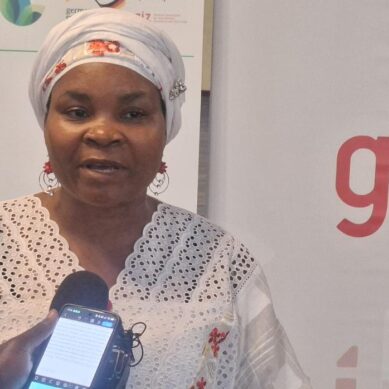
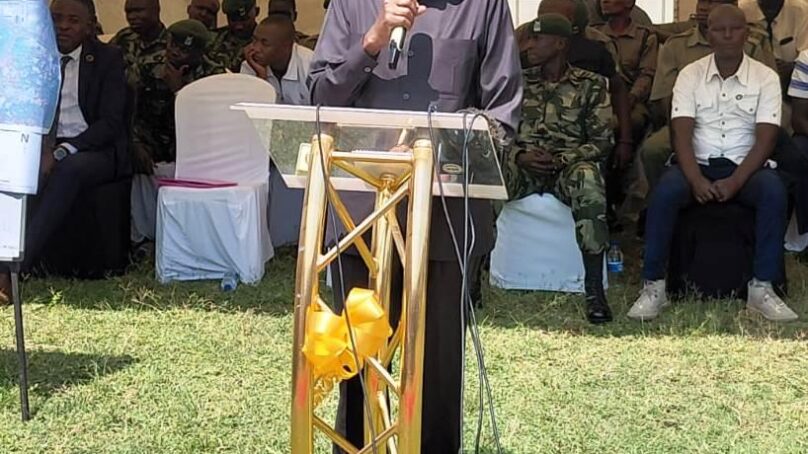
Speaking in Kisumu on Tuesday, EACC Chief Executive Officer (CEO) Abdi A. Mohamud said the disputed land forms part of a 16-acre parcel originally reserved for Kenya Prisons Service staff housing and regional offices.
Mr Mohamud said investigations had established that the land was unlawfully acquired in or around 1989 through fraud that involved forged documents, fake allotment letters and altered development plans before being subdivided into 92 parcels and transferred to private individuals.
He said the commission has filed nine asset recovery suits before the Environment and Land Court in Kisumu seeking the cancellation of all titles, a declaration that the transactions were illegal and restoration of the land to the Kenya Prisons Service.
Mohamud said the recovery followed a petition lodged by the Kenya Prisons Service in February 2022 seeking investigations into the unlawful occupation, subdivision and alienation of the land.
He explained that investigations established the property had originally been set aside for prison use before it was allegedly acquired through fraudulent documentation.
The CEO stated that the disputed land was later subdivided into 92 parcels and transferred to private individuals and is now commonly known as Winam Estate, also referred to as Grace Ogot Estate.
Mohamud said the Kisumu case mirrors a broader pattern of illegal acquisition of public land across the country, where land reserved for essential government functions has allegedly been diverted into private ownership through abuse of office, fraudulent documentation and manipulation of land allocation processes.
“There is a craze where any vacant place, any unoccupied place, not only in Kisumu but throughout the country, there are people who scout around and look for idle land,” he lamented.
According to the commissioner, EACC has pursued similar public land recovery cases in several parts of the country that include Nairobi, Nyeri, Nyahururu, Nanyuki, Kericho, Kakamega and Mombasa.
The cases involve government land and property allegedly acquired through illegal allocation and fraudulent transactions, with the commission moving to court to recover the assets and restore them for public use.
Mohamud reiterated that public land is held in trust for Kenyans and must only be allocated and used in accordance with the Constitution and applicable land laws. He said the commission remains committed to recovering illegally acquired public assets and safeguarding public resources. H said all public land should be protected and utilised for intended public purpose.
It is in public domain that thousands of acres of prisons land has been grabbed all over Kenya and EACC says it has initiated processes in courts to recover the lands.
Another case in point is Kitale in Trans Nzoia County, where over 3,000 acres of prisons land is said to have been hived off by grabbers.
With recent high-profile cases spearheaded by the Ethics and Anti-Corruption Commission (EACC), Kenyans are hopeful that these and any other public land that was illegally converted to private use will be recovered and reverted to public use.
According to data from World Bank, Kenya loses between Ksh194 billion and Ksh1.1 trillion ($1.5 billion to $8.5 billion) annually to corruption, depending on whether estimates focus strictly on documented public sector graft or broader illicit financial flows.
While various state and independent oversight bodies provide differing figures, corruption remains to be a major obstacle to the economic development of the country.
- A Tell Media / KNA report / By Mabel Keya Shikuku and Mary Aoro


About author