

Somalis are fighting back, from homemade sambusas for protesters to foot patrols on the lookout for ICE.
Kamal Yusuf doesn’t speak English. That hasn’t stopped him from getting involved as US Immigration and Customs Enforcement agents flood his immigrant-heavy Minneapolis neighbourhood.
For the past two weeks, he has been on the streets actively looking out for any ICE presence.
From 8am to 6pm, Yusuf travels through the Cedar Riverside neighbourhood, popularly known as West Bank, on foot in biting cold and on slippery ice. The instant he spots ICE agents, he immediately informs a Signal chat and whistles for several minutes without pause.
Yusuf, with his neon orange vest and black beanie that says “FUCK ICE,” is not an inconspicuous presence.
“But I am a citizen. I need to do this for my community,” he said on Sunday, through a friend who translated.
“We realised we can’t fight the federal government. But we can come together and patrol the neighbourhood, keep ICE out.”
The only breaks Yusuf takes are at mosques or the West Bank Diner, a restaurant that gives free tea and sambusas, a savoury Somali pastry, to anyone who is part of the patrol.
Creating new ICE watch patrols and rapid response networks, fearing going to work or leaving home, watching their shared community spaces grow desolate and their shops sit empty – these are the experiences of Somali residents of the Twin Cities who spoke with The Intercept about being under siege in their own hometowns.
While many of the state’s residents are being impacted by President Donald Trump’s immigration crackdown, Somalis in particular know they are targets of the administration and the thousands of federal immigration agents deployed to Minnesota.
Yusuf’s Signal chat includes eight Somali founding members among the hundreds of volunteers belonging to a patrol group created last month after Trump’s surge of force began.
“When ICE started showing up in our neighbourhoods,” said Abdi Rahman, a 28-year-old founding member of the West Bank neighbourhood patrol, “we realised we can’t fight the federal government. But we can come together and patrol the neighbourhood, keep ICE out, de-escalate, keep some of these right-wing lunatics out of our neighbourhood.”
The Somali community in the Twin Cities is putting up a resistance against ICE, pooling resources, and trying to protect its more vulnerable members from arrest.
“We buy groceries for them and drop them off at their homes.”
In the past two weeks, videos of US citizens of Somali heritage confronting ICE have spread online. Most Somali people in the Twin Cities are citizens or permanent residents, but the many who are not find themselves vulnerable to the vagaries of the federal government.
“The non-citizens have stopped stepping out entirely. We buy groceries for them and drop them off at their homes,” Rahman said.
The current moment is reminiscent of the unrest that swept Minneapolis in 2020, Rahman said, after police murdered George Floyd. “The Somali community came together back then too, and it really helped keep us safe.”
Rahman had just ended his own patrol on a 35-degree day – balmy by the standards of January in Minneapolis. A resident of the West Bank, walking around the neighbourhood of over 10,000 families instilled Rahman with a sense of belonging.
“That’s why I hate that Trump questions whether we belong here or not,” he said. “I am a true Minnesotan. This is not even what I consider cold!”
For many Somali residents of the Twin Cities, the Trump administration’s racist tirades and crackdown aren’t the first adversity they’ve experienced – and not the first time they’ve set their sights on persevering.
Mahmoud Hasan, a community activist whom everyone refers to as BBC, was in a refugee camp after fleeing civil strife in Somalia in the 1990s. He earned his moniker because, living in the camp, he learned English strictly by watching the BBC and would practice by speaking like a news anchor.
“We fled a civil war,” Hasan said. “We are more resilient than they think.”
The Somalis of Minnesota have been under near-constant attack from the highest levels of the Trump administration for months. In December, right-wing media began focusing on a long-running scandal involving day-care centres accused of defrauding the government. Many of the claims made by right-wing YouTuber Nick Shirley – who has an anti-immigrant history and relied on a source who has made anti-Muslim remarks – have been debunked.
“Their country stinks, and we don’t want them in our country,” Trump said in a tirade that was bigoted even by the president’s standard. “We’re going to go the wrong way if we keep taking in garbage into our country.”
On December 17, as ICE and other federal agents were flooding into Minnesota, a group of Somali leaders came together to form SALT (Somali American Leadership Table), an acronym chosen as a nod to melting ice. The group was brought together because the founders saw the assault on their fellow Minnesotans as a risk to the entire community.
“The armed men and women, with their faces covered, roaming our streets and profiling us,” said Imam Yusuf Abdulle, a SALT co-founder. “We thought we had left all that behind but now this moment in America is reminding us again of the Somali civil war.”
“But we are fighting,” said Abdulle, who is also director of the Islamic Association of North America, which includes close to 40 Islamic centres across the country. “We didn’t come this far, make our lives here, to again be targeted and abused like this.”
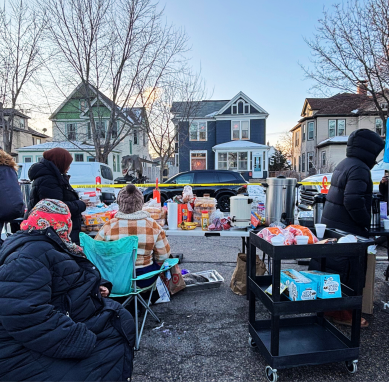
When Renee Nicole Good was shot and killed by ICE agent Jonathan Ross last week, SALT leaders organised a protest where elderly Somali women handed out tea and homemade sambusas.
“Renee died for us, she died protecting us,” said Jamal Osman, a Somali American and the vice president of the Minneapolis City Council. “Trump is singling us out but our allies here are doing everything they can to protect us.”
Somalis in Minnesota are overwhelmingly citizens. Nearly 58 per cent of them were born in the US, the Census Bureau reports. Of the foreign-born Somalis in the state, 87 per cent are naturalised US citizens, according to CNN.
ICE’s aggressive targeting, although, has meant even citizens have been afraid to venture out. Saadia Saman, a citizen employed at a Minneapolis warehouse, hadn’t gone to work for three days after ICE operations ramped up in the early days of the New Year.
Hours after Good was killed, federal agents swarmed outside a nearby high school and violently seized a Spanish-language translator. One of Saman’s daughters, a 10th grader, was there and came home crying.
The following night, Saman, clad in a yellow bib, was distributing free food and hot chocolate at a vigil near the site of Good’s fatal shooting.
“We are not garbage. We are good people. We’re Somali,” Saman told The Intercept at the memorial. “You see that we are helping the Minneapolis community?”
Although out of the house now, Saman said she has been travelling with her US passport and Social Security card.
“In case of ICE…” she said, trailing off.
Saman is not the only one. In the Twin Cities, many Somali citizens and permanent residents have taken to carrying their papers – especially cab drivers, whose jobs keep them in public.
“We have started carrying our passports at all times, for fear of when an ICE agent will pull us over, even those of us who are citizens,” said Mustafa Mohamed Abdile, a board member of the Minnesota Uber/Lyft Drivers Association. “We are worried about ICE, and we are also worried about passengers who might support ICE.”
One driver, Abdi, who asked to be identified only by his first name for fear of retribution, was asked by an elderly white customer where he was “originally” from – and repeated invective from the viral right-wing YouTube videos upon learning Abdi was Somali. “‘Somalis are lining their pockets with millions by using government welfare money,’” Abdi recalled the man saying.
Abdi chuckled.
“If that were the case,” he told the man, “I would not be driving you 10 miles on these slippery roads late on this cold night for just $15.”
Despite the large numbers of citizens among the community, public life for Somalis in Minnesota has receded into private spaces.
In southern Minneapolis, the Karmel Mall – known informally as the Somali mall – would usually have a bustling crowd. On Saturday evening, however, the mall bore a deserted look as it has for the past month.
“We open our shops everyday but people hardly come,” said Abdul, a shopkeeper who sells perfumes and asked The Intercept to withhold his last name for fear of retribution. “I wouldn’t have had time to speak to you if you came here a few months ago, I’d be that busy with customers. Now, it’s all barren.”
A co-owner of a Somali cafe in a racially diverse neighbourhood in south Minneapolis, Duniya Omar has noticed immigrant-run stores and restaurants locking their doors and closing their shutters. At her cafe too, the flow of customers is down to a trickle.
“It makes a huge financial difference,” said Omar, who has lived in Minneapolis since she was five. “Our business has been affected, 100 percent.”
Local Somalis have organised to drum up business for their community.
Abdi Mohamed, a Somali American filmmaker, said, “There was an event that we had, where we invited people to come to the Somali mall and patron our businesses, eat from our restaurants – to have not only that solidarity but also that economic support because people were suffering after the harassment campaign and the ‘garbage’ insult from the president.”
Reinvigorating public life for the Somali community may prove a tall order. With even citizens fearful, those non-citizens among Minnesota’s Somalis are continuing to be aggressively targeted by Trump administration policies.
On Tuesday, the administration announced that it will end Temporary Protected Status or TPS, for Somalis in March, effectively forcing thousands of Somalis out of the country unless a court pauses the revocation of their protected status.
Somalis were just the new target group for anti-immigrant rhetoric, said another Somali cab driver, who asked to not be identified by name due to fear of retaliation.
“Before, it was ‘Haitian people eating cats and dogs.’ It was ‘Mexicans are all rapists, all criminals.’ Now, it’s us,” the driver said. “Tomorrow, who’s it gonna be?”
- A Tell Media report / From The Intercept


About author