


Kenya and China are deepening education partnership through initiatives that equips teachers with digital literacy and STEM competencies, with a strong focus on Artificial Intelligence, innovation and practical classroom applications.
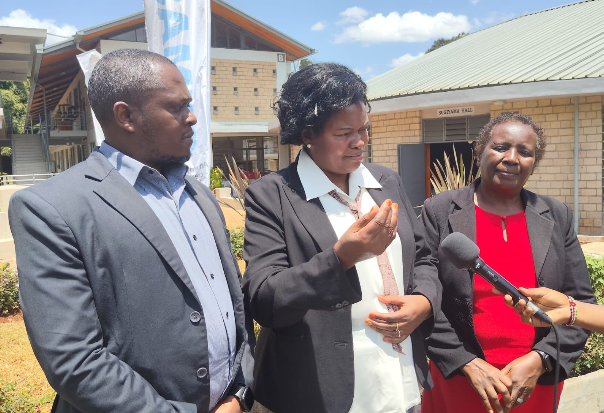
Speaking during the closing ceremony of a workshop on advancing digital literacy for competency-based STEM education at the Centre for Mathematics, Science and Technology Education in Africa (CEMASTEA) in Nairobi, Prof Xiao Huang, Dean of Joint Education Institute of Zhejiang-Normal University (ZJNU) and the University of Kansas Institute for China-Africa, said the programme is designed to enhance teachers’ digital and scientific literacy.
The training brought together about 100 Junior and Senior School teachers, university lecturers, and STEM education specialists, with Kenyan and Chinese institutions collaborating to promote knowledge exchange and innovation in education.
Prof Huang said the two-day programme exposed teachers to AI, STEM education policies and practical case studies, including experiences from China’s technology and innovation sectors such as Alibaba and Yiwu.
She commended CEMASTEA for spearheading STEM education, saying the practical approach is intended to help teachers understand how science and AI can be applied in classroom activities.
She encouraged learners to embrace innovation and expand cooperation among educators.
The partnership brings together the Institute of China-Africa Consortium of Universities Exchange Mechanism, the Global Teacher Professional Development Institute for Africa at ZJNU, CEMASTEA and the African Foundation for Women and Youth in Education, Science, Technology and Innovation (AFoWYESTI).
Huang said the initiative provides an important platform for Chinese and African teachers and education specialists to interact, exchange experiences and develop a deeper understanding of each other’s education systems.
She described the current programme as a new phase in continued China-Africa educational co-operation, noting that previous exchanges have already enabled African educators and delegations to visit Zhejiang Normal University and participate in academic conferences.
According to Huang, the cooperation could expand to include China-Africa science education dialogues, increased academic exchanges and opportunities for African students, to pursue master’s and doctorate programmes in China.
She called for continued collaboration in education, research and innovation to help deepen people-to-people ties between China and Africa, while strengthening capacity in STEM and digital education.
- A Tell Media / KNA report / By Ian Chepkuto


About author