

After nearly three years of struggling to find water for his camels in his home village of Wardhere, Ethiopia, Abdullahi Hussein Bare made a 295-kilometre trek to Bacadweyn in central Somalia, driven by a desperate search for food and water to keep his malnourished herd alive.
Bare reached Bacadweyn with his camels after a gruelling journey driven by a simple need: finding enough water to keep his livestock alive.
“I came here because I could not find enough water for my camels in my area,” Bare said. “The drought has made it increasingly difficult to find both water and pasture.”
His journey reflects the crushing pressure that severe drought is placing on pastoralist communities whose livelihoods depend entirely on livestock. Driven by acute water scarcity, many herders have been forced to abandon their traditional grazing lands in search of surviving pasture.
Even Bacadweyn, a historic town in the Mudug region located 48 kilometres from Galkayo, has not been spared by the prolonged drought gripping the Horn of Africa. Renowned for its natural salt production, which is sold throughout Somalia and exported to neighbouring Ethiopia, the town’s local economy relies heavily on small-scale farming and livestock keeping.
For decades, camels from the area were exported to Saudi Arabia, making herding an essential pillar of the community’s economic and social identity. However, the persistent drought has brought these traditional livelihoods to the brink.
Relief finally arrived with the recent commissioning of a strategic borehole, supported by the United Nations Development Programme (UNDP), which now provides a vital lifeline for drought-affected pastoralists and their herds.
The borehole has drawn herders from across central Somalia and beyond, including Bare, who travelled 42 days from Wardhere in Ethiopia’s Somali State after years of failing water supplies. His gruelling journey demonstrates not only the extraordinary lengths pastoralists must go to when survival is on the line, but also how environmental crises ignore national boundaries, forcing families to follow the water wherever it rains.
For Bare and countless others, the promise of free, reliable water has turned Bacadweyn into a critical sanctuary.
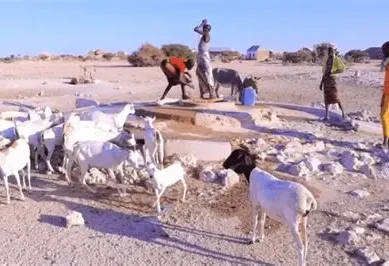
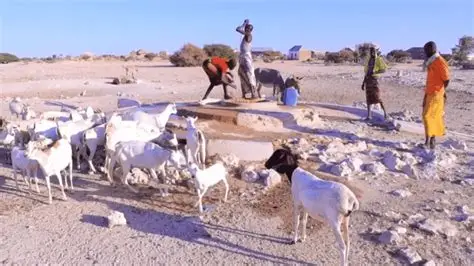
Marshal Hussein Nor, chairman of the borehole management committee, confirmed that the facility has become a vital lifeline for livestock from across the region. On average, nearly 1,000 goats and sheep alongside 600 camels rely on the well each day.
Demand is so overwhelming that herders frequently arrive in the dead of night, forcing the committee to keep the pumps running past normal operating hours despite working in darkness due to a lack of lighting. The crisis in Bacadweyn reflects a broader reality across Somalia, where access to water and pasture remains the bedrock of rural survival.
- A Tell Media / Xinhua report


About author