
Abstract
This article examines how authoritarian regimes sustain power through an interconnected triad of legal manipulation, media capture, and diplomatic legitimacy, using Uganda as a case study. Like the Ngorongoro crater’s enclosed communities, extreme authoritarianism seeks to create closed societies using legal, media, and diplomatic justifications. We employ a 4-Dimensional Environmental Framework – ecological-biological, socioeconomic, sociocultural and temporal – to demonstrate how regimes manufacture terrorism, insecurity, and instability, then disorient national budgets to ostensibly combat these threats, producing “unstable stability.”
Drawing on a 5-Dimensional Knowledge Production Framework, we argue that escaping this trap requires fundamental educational restructuring to produce citizens, professionals and leaders equipped for 21st-century governance. The article concludes that civic education reform is not merely pedagogical but existential for democratic survival.
Keywords
Authoritarianism, Uganda, Press Freedom, Rule of Law, Sovereignty, Civic Education, Environmental Fragmentation, Knowledge Production, Unstable Stability, Military Courts
Introduction
Paradox of repression
Uganda presents a defining paradox of our time. Its 1995 Constitution guarantees fundamental rights and freedoms. It holds regular elections. It maintains a vibrant, if embattled, civil society. Yet beneath this democratic veneer lies a systematic shrinkage of civic space, orchestrated through laws, media controls and diplomatic manoeuvring that together form what we term the gilded cage – a structure that appears legitimate from outside but traps citizens within.
As Freedom House’s 2025 assessment confirms: “While Uganda continues to hold regular elections, their credibility has deteriorated.” The National Resistance Movement (NRM), under President Yoweri Museveni since 1986, retains power through patronage, intimidation and politicised prosecutions of opposition leaders.
Beyond scope does not exist. Everything is connected to everything else. Understanding this system requires moving beyond isolated analyses of individual laws or incidents. The legal trap, the media muzzle and the diplomatic shield operate not as separate domains but as mutually reinforcing dimensions of a single system. This article maps those connections.
Theoretical frameworks: Seeing the whole
Ngorongoro analogy of closed society
Like the Ngorongoro crater communities in Tanzania – enclosed, isolated, and self-contained – extreme authoritarianism seeks to create closed societies using all sorts of justifications. The regime’s legal framework, media controls, and diplomatic manoeuvring build an impermeable barrier around citizen consciousness. Just as the crater’s walls prevent exit and entry, the state constructs legal, informational, and economic walls that trap citizens within a managed reality.
The 4-Dimensional environmental framework
To comprehend how authoritarian regimes manufacture and exploit instability, we employ a framework analysing four interconnected environmental dimensions:
Ecological-biological dimension: Resource competition, environmental degradation and climate pressures create material conditions for conflict. Uganda’s rangeland policies, for instance, have displaced pastoralists, “exposed [them] to incremental risks, poverty and a breakdown of social networks,” increasing vulnerability to “extreme events such as droughts, floods and disease outbreaks.” This ecological stress becomes fodder for manufactured insecurity.
Socioeconomic dimension: State resource allocation – particularly the 24.2 per cent of Uganda’s national budget directed to “governance and security” in financial year 2024/25 – reveals how regimes prioritize coercion over welfare. Uganda loses an estimated Ush10 trillion ($2.7 billion) to corruption annually, equivalent to the budget allocated for key services such as education, health and water combined. This “security” spending disorients budgets away from health, education, and infrastructure toward maintaining control.
Sociocultural dimension: Civic education has been systematically eroded, producing a population disconnected from governance processes. The National Unity Platform (NUP) manifesto notes that the government has deliberately undermined the education system as a method to manipulate the population. Nelson Mandela’s axiom that “education is the most powerful weapon that you can use to change the world” is inverted: uneducated people are easy to rule over and manipulate.
Temporal dimension: Regimes exploit historical narratives of instability to justify emergency measures, then institutionalize those measures across time, normalizing exceptionalism. The UPDF (Amendment) Bill 2025, passed despite a Supreme Court ruling, exemplifies this temporal manipulation – using past instability to justify permanent military authority over civilians.
Manufacturing “unstable stability”
Complexity is ecologically superior to simplicity. Authoritarian regimes simplify complex social realities into binaries – order versus chaos, sovereignty versus foreign interference – to justify control. They manufacture terrorism, insecurity and instability through multiple mechanisms:
- Legal vagueness that criminalizes dissent as “economic sabotage” or “terrorism”
- Selective enforcement that targets opposition while protecting regime allies
- Information control that creates perception of threat where none exists
- Diplomatic framing that recasts repression as sovereignty defence
The result is unstable stability – a condition where apparent order requires continuous violence, surveillance, and expenditure to maintain, creating the very instability it claims to address. Uganda ranked 126th out of 142 countries in the World Justice Project’s 2024 Rule of Law Index, scoring just 0.39, reflecting serious deficits in legal integrity, fundamental rights, and government accountability .
Narrowness of the collective mind; fragmenting collective thought. By fragmenting information, criminalizing assembly, and eroding civic education, regimes prevent citizens from seeing the whole picture. In the absence of civic instruction, citizens build an understanding of governance based on what they observe – and what they observe is often disappointing.
The 5-dimensional knowledge production framework
Understanding and resisting authoritarianism requires moving beyond disciplinary silos. Our framework integrates:
- Disciplinarity (legal analysis, political science)
- Interdisciplinarity (connecting law, media studies, international relations
- Crossdisciplinarity (applying theories from one field to another)
- Transdisciplinarity (integrating academic and practitioner knowledge)
- Extradisciplinarity (centring citizen experience and indigenous knowledge)
The Quintuple Helix model emphasizes that the natural environment is not merely another inspirational source of knowledge but the most critical, serving as the backdrop for human preservation and vitalization. The exchange of information and the co-evolution of society and nature can lead to a new balance characterized by reduced exploitation, destruction, pollution, and inefficiency. Only through this multidimensional approach can we grasp how legal, media, and diplomatic tools combine to create the gilded cage.
Legal Trap: Constitutional veneer, authoritarian substance
Pattern of legislative overreach
Uganda’s Parliament, once envisioned under the 1995 Constitution as a deliberative body and check on executive excess, is increasingly described as a “rubber stamp” – passing laws later dismantled in court for violating the very Constitution legislators are sworn to uphold.
Key examples include:
- The Computer Misuse (Amendment) Act, 2022: Struck down by the Constitutional Court for vague speech offences and for passing without quorum. Opposition MP Joel Ssenyonyi warned that vague terms like “offensive” and “malicious” could criminalize free expression.
- The Public Order Management Act: The Supreme Court dismantled key provisions that had effectively turned the right to assemble into a police-controlled privilege.
- Military Trials of Civilians: The Supreme Court prohibited this practice in January 2025, ending a long-criticised practice that blurred the line between civilian justice and military authority. Yet on May 20th, 2025, Parliament passed the controversial UPDF (Amendment) Bill 2025, granting military courts powers to try civilians – a move that defied the Supreme Court ruling and Article 92 of the Constitution, which prohibits Parliament from enacting laws that overturn specific court decisions .
- Press and Journalist Act of 2000: Originally meant to professionalize journalism, this law has been weaponized to restrict who qualifies as a journalist, criminalize independent reporting, and control media content. The law guarantees only two journalism professionals out of thirteen members of the Media Council, tipping the balance against journalists and negating the principle that professionals should be regulated by their peers. Academic requirements for journalists have been described as “an ill-conceived absurdity” that violates international instruments protecting freedom of expression.
Across these debates, dissenting voices consistently raised core concerns: vagueness of legal provisions, excessive executive or police discretion, risk of political abuse, conflict with constitutional rights, and incompatibility with international human rights standards.
The sovereignty bill: A new frontier
Protection of Sovereignty Bill, 2026 represents an escalation. Tabled in April 2026 by Minister David Muhoozi, it purports “to shield Uganda against undue foreign influence” Critics identify it as a tool “to effect its dictatorial intentions by squeezing media and civic spaces and restricting foreign funding, cross-border information sharing, and critical reporting.”
Key provisions threaten fundamental rights:
- Economic Sabotage: Criminalizes reporting that “questions Uganda’s economic performance” with up to 20 years imprisonment. Journalists could find themselves smeared with accusations of ‘economic sabotage’ and jailed as ‘agents of foreigners’
- Foreign Agent Designation: Redefines “foreigner” broadly to include Ugandan citizens abroad, criminalizes media quoting from the diaspora, and restricts foreign funding for media.
- Ministerial Discretion: Grants the Internal Affairs Minister power to designate any person or institution as a “foreigner,” revoke licenses arbitrarily, and inspect premises without court orders.
The Daily Monitor editorial board warned: “The loose definition of so-called foreign influence has the possibility of visiting upon Uganda’s body politic all manners of grim outcomes.” The bill would introduce personal liability for media executives, including a 20-year prison term for editorial decisions, and draconian fines and asset seizures with the potential of drowning media outlets through bankruptcy.
The whole is greater than its parts. Individually, these provisions are troubling. Together, they constitute a comprehensive system for eliminating independent journalism, foreign-funded civil society, and diaspora engagement – the very actors who might expose state repression.
Article 3: Right to resist – and its nullification
The Uganda Constitution (1995) explicitly provides for resistance. Article 3 states that “all organs and people of Uganda have the right and duty to resist any person or group of persons seeking to overthrow the established constitutional order.” Clause (4) grants citizens a “right and duty at all times to defend this Constitution and, in particular, to resist any person or group of persons seeking to overthrow the established constitutional order.” Clause (5) declares that any person who resists “commits no offence.”
Article 3 is revolutionary. No other African constitution matches this boldness; Kenya’s 2010 charter hints at resistance but stops short of arming it. The drafting debates in 1995 were fierce – NRM loyalists wanted dilution; survivors of past atrocities demanded teeth.
However, the NRM regime has refined sophisticated tools to resist the citizens exercising this constitutional right:
- Administrative Legalism: By passing legislation like the Public Order Management Act and the Computer Misuse Act, the regime reclassifies legitimate resistance as “unlawful assembly” or “cyber harassment,” effectively criminalising the tools of resistance.
- Economic Encirclement: Through the Sovereignty Bill and other instruments, the regime restricts financial resources to civil society and media, starving the infrastructure needed to articulate resistance.
- Monopoly on Force and Narrative: The regime claims the monopoly to define threats to sovereignty, controlling the narrative space and preventing citizens from organizing the resistance they are legally entitled to mount.
The result: Article 3 exists on paper but is systematically rendered inoperable.
- Media Muzzle: Silencing the watchdog
- The Nation Media Group Closure
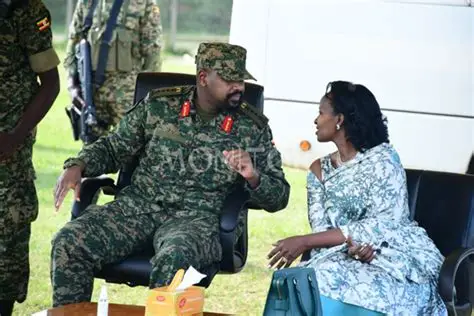
On June 28, 2026, Ugandans woke to a barrage of social media posts from General Muhoozi Kainerugaba, Chief of Defence Forces and son of President Museveni, announcing the closure of the largest independent media house, Nation Media Group (NMG) – including Daily Monitor, KFM, Dembe FM, NTV and Spark TV.
The General posted that he does not believe in a free press, and that the media houses would never reopen without his permission. He later confirmed that these orders were approved by his father, the president. Army personnel besieged the offices, shut down studios, and prevented access. Staff were forced to leave; NTV broadcast displayed “video not available.”
This was not unprecedented. In 2002, Daily Monitor was shut down for reporting that a UPDF chopper had been shot down by LRA rebels. In 2005, KFM was closed after journalist Andrew Mwenda stated on air that South Sudan’s leader John Garang had died in a defective Ugandan helicopter. In 2013, Daily Monitor was again shut down following publication of a letter alleging a plot to assassinate army officials opposed to the “Muhoozi project” – the grooming of the president’s son to succeed him.
The 2026 closure, however, marks an escalation. NMG is not merely a local media house but the largest independent media group in East and Central Africa, listed on stock exchanges in Kenya, Tanzania, Uganda and Rwanda. The global response was swift: WAN-IFRA and the World Editors Forum denounced the shutdown and called on the government to honour constitutional guarantees and international standards protecting media freedom.
Systematic harassment and self-censorship
Beyond shutdowns, journalists face “intimidation including arrest, harassment, destruction of equipment, and assault, especially for writing that is critical of the president and his inner circle.” A “special security unit, founded in 2017, monitors journalists’ social media activity.”
The Uganda Human Rights Commission’s 2018 report documented “egregious human rights violations relating to prolonged pre-trial detention committed by the army and police, including torture of detainees” and “infringements on freedom of the media through violence against journalists, arrest, detention and torture of journalists, and arbitrary shutting down of media houses.”
Journalists Andrew Nabimanya (Ninye Tabz) and Timothy Kalyegira were abducted and held in General Muhoozi’s infamous “torture basement” (or freezer as President Museveni calls it) where abductees consistently report being subjected to torture – before being charged. Kalyegira was remanded to Luzira maximum security prison for “broadcasting online without a license.”
Press Freedom Index ranks Uganda 143rd out of 180 countries. Police are identified as the leading violator of media freedoms, with impunity. Instances of prosecution of brutal police officers are rare in contemporary Uganda.
Goal: Self-censorship
The ultimate victory for authoritarian media control is self-censorship—when citizens internalize the boundaries of permissible speech without needing overt enforcement. As one journalist observed: “I would be concerned about statutory regulation as it is dangerous. Their procedure is to wait for the journalist to make a mistake and pounce. The State does not like a critical media. When you gag the media, you also gag the public.”
The Media Council, charged with protecting journalists, has never been heard to condemn state brutality against journalists. It focuses on punitive action against journalists rather than protection, conceptualizing itself as “part of the state system that exacts punishments and displays its power of control, instead of acting as a neutral arbitrator.” The Diplomatic Shield:
Legitimacy through sovereign rhetoric
“Stick and flag” dilemma
Authoritarian regimes exploit the tension between donor objectives: the “stick” (aid conditionality to change behaviour) and the “flag” (expressing commitment to human rights norms). When donors publicly threaten aid cuts, regimes reframe this as foreign interference.
The Protection of Sovereignty Bill, 2026, explicitly weaponises this dynamic. By criminalising foreign funding and framing criticism as “undue external interference,” the regime positions itself as defender of national sovereignty. The Attorney General defended the bill as “grounded in the urgent need to safeguard Uganda’s autonomy and stability.”
Quiet diplomacy and its limits
Private pressure can sometimes work, as when donors have close relationships with senior officials enabling “quiet diplomacy.” However, this approach requires trust and avoids public accountability – often sacrificing the “flag” objective of demonstrating commitment to human rights norms.
The Sovereignty Bill threatens to end even quiet diplomacy. It prohibits “foreign agents” from participating in governance issues, including civic education and election coverage, and restricts influence on government policies without ministerial approval.
Diplomatic Performance
Through diplomatic rhetoric, regimes accomplish several goals simultaneously:
- Deflect international criticism by invoking sovereignty
- Mobilise domestic support against perceived foreign threats
- Divide international actors by exploiting donor dilemmas
- Maintain aid flows while evading accountability
This is not merely defensive; it is an active strategy of legitimacy production. By performing sovereignty, regimes manufacture the appearance of democratic governance while hollowing out its substance.
Environmental fragmentation and regime excesses
Ecology of Repression
Authoritarian control and environmental degradation are not separate crises; they are mutually reinforcing. Everything is connected to everything else.
Uganda’s rangeland policies demonstrate this connection. “Policies were based on western European resource management, classical rangeland ecological and economic theory and marginalization narratives, rather than the socio-ecological realities of Uganda’s rangelands.”
This misalignment has consequences:
- Pastoralists were “displaced and exposed to incremental risks, poverty and a breakdown of social networks”
- “Expansion of competing land uses has reduced the net availability of rangeland resources”
- “Policies promoting fire exclusion have led to increased bush encroachment”
Resource scarcity fuels conflict. Research identifies “four primary types of conflicts (over private land boundaries, common-pool resources other than water, water resources, and conflicts over other resources)” linked to “agroecological potential, poverty level, population density, and proximity to roads and markets.”
Manufacturing insecurity through environmental stress
Regimes exploit environmental stress to justify securitization. By framing resource conflicts as security threats, they:
- Expand security budgets (the 24.2 per cent allocated to governance and security)
- Restrict civil liberties in the name of maintaining order
- Blame external actors (foreign NGOs, climate activists) for instability
- Divert attention from governance failures
The “unstable stability” produced is inherently fragile. It depends on continuous expenditure and coercion, creating a cycle where “security” spending undermines the welfare and education that might reduce actual insecurity.
Death of civics: Educational neglect as authoritarian strategy
Deliberate Omission
Civic education in Uganda has been systematically eroded. Precolonial societies “had mechanisms for grooming civic awareness through clan rituals, council discussions and moral instruction” but “colonialism replaced that with loyalty to empire, and post-independence regimes never fully restored what was lost.”
Today’s system “prepares pupils for exams, not engagement.” The result is a population disconnected from governance processes. Few citizens can describe how a law is passed, how to follow up a government commitment, or how to engage local councils beyond voting.
Fear of the educated citizen
Opposition leader Joel Ssenyonyi has exposed this educational neglect as deliberate strategy. “The government has deliberately undermined the education system as a method to manipulate the population,” he argues, noting that the capitation grant is “just 20,000 shillings per child per year.”
Ssenyonyi quotes Nelson Mandela’s axiom that “education is the most powerful weapon that you can use to change the world” and argues that educated people will challenge leaders. The government, he suggests, “fears an educated population” because uneducated people are very easy to rule over and manipulate.
Narrowness of the collective mind; fragmenting collective thought. By restricting education funding, controlling curricula, and eliminating civic instruction, regimes fragment collective understanding. Citizens learn to recite facts but not to question systems. They learn loyalty but not critique. They learn obedience but not agency.
Rethinking education for the 21st century
Beyond technical training
The authoritarian trap cannot be escaped through technical education alone. Uganda needs an educational transformation that produces:
- Critically thinking citizens who can evaluate governance claims
- Ethically grounded professionals who resist corruption
- Civically engaged leaders who understand democratic accountability
- Systemically aware graduates who see connections across sectors
Reintroducing civic education must go beyond textbooks. It must include the use of local languages, community debates, practical simulations, and critical engagement with Uganda’s Constitution. It must empower citizens to understand not just how to vote, but how to speak, organise, and demand.
The 5-Dimensional educational model
Applying our knowledge production framework to education requires:
- Dimension Educational Implication
- Disciplinarity: Strong foundational knowledge in law, politics, and economics
- Interdisciplinarity: Understanding how legal, media, and diplomatic systems interact
- Crossdisciplinarity: Applying methods from diverse fields to governance questions
- Transdisciplinarity: Integrating academic knowledge with community practice
- Extradisciplinarity: Centring indigenous governance traditions and citizen experience
This approach produces graduates who can think systemically, resist simplification, and recognize that “the whole is greater than its parts.”
Education as existential struggle
Complexity is ecologically superior to simplicity. The authoritarian project depends on simplification – reducing complex governance challenges to security threats, complex societies to ethnic binaries, complex economies to growth metrics. Educational transformation resists this by cultivating comfort with complexity, ambiguity and systemic thinking.
The struggle over education is existential. It determines whether future generations see themselves as passive subjects or active citizens, whether they accept the gilded cage or demand its dismantling.
Conclusion
Fragility of the gilded cage
The gilded cage – constructed through law, media control, and diplomatic legitimacy – appears robust. It has withstood multiple electoral challenges, international criticism, and domestic protest. Yet it is fundamentally fragile for three reasons:
Unsustainability
Authoritarian control requires continuous expenditure. The “unstable stability” produced demands ever-increasing security budgets, diverting resources from education, health and welfare – undermining long-term stability. Corruption bleeds the state of Ush10 trillion annually, equivalent to the combined budgets for education, health and water. The civic vacuum is filled not by education but by transaction, producing a society where corruption became culture.
Inherent contradictions
The system depends on international legitimacy while rejecting international scrutiny. It invokes constitutional guarantees while violating them. It demands sovereignty while depending on foreign aid. These contradictions are exploitable by citizens, civil society, and international actors who demand consistency.
Article 3 of the constitution remains a revolutionary weapon – a right to resist that cannot be fully extinguished, only suppressed. The regime has refined tools to resist the citizens, but these tools are themselves unsustainable and contradictory.
Human resistance
Despite repression, citizens resist. Opposition leader Bobi Wine received 34.8 per cent of the vote despite severe repression. The 2021 elections showed that even with internet shutdowns, intimidation, and harassment, citizens sought alternative information sources. The diaspora, though criminalized, remains engaged.
The Nation Media Group closure has not gone unchallenged. The company successfully sued the government for previous shutdowns and was awarded more than $818,000 (Ush3 billion) in damages. Founder Wafula Ogutu stated that whoever closed the media house would again be held accountable.
Closing of the crater
By controlling the legal interpretation of resistance and the media through which that resistance is expressed, the regime achieves the Ngorongoro ideal – a fully enclosed society. The Daily Monitor incident serves as a stark reminder that the cage is not just a metaphor; it is a physical and economic reality.
Yet craters have walls that can be scaled. The gilded cage has doors that can be opened. The struggle for democracy in Uganda is connected to global struggles against authoritarianism. The erosion of civic education is connected to environmental degradation. The silencing of media is connected to the distortion of budgets. To understand any part, we must see the whole.
The Whole is Greater Than Its Parts. The gilded cage’s components – legal, media, diplomatic – are formidable individually. Together, they are nearly total. But together, too, are the forces of resistance: educated citizens, independent journalists, courageous judges, diaspora networks and international solidarity. These parts, connected, can dismantle what no single actor can.
The task is urgent. The time is now. The future depends on whether we choose the simplicity of the cage or the complexity of freedom.
- A Tell Media report / By Prof Oweyegha-Afunaduula. The writer is a retired Ugandan scholar and elder who has witnessed and analysed Uganda’s political evolution from colonialism through independence to the present day. He is a founder of Centre for Critical Thinking and Alternative Analysis (CCTAA), Uganda.
References
1. National Unity Platform. (2025). NUP Manifesto.
2. Media Observer. (2026). Uganda’s sovereignty bill a threat to society, it must be withdrawn.
3. Byakagaba, P., Egeru, A., Barasa, B., & Briske, D.D. (2026). Uganda’s rangeland policy: intentions, consequences and opportunities. FAO/AGRIS.
4. Transparency International Defence & Security. (2026). Uganda – Government Defence Integrity Index.
5. Othieno, G.K. (2025). The death of civics. The Independent Uganda.
6. Nkonya, E.M. & Markelova, H. (2009). Looking beyond the obvious: Uncovering the features of natural resource conflicts in Uganda. CAPRi Working Paper 0095.
7. Uganda Constitution, 1995. Articles 3, 28, 29, 41.
8. WAN-IFRA. (2026). Vestiges of press freedom in Uganda finally disappear down the drain.
9. A Critical Analysis of the Press and Journalist Act of Uganda. (2021). East African Journal of Peace & Human Rights, Vol. 27, No. 2.
10. Daily Monitor. (2026). Put the skids under move towards authoritarianism.
11. König et al. (2021). Quintuple Helix model and knowledge production. In SPES Working Paper.
12. Nkumba University News. (2025). How Uganda’s 1995 Constitution Promises Sovereignty but Delivers Chains.
13. TVB News. (2026). Uganda military commander orders closure of two news organizations.


About author
