
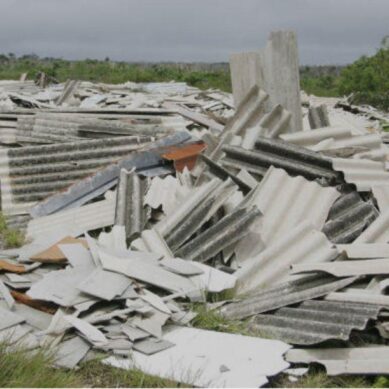

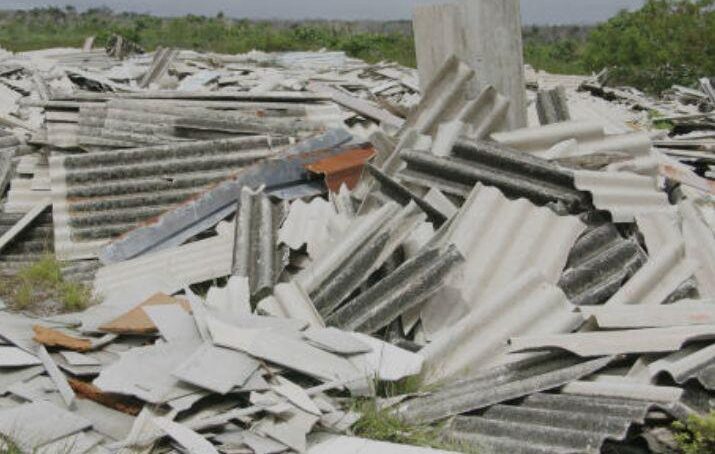
Activists and environmentalists in Homa Bay County have expressed objections to a proposal by a company to dispose asbestos in Kaksgunga area in Suba North Sub-County.
Activists, Evans Oloo and Eugene Obisa said the proposal by Lakers Consultancy Ltd to dispose asbestos in the area near the beaches of Lake Victoria is dangerous to the environment.
Asbestos is a known carcinogenic substance that causes various type of cancer.
The company’s proposal follows a government ultimatum requiring property owners to safely remove and dispose of all asbestos materials from public and private facilities. Property owners of old buildings with asbestos are struggling to find suitable places to dispose of the material.
A public participation exercise was recently convened by Lakers Consultancy Ltd in Mbita seeking public views on their proposal to dump the materials.
The activists, local residents and environmental groups objected to the idea, forcing the firm to start looking for an alternative location where they can dump the material. The concerned groups expressed concerns that dumping asbestos next to the lake will pose a serious threat to the local marine environment.
This highlights the struggle to dispose of asbestos more than 20 years after the government banned the carcinogenic building material in 2006. Mr Oloo termed the proposal environmentally dangerous, socially irresponsible, medically hazardous and constitutionally unacceptable.
He said establishing an asbestos disposal site near Lake Victoria threatens the health, livelihood, environment and future of millions of residents who depend on the lake ecosystem for fishing, domestic use, agriculture, tourism and economic survival.
“The proposed project exposes the people of Suba North and neighbouring regions to possible contamination through floods, water runoff, airborne asbestos fibres and soil seepage. Any leakages would have devastating long-term effects on aquatic life, public health and biodiversity within the Lake Victoria Basin,” the activists wrote in an objection letter.
Oloo said the disposal, if allowed, will violate several provisions of the Constitution on right to a clean and healthy environment, right to the highest attainable standard of health and protection of ecologically sensitive areas.
He also cited violation of enforcement of environmental rights, national values and principles including sustainable development and public participation as well as protection of the right to life.
“The dumping proposal also contravenes the Environmental Management and Co-ordination Act (EMCA), Cap 387 including entitlement to a clean and healthy environment, requirement for Environmental Impact Assessment, public participation and consideration of objections, regulation of hazardous substances and dangerous waste,” the activists wrote.
The activists said asbestos is recognized as a hazardous carcinogenic substance associated with diseases like lung cancer adding that the World Health Organization and International Labour Organization have consistently warned against unsafe asbestos handling and disposal. They also called for protection of Lake Victoria and surrounding communities from hazardous environmental exposure.
Oloo said the government should ensure that all environmental laws, constitutional safeguards and public health standards are strictly complied with.
He also called on the state to recommend alternative environmentally safe locations away from water bodies, fishing zones, residential settlements and ecologically sensitive ecosystems for disposing of asbestos.
Environmentalist Willis Omullo also opposed the idea of dumping the hazardous material near the lake.
In Homa Bay, asbestos is on some buildings at Tom Mboya University, Asumbi Teachers Training College, the county teaching and referral hospital, the nurses’ quarters, Homa Bay High School and some residential houses owned by county and national governments.
Environmentalists have proposed chemical destruction of asbestos and recycling harmless by-products into new construction materials, effectively eliminating the need for toxic underground dumping.
“Instead of dumping them in a wetland or any other ecosystem, they can be turned into something useful,” Omullo said.
The environmentalist, who leads Aluora Makare a group, said current disposal methods threaten different bio-diversities, especially marine life. He said leaving asbestos at the lake shore will compromise water quality.
“The same materials will end up on our tables and into the body when fish feed on them before the fish is caught and cooked. We are against any attempt to dump asbestos anywhere in the county,” the environmentalist said.
- A Tell Media / KNA report / By Davis Langat


About author