


State has called for increased investment in the menstrual health sector, saying Kenya has the potential to transform it into a vibrant industry that creates jobs, promotes innovation and accelerates economic growth.
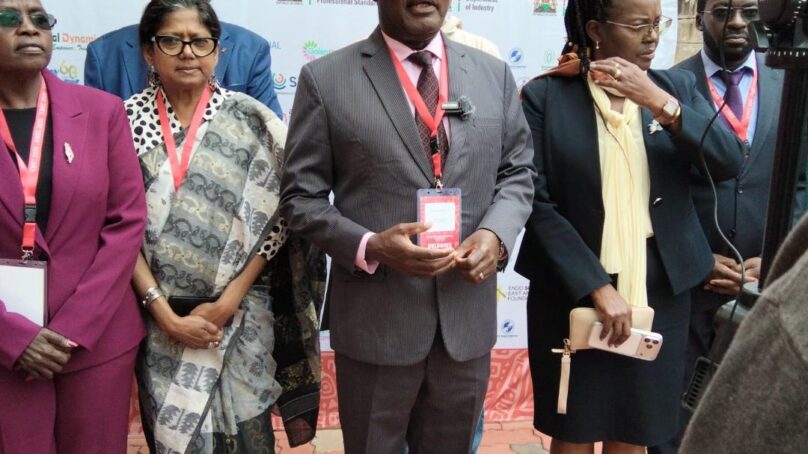
Department of Industry Principal Secretary Juma Mukhwana, while officially opening a two-day Kenya Menstrual Economy Conference in Nairobi, said the country must move beyond viewing menstruation solely as a health issue and recognise it as an economic opportunity that cuts across agriculture, textiles, manufacturing, research, innovation, logistics, waste management and financial services.
“We must move beyond seeing menstruation as simply a biological function and prioritise initiatives that build a vibrant menstrual economy that creates jobs, expands manufacturing, supports innovation and ensures that every woman has access to affordable, safe and quality menstrual health products,” he said.
The principal secretary said the government remains committed to creating an enabling environment for local manufacturers through industrial policies, enterprise development programmes and protection of innovations to strengthen the production of menstrual health products.
He urged innovators to safeguard their intellectual property before commercialising their products and challenged entrepreneurs to focus on scaling up production rather than merely showcasing products at exhibitions.
“The measure of success is not the number of exhibitions you attend but the volume of products you sell,” he said.
Dr Mukhwana said the government is implementing the Buy Kenya Build Kenya policy to encourage public institutions to procure locally manufactured goods, noting that retaining public spending within the country will strengthen industries and create employment opportunities.
“We do not want to collect money from Kenyans only to spend it importing products that can be manufactured locally. We want that money to build industries, create jobs and grow our economy,” he said.
He added that the government has established County Aggregation and Industrial Parks across the country to provide affordable production spaces and has introduced tax incentives including duty-free importation of manufacturing machinery to support industrial expansion.
The principal secretary also called for increased investment in environmentally friendly menstrual products and improved sanitation facilities in schools, saying adequate toilets, clean water and proper waste management are essential components of menstrual hygiene management.
State Department of Gender and Affirmative Action Principal Secretary Anne Wang’ombe said menstrual health is a matter of dignity, gender equality and human rights and called on manufacturers to make sanitary towels more affordable to reduce period poverty.
“Every month, millions of women and girls require safe, affordable and quality menstrual products. Let us make sanitary towels affordable and of good quality so that we can significantly reduce period poverty,” she said.
Wang’ombe said the government has continued to invest in the National Government Sanitary Towels Programme, spending about Ksh940 million annually to support vulnerable school-going girls.
However, she noted that demand still exceeds available resources, calling on government agencies, development partners, civil society and the private sector to work together.
“These girls are ours and these women are ours. If we join hands, we can ensure every girl and every woman enjoys the dignity they deserve,” she said.
The gender principal secretary said Kenya has enormous potential to become a regional manufacturing hub for affordable and environmentally sustainable menstrual products, adding that local production would lower costs, strengthen supply chains and create employment opportunities.
She further emphasised the need to improve menstrual hygiene infrastructure in schools by providing adequate toilets, running water and safe changing facilities, noting that access to sanitary towels alone cannot fully address menstrual health challenges.
Embu Woman Representative Pamela Njeru said period poverty remains a major barrier to education, health and economic empowerment for women and girls, urging stakeholders to shift from charity-based interventions to sustainable investments in the menstrual economy.
“Menstrual health is not merely a welfare issue. It is a health and dignity issue, a mental wellness imperative and a key component of economic productivity,” she said.
Drawing from her personal experience of growing up without access to sanitary towels, Njeru said many girls continue to miss school and face exploitation because they cannot afford menstrual products.
She highlighted programmes implemented by her office, including the distribution of sanitary towels to 118 out of 167-day secondary schools in Embu County over the past three years, mentorship initiatives through the Nasuwa Camp programme and the SOMO programme, which supports teenage mothers to return to school.
Njeru appealed to development partners and private sector players to help reach the remaining 51 schools that have not yet benefited from the sanitary towel programme.
“We must move from ideas to impact and create a system where no woman’s period limits her economic potential or compromises her dignity,” she said.
The leaders agreed that strengthening local manufacturing, investing in innovation, improving sanitation infrastructure and building strong partnerships will be critical in eliminating period poverty, while positioning Kenya as a regional leader in the menstrual health industry.
The conference brought together government officials, policymakers, manufacturers, innovators, development partners and investors to explore strategies for expanding the menstrual economy through local manufacturing, policy reforms and strategic partnerships that promote women’s health, industrialisation and inclusive economic growth.
- A Tell Media / KNA report / By Anita Kariuki and Lillian Gichohi


About author