


Kenya is staking its tourism future on a proposition on a few countries have managed to pull off: growing visitor numbers and revenues while protecting the wildlife and ecosystems that attract tourists.
Fresh from a 2024 record-breaking year that saw the country welcome 2.4 million international visitors and earn Ksh452.2 billion ($3.5 billion) from tourism, the country is now pursuing an ambitious target of 5.5 million arrivals and Ksh1.1 trillion ($8.5 billion) in tourism earnings by 2027.
Current exchange: $1 = Ksh129.5
But as wildlife habitats shrink, climate pressures intensify and communities living alongside conservation areas demand a greater share of the benefits, the question confronting policymakers is whether the country’s celebrated conservation model can withstand the pressures of rapid growth.
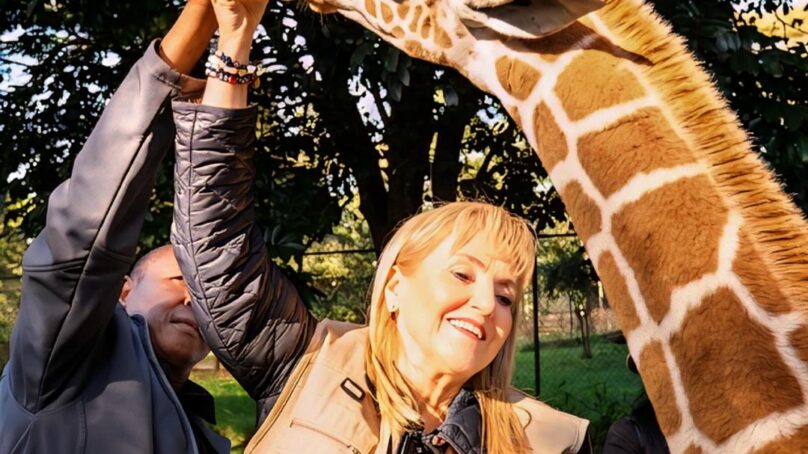
This was the setting when senior leaders of the World Travel and Tourism Council (WTTC) toured some of Kenya’s most symbolic conservation sites on Tuesday.
Led by WTTC President and Chief Executive Officer Gloria Guevaraand Deputy President Najib Balala the delegation visited Nairobi National Park, the Ivory Burning Site and the Sheldrick Wildlife Trust alongside officials from the Ministry of Tourism and Wildlife.
The visit underscored Kenya’s standing as one of the world’s most recognisable safari destinations, but it also highlighted the delicate balancing act facing a country seeking to turn conservation into an economic strategy.
“Kenya’s conservation history is remarkable. The country has demonstrated to the world that conservation and tourism can thrive together,” said Guevara. “Kenya remains a global leader in conservation, and its achievements continue to inspire the international community,” Guevara added.
Mr Balala, Kenya’s former tourism cabinet secretary and now WTTC deputy president, praised the work of the Kenya Wildlife Service (KWS).
“I commend the government of Kenya and the Kenya Wildlife Service for their unwavering commitment to protecting our wildlife heritage. KWS carries a critical mandate on behalf of the nation and its work continues to safeguard wildlife for future generations,” he said.
For Kenya, however, the real test lies beyond the symbolism. The country’s tourism rebound has been among the strongest in the region. International arrivals in 2024 rose by 15 per cent to a record 2.4 million visitors, while earnings climbed by nearly 20 per cent to Ksh452.2 billion.
The performance built on gains made in 2023 when arrivals increased by 31.5 per cent to 1,951,185 visitors from 1,483,752 in 2022. Tourism earnings similarly rose by 31.5 per cent, growing from h268.09 billion to Sh352.54 billion.
Tourism remains one of Kenya’s biggest foreign exchange earner and employer. Under the Kenya National Tourism Strategy, the government hopes to generate Ksh1.1 trillion from tourism by 2027.
Yet the country’s tourism success is inseparable from its natural heritage. Kenya’s wildlife populations, open landscapes and coastal ecosystems form the backbone of its global tourism appeal. Any decline in those assets would threaten not only biodiversity but also one of the country’s most important economic sectors.
Cognizant of that reality, Kenya has built an increasingly ambitious conservation framework. The National Wildlife Strategy, aligned with Vision 2030, seeks to coordinate government agencies, county administrations and private landowners through data-driven planning and decision-making.
Meanwhile, the KWS Strategic Plan, a five-year roadmap running through 2028 and valued at Ksh98.3 billion, prioritises resource mobilisation, technological innovation in wildlife protection and stronger anti-poaching operations.
Kenya has also aligned itself with the global “30 by 30” target, committing to conserve and effectively manage 30 per cent of its land and marine areas for biodiversity.
The country’s National Biodiversity Strategy and Action Plan aims to ensure that businesses, communities and civil society integrate biodiversity considerations into their operations and planning by 2030.
And there are signs the approach is delivering results as Kenya’s rhino conservation programme has emerged as one of Africa’s notable success stories, with the national rhino population rising to approximately 2,102 animals. The figure includes 1,059 black rhinos, 1,041 southern white rhinos and the world’s last two remaining northern white rhinos.
Moreover, more than 55 community conservancies have been established across the country, providing vital buffer zones around protected areas while generating livelihoods and strengthening local stewardship of natural resources. Besides, government-led restoration programmes have also contributed to a steady increase in national tree and forest cover.
But the model is not without strain as communities living near wildlife habitats continue to grapple with crop destruction, livestock losses and occasional attacks linked to human-wildlife conflict. Conservationists warn that unless local people receive tangible benefits from protecting wildlife, public support for conservation could weaken.
On the other hand, climate change presents another threat, with prolonged droughts and shifting weather patterns placing additional pressure on fragile ecosystems. At the same time, the country’s most popular destinations face the risk of overdependence.
To ease that pressure, Kenya is seeking to diversify its tourism offering beyond traditional safaris.
The government is promoting medical tourism, agri-tourism and digital nomad experiences, while expanding the Meetings, Incentives, Conferences and Exhibitions (MICE) segment, which officials expect could account for between 30 and 35 per cent of future arrivals.
County governments are also being encouraged to develop cultural, historical and inland attractions that have long remained outside the mainstream tourism circuit. Sustainability has become a central pillar of that strategy, with nearly 20 per cent of the sector’s energy needs already being met through low-carbon alternatives.
For decades, Kenya marketed itself to the world through images of lions on the savannah, elephants roaming beneath vast skies and spectacular migrations across protected landscapes. Today, those images carry a deeper significance.
The country is attempting to prove that conservation is not simply an environmental responsibility but an economic investment capable of creating jobs, attracting capital and securing long-term prosperity.
Whether Kenya can achieve its trillion-shilling tourism ambitions without compromising the natural assets on which they depend may determine not only the future of its tourism industry, but also whether the country can offer the world a credible model of sustainable development.
- A Tell Media / KNA report / By Arnold Linga Masila


About author