


The Kenya National Commission on Human Rights (KNCHR) presented a framework guiding compensation and reparations for victims of human rights violations to President William Ruto, marking a significant step towards justice, accountability and national healing.
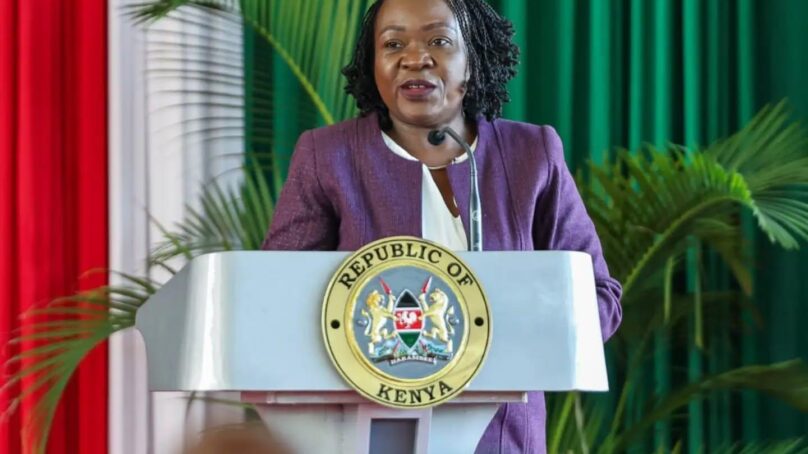
Presenting the report at State House, Nairobi, KNCHR Chair Claris Ogangah said the framework was developed in accordance with Presidential Proclamation No.1 of 2026 and seeks to establish a structured mechanism for compensating and supporting victims of human rights violations, including those arising from demonstrations and public protests.
“Today marks a historic and significant milestone in Kenya’s continuing journey towards justice, accountability and national healing. We gather not merely to present a report but to reaffirm the state’s commitment to recognising persons who have suffered violations and to move towards providing meaningful remedies for the harm they have suffered,” Ogangah said.
She noted that the initiative represents the first major state-led process aimed at formally acknowledging victims of human rights violations and providing a framework for reparations, reconciliation and restoration of dignity.
According to the report, the commission documented 1,815 claims and received an additional 1,022 cases from the Independent Policing Oversight Authority (IPOA) and other government agencies. Out of these, 1,101 victims have so far been verified and have provided consent for inclusion in the reparations programme.
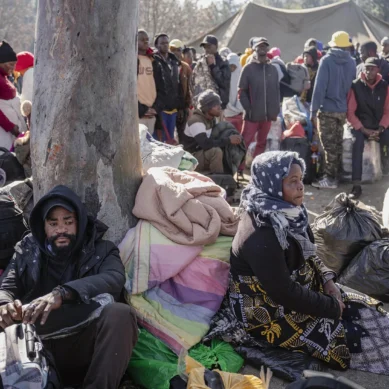
The documented cases cover violations arising from the 2017 and 2022 election-related protests, demonstrations witnessed in 2023 and 2024, the Gen Z and Finance Bill protests, as well as the 2025 commemoration demonstrations. The violations include deaths, injuries, unlawful arrests, sexual violence and destruction of property.
“The framework seeks to establish a victim-centred, transparent and accountable system capable of delivering accessible and effective remedies in accordance with the Constitution and international human rights standards,” she said.
Ogangah observed that compensation is only one component of reparations and that the framework also recommends rehabilitation, restitution, satisfaction measures and guarantees of non-repetition.
She further proposed collective reparations for communities that have historically borne the effects of protests and related violations, including investments in community infrastructure, psychosocial support services, memorial sites and community development initiatives.
The KNCHR chai underlined the economic impact of violent protests, citing ministry of interior estimates indicating that demonstrations between June and July 2025 resulted in losses amounting to approximately Kha3 billion.
“There is a significant cost on human lives including deaths and injuries, but violent protests also have serious economic consequences that affect investment, employment, public finances and overall economic stability,” she said.
She called for a national conversation on balancing constitutional rights with civic responsibilities, in addition to operationalisation of Article 37 of the Constitution through legislation and technology-supported systems to facilitate peaceful demonstrations while safeguarding public order.
Chief Justice Martha Koome welcomed the report and described it as an important milestone in advancing constitutionalism, accountability and the rule of law.
Speaking on behalf of the Judiciary and the National Council on the Administration of Justice (NCAJ), Koome noted that the framework recognises the constitutional obligation to ensure victims of human rights violations receive effective remedies and meaningful redress.
“The Bill of Rights affirms that every person is entitled to the full enjoyment of fundamental rights and freedoms. It also places a corresponding obligation on all state organs and public institutions to respect, protect and fulfil those rights,” she said.
Koome noted that the right to a remedy is itself a fundamental constitutional guarantee and that reparations are essential in ensuring justice for victims.
“The right to reparations is the promise of our Constitution. It is a demand of justice and a requirement of the rule of law,” she stated.
The Chief Justice said the judiciary has been working through the National Council on the Administration of Justice to explore ways of operationalising Article 37 through legislation, rules of procedure and standard operating procedures to ensure demonstrations remain peaceful while protecting the rights of all citizens.
She observed that many of Kenya’s constitutional gains were achieved through civic action and public demonstrations, making it necessary to protect the right to assemble while ensuring public safety and respect for the rights of others.
“As an institution constitutionally entrusted with the interpretation and protection of the Constitution, the Judiciary remains steadfast in ensuring that constitutional guarantees are not merely aspirational promises but lived realities for all Kenyans,” Koome said.
She commended KNCHR for developing a practical framework that would guide the country towards healing historical injustices, strengthening public trust in institutions and promoting national reconciliation.
The report is expected to guide future government policy, legislation and institutional reforms aimed at compensating victims, rebuilding confidence in public institutions and fostering lasting national unity.
- A Tell Media / KNA report / By Sallo Gobana and Lilian Gichohi


About author