

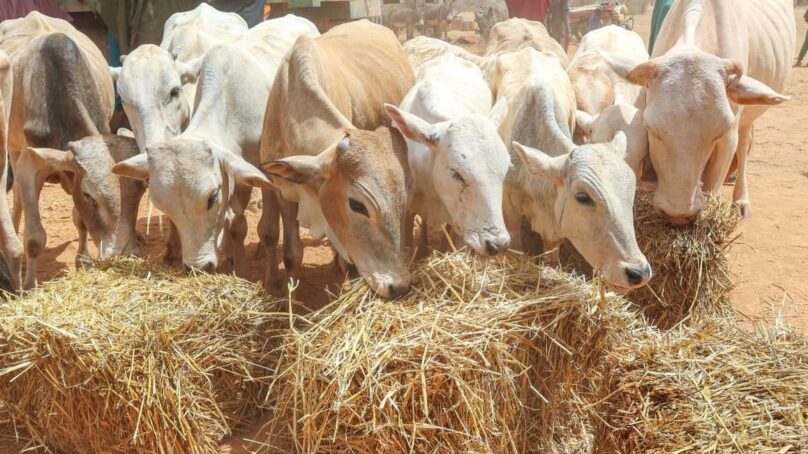
Kenya will observe the global observance of Desertification and Drought Day on June 17, 2026 in Vipingo Central Primary School, Kilifi County. The occasion expected to bring renewed focus on sustainable rangeland management, climate resilience and livestock value chain development in arid and semi-arid lands (ASALs).
Consequently, policymakers, development partners, researchers and community representatives have convened a meeting in Nairobi co-hosted by GIZ and the ministry of agriculture and livestock development through the department of livestock development to explore solutions to land degradation and recurrent droughts in pastoral regions.
During the stakeholder roundtable discussions ahead of the 2026 global event, participants called for increased investment in climate-resilient livestock systems, restoration of degraded ecosystems and improved drought preparedness to safeguard livelihoods in ASAL regions.
Director of Veterinary Services Allan Azegele reaffirmed Kenya’s support for the International Year of Rangelands and Pastoralists (IYRP) and the government’s commitment to restoring 13.5 million hectares of degraded rangelands.
He noted that ASALs cover about 70-80 per cent of Kenya’s land area and remain central to livestock production, ecosystem services, and climate resilience.
Senior Environment Research Officer at the National Environment Management Authority (NEMA) Wilson Busienei stressed that land degradation is both an environmental and socio-economic challenge.
He highlighted Kenya’s commitments under the Nationally Determined Contributions (NDCs), the National Adaptation Plan (2023-2032) and Land Degradation Neutrality targets, which prioritise ecosystem restoration, climate-smart agriculture and drought resilience.
From a continental perspective Huyam Elamin Salih of the African Union Interafrican Bureau for Animal Resources (AU-IBAR) emphasised livestock transformation as central to Africa’s development agenda under the Livestock Development Strategy for Africa (LiDeSA).
Dr Elamin called for investments in feed systems, animal health, indigenous genetics, climate finance and regional livestock trade.
Dr Guyo Malicha Roba of IGAD’s Centre for Pastoral Areas and Livestock Development (ICPALD) urged stronger investment in mobility corridors, water infrastructure, natural resource management and conflict mitigation systems to enhance pastoral resilience and regional integration.
GIZ Kenya’s programme director for agriculture and rural development Petra Jacobi, underscored the importance of secure land tenure, strong policy frameworks, and community empowerment in achieving sustainable rangeland management.
Drawing from experiences in Turkana and West Pokot, she highlighted rangeland committees, traditional governance systems, and pasture restoration as key drivers of impact.
Equity Group’s Director of Strategy, Brent Malahay said the institution plans to increase agriculture and food sector financing from 10.5 per cent to 30 per cent by 2030.
He emphasised a systems-based approach linking producers, processors, tanneries, exporters and markets, alongside investments in financial literacy, regenerative grazing and value addition.
At the research level Siboniso Moyo of the International Livestock Research Institute (ILRI) noted that rangelands cover about 50 percent of the world’s land surface, while pastoral systems support over 250 million people in Africa and contribute more than 75 per cent of the continent’s milk and 50 per cent of its meat production.
Participants also highlighted the growing demand for animal protein and the need for improved productivity, feed systems, and value addition. Women’s empowerment and secure land tenure were identified as critical gaps, given their central role in pastoral production systems despite limited access to resources and decision-making.
The World Day to Combat Desertification and Drought is observed annually on June 17 to raise global awareness on land degradation and promote efforts to restore healthy ecosystems.
- A Tell Media / KNA report / By Wangari Ndirangu


About author