



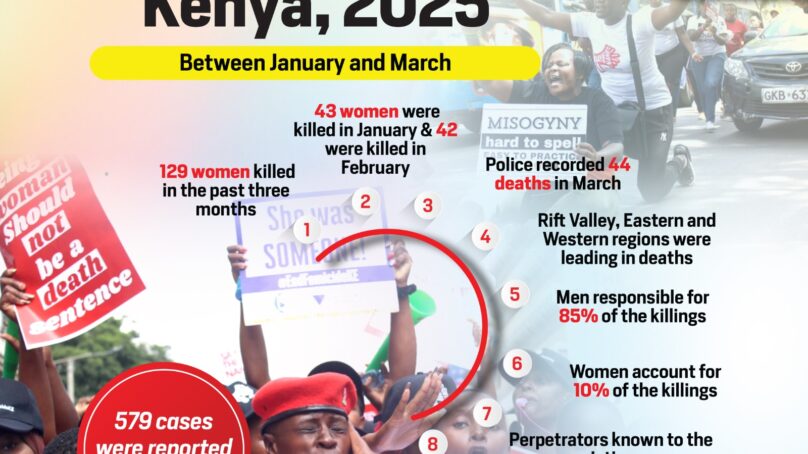
Fear has quietly gripped women in Nyahururu following phenomenal rise in femicide incidence in Kenya over the past one year, which has sparked widespread safety fears and uncertainty.
According to UNESCO, police data show that at least one woman is killed every day in Kenya in romantic relationship.
For many women in the Nyahururu town, in central Kenya, routine activities such as walking home in the evening, boarding public transport or meeting unfamiliar people comes with heightened caution and fear. THis is because of some of the femicide incidents are linked to aliens – refugees, businessmen or expatriates.
Conversations around safety is now common among friends, families and social places as reports of the high number of women being murdered in relationships take centre-stage and violent circumstances dominate headlines nationwide.
“I no longer feel as safe and free as before,” a Laikipia University student who lives in Nyahururu town says. “You constantly have to think about where you are going, who you are with and what time you will get home.”
The growing concern follows a rise in femicide and gender-based violence in Kenya, with rights organisations warning that women are increasingly becoming victims of deadly violence – often at the hands of people known to them.
According to recent Counting the Cost: A Decade of Femicide in Kenya – 2025/2026 data collected and collated by africadatahub.org in partnership with africauncensored.online and odipodev.com over 1,000 women were killed in Kenya between 2016 and 2025.
The report shows 102 deaths were recorded last year alone and most of the femicide cases were linked to romantic relationships or domestic violence. Rights groups say most victims are young women aged between 18 and 35.
In Nyahururu, women say the stories have changed how they move and interact in public spaces. Some women now avoid walking alone at night, while others prefer sharing live locations with friends or using trusted transport operators. Businesswoman Jane Wanjiku says the fear has affected routines.
“Even when closing my shop in the evening, I have to ensure someone knows where I am. Women are scared because the cases are rising,” she added.
Human rights activists argue that beyond fear, the trend reflects deeper societal problems including domestic violence, weak law enforcement, economic stress and normalisation of abuse against women.
Women’s rights groups continue calling for stronger protection systems, quicker investigations, and tougher action against perpetrators, warning that unless urgent measures are taken, more women will continue living in fear.
As the country struggles to address the crisis, many women in Nyahururu say caution has now become part of survival.
- A Tell Media / KNA report / By Mango Masiaga and Kimani Tirus


About author