


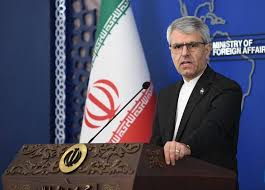
Iran’s Foreign Ministry spokesman said on Monday that the US response to Tehran’s 14-point peace proposal is difficult to assess, citing Washington’s history of “making unrealistic demands.”
Spokesman Esmaeil Baghaei, speaking at his weekly news conference in Tehran, confirmed Iran had received the US reply through Pakistan, which has been serving as a mediator, but declined to share specifics.
“The US message was received through Pakistan,” Baghaei said. “Given the US practice of making excessive and unreasonable demands, it is not easy to review this response.”
Baghaei said Iran is dealing with a party that “constantly changes its views,” complicating any diplomatic progress.
He stressed that Iran will only negotiate on ending the war and will not discuss other issues, including its nuclear program.
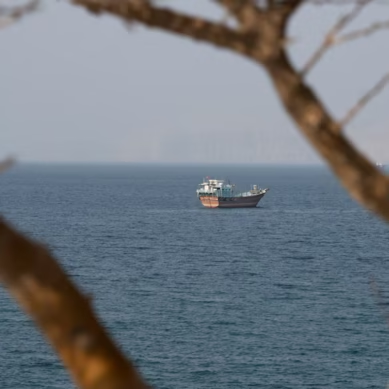
Responding to President Donald Trump’s description of allowing ships through the Strait of Hormuz as a “humanitarian gesture,” Baghaei dismissed the characterisation, saying the world does not accept “US claims of humanitarianism.”
He said the US cannot escape a “self-created quagmire” in the region by repeating past mistakes.
Baghaei also warned that threatening language would not work against Iran, and said the recent tensions in the strait were a direct result of US and Israeli military strikes on Iran.
He said the waterway had been safe for international shipping before the attacks began. He called on the international community to hold the United States and Israel accountable for “deliberately creating instability” in regional waters.
On Febraury 28, Israel and the United States launched joint strikes on Tehran and other Iranian cities, killing then-Supreme Leader Ali Khamenei, senior military commanders, and civilians.
Iran responded with waves of missile and drone attacks on Israeli and US targets across the region and restricted passage through the Strait of Hormuz for vessels linked to Israel and the United States.
A ceasefire took effect on April 8, followed by talks between Iranian and US delegations in Islamabad that ended without a deal. On April 30, Iran delivered a 14-point proposal to the US side via Pakistan.
- A Tell Media / Xinhua report


About author