



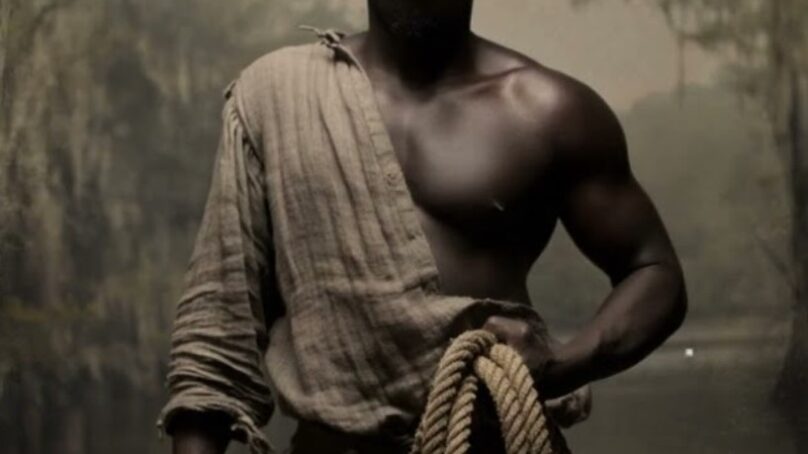
Plantation owners threw Black male slave into murky swamp but it refused to bury him, he survived and came back for all 43 of them
Editors choice
The journey goes back in time to Addis 1889 to a swamp where three men signed a death sentence they would come to regret. In the late summer of 1859 in a forgotten stretch of the American South where the air hung thick as syrup and the cypress trees rose like silent witnesses.
There existed a plantation town that did not appear on most maps. It was the kind of place built on cotton, fear and unspoken rules. The town had one main road of packed red clay, a church with white paint peeling under the heat, a sheriff’s office that doubled as a courtroom and a long wooden dock that stretched into a black water swamp locals simply called the mouth.
The swamp swallowed sound, it swallowed light, and as the town’s folk believed, it swallowed men. The town was controlled not by law, but by agreement and understanding between landowners, businessmen and the sheriff. That order must be preserved at any cost. That order depended on obedience, and obedience depended on fear.
Among the labourers who worked the surrounding fields was a man who did not fit easily into fear. His name had once carried respect. He had served in militias along the frontier, fought in skirmishes most of the town had only heard about in tavern rumours, and returned not with riches, but with discipline. He walked straight back. He spoke rarely.
He observed everything. Strength unsettles insecure men. And in 1859, strength in the wrong body was seen as defiance. Witness accounts collected years later would describe him as calm in a way that made you uneasy. He did not bow his head quickly. He did not laugh at cruel jokes. He did not drink himself numb at the saloon on Sundays.
Instead, he saved his coin, kept his boots polished, and read old newspapers discarded by plantation owners. Some claimed he was teaching others to read. Others said he was asking questions about wages, about fairness, about why certain punishments were delivered publicly, while others were handled quietly behind closed doors.
The plantation system depended on silence. Questions threatened that silence. By early August, tension had settled like a coming storm. Tools went missing from a storage shed. A ledger book disappeared from accounting desk. A mule was found wandering loose with its reigns cut. None of these acts were proven to be sabotage, but suspicion does not require proof when power fields challenged.
The accusation came swiftly and conveniently. A warehouse near the dock caught fire one humid night. Flames licked the sky, illuminating the swamp in flickering orange. By morning, rumours had already hardened into certainty. He had been seen nearby. He had argued with the overseer days before. He had motive, they said.
There was no trial in the formal sense. Instead, a meeting was called inside the sheriff s office. Forty-three men attended, plantation owners, foreman, the blacksmith, the duck supervisor. The preacher did not attend but he did not protest either. A single sheet of paper was passed around the room. It declared that for the safety and preservation of the town, decisive action must be taken against a dangerous agitator. Each man signed his name.
Some signed boldly, some hesitated before pressing ink to parchment, but all signed. The sheriff would later claim it was necessary that the town could not afford rebellion that an example had to be made. Near midnight, they came for him. He did not run. Neighbours reported hearing boots striking wood, then dirt, then wood again as he was dragged from his small cabin. Torches lit the road.
The sick adders went quiet. One witness, a boy no older than 12 at the time, would later recount how he saw the man face in the firelight bloody but unafraid. They beat him not out of rage alone, but out of ritual. Each man who had signed the paper seemed compelled to participate, as if striking him would erase doubt from their conscience.
The blacksmith tightened iron around his wrists. The dark supervisor wrapped rope around his neck. The sheriff read out the accusation once more, his voice steady rehearsed. You set flame to this town, the sheriff declared. And for that you will be removed from it. Removed. Not executed. Removed.
The procession toward the swamp moved slowly. Cypress knees jutted from the mud like broken bones. Spanish must swayed overhead. The torches hissed in the damp air. The swamp, vast and black, waited without ripple. Local folklore held that the swamp was bottomless in places that bodies thrown into it were never found. Alligators fed deep within its channels.
Cottonmouth snakes nested in the reeds. The water itself carried disease. To throw a man into the mouth was to erase him without grave, without marker. They tied additional weight to his ankle, scrap iron from the forge. Someone suggested shooting him first.
The sheriff refused. “Let the swamp take him,” he said. “Let nature pass judgment.”
“There is a particular silence that falls before irreversible acts. Even the most hardened men feel it. It presses against the ribs, demanding reconsideration, but pride is louder than conscience in groups and so they pushed him forward. The dock creaked under shifting boots. The rope around his neck tightened. He stumbled once, but regained footing despite the chains.”
Witnesses later claimed he looked back at them, not pleading, not cursing, but memorising. One by one, all 43, the sheriff gave a nod. They shoved him into the water. The splash echoed farther than expected. Ripples spread across the black surface.
For a moment, nothing happened. Then bubbles rose large, frantic, breaking against torch-like reflections. Some men turned away immediately. Others leaned forward to ensure the deed was complete. The iron weights dragged him downward. The rope tangled briefly against the dock-post before slipping free. The bubbles grew smaller, then stopped.
The swamp closed over him as if he had never existed. They waited longer than necessary. 5 minutes. 10. The sheriff finally spoke. It’s done. The torches were extinguished one by one. Boots retreated across the dock, then onto the path, then toward town. By the time the first hint of dawn touched the horizon, the swamp had returned to its habitual stillness.
In the days that followed, the town resumed its rhythm. Cotton was picked. Ledgers were balanced. Church bells rang. Officially, he had fled. That was the story agreed upon. The signed document was locked away in the sheriff’s desk. Yet subtle changes began to surface. Dogs refused to approach the duck. The blacksmith complained of restless sleep.
A farmhand claimed he heard coughing near the water at night. These reports were dismissed as nerves, as superstition. The swamp, however, had its own currents in its own timeline. Naturalists of the era described southern swamps as ecosystems of decay and rebirth. Beneath the surface, cypress roots inter-rove into networks strong enough to catch debris, even bodies. Mud did not always swallow.
Sometimes it held. Beyond the usual fishing routes, there existed a narrow bank of higher ground known only to trappers and those who preferred not to be found. It was said that an elderly woman lived there alone, sustained by herbs, fish and a stubborn refusal to leave land that frightened others.
At some point before dawn, something surfaced among the roots. Not a corpse, a hand bound in iron. The documentary records cannot confirm the precise sequence of survival, whether the weight snagged on submerged timber, whether the rope frayed against barnacles, whether sheer force of will overpowered drowning. What is certain is that he did not die that night. The swamp did not claim him.
Instead, it delivered him elsewhere. But in the town, no one knew this. Forty-three men continued believing they had erased a problem. They did not yet understand that they had created one because what they had thrown into the swamp was not merely a man. It was memory. It was witness. It was calculation. And as the days turned to weeks, and the humidity thickened toward autumn, the first cracks in their certainty began to form.
A set of footprints was reported near the dock bear. Deep deliberate. The sheriff dismissed it as a fisherman. Srrax. The blacksmith found a single chain link missing from his inventory and swore he had counted carefully. The swamp remained silent, but somewhere within its shadows, breath returned to lungs that had tasted mud and darkness, eyes reopened beneath moss draped branches, and in that half-light between death and survival, something shifted.
He had seen their faces, all 43. And although the town believed the water had closed the story, the swamp was only beginning to write the next chapter. What happened in the days after his body vanished beneath black water would transform fear into something far more precise because survival in the swamp is not random.
It requires patience, adaptation, silence and he possessed all three. In the distance beyond the town, as Edge, an old woman tending herbs, would soon discover that the swamp had delivered her a man who was not meant to die. And when he opened his eyes fully, when breath steadied and memory sharpened, the count would begin – 43 names one by one.
The swamp had refused to bury him, and that refusal would change everything. By the time the town had convinced itself that the swamp had done its work, the man they had thrown into the black water lay miles away beneath a canopy of cypress and moss, suspended somewhere between fever and oblivion.
The mouth was not a single body of water, but a labyrinth channels feeding into hidden clearings, submerged logs forming natural barriers, currents slow on the surface, yet decisive beneath. Naturalists would later record that debris cast into certain sections of southern swamps, often travelled unpredictably, snagged by root systems that functioned like woven nets.
It was into one of these woven fortresses that his body had drifted. The iron weights tied to his ankles had not pulled him into endless depth as the 43 intended. Instead, they caught between thick cypress knees rising from the mud like the fingers of a buried giant. The rope around his neck twisted violently as he plunged, but in the chaos of impact, it snagged against submerged wood.
The knot, hurried and overconfident, slipped just enough under pressure. Water filled his lungs. Darkness pressed in. But drowning is not always instant. The body fights with a ferocity the mind cannot predict. Instinct made him thrash. The thrashing tightened the chain. Three miles from the dock on slightly elevated ground ringed by palmetto and wild cane stood a structure most townsfolk pretended did not exist.
It was a cabin of rough timber and tin patchwork, smoke stained and angled slightly from years of settling. The woman who lived there had no official record in town ledgers. Some called her a healer, others called her a witch. Most simply avoided speaking of her at all. She survived on fish traps, herbs, and trade, conducted rarely and cautiously. She knew the swamp sods.
She read water the way others read scripture. When something frozen entered its patterns, when birds startled without visible cause, when a floating branch carried the scent of blood, she noticed. That morning, as mist [clears throat] clung low over the surface, she pushed a narrow skiff through a channel, checking her lines.
The pole in her hands moved silently against the mud. It was the unnatural angle of his arm that caught her eye first. Human limbs do not rest like driftwood. She maneuvered closer. The sight before her would have turned many back toward safer ground. A grown man chained, skin torn, throat bruised purple beneath rope burn.
His chest moved so faintly it was almost indistinguishable from the ripple of water. Iron clinked softly as the skiff touched him. She studied his face for a long moment. Swamps taught hard lessons about interference. The living could become the dead quickly for those who misjudged risk. But she also recognised deliberate violence when she saw it. The rope was not accident.
The chain was not misfortune. Without calling out, without dramatics, she hooked the chain with her pole and dragged him alongside the skiff. It took time. Dead weight is difficult. Half dead weight is worse because it shifts unexpectedly. Twice she nearly lost grip. Twice she steadied herself. By the time she reached the bank near her cabin, the sun had begun to burn through the mist. Sikas resumed the rhythm.
She hauled him onto mud with effort born from necessity, not strength. Inch by inch, she freed his ankles from iron, prying at bent links with tools kept for traps. Inside the cabin, she laid him on a narrow cot stuffed with dried grass. Fever set in quickly. Swamp water carries rot invisible to the eye. Infection crawls through bloodstream faster than fear.
For two days, he hovered at the edge. She cleaned wounds with boiled water and crushed herbs. She forced bitter tinctures between clenched teeth. At times, his body convulsed violently as though reliving the plunge into darkness. Words escaped him in fragments. No, please, only names. Over and over, names.
She did not recognise them, but she understood the pattern. Trauma repeats until resolved. On the third night, his eyes opened fully. Disorientation registered first, then pain, then memory. He tried to sit up. Failed. Tried again. This time she pressed a firm hand against his shoulder. You’re not meant to die, she said quietly, as if stating a fact about weather. Not yet.
His voice was cracked bark. How long? Long enough for them to think you were gone. Silence settled between them. Outside, an owl called once. He turned his head slowly, absorbing surroundings, rough timber walls, bundles of drying plants hanging from rafters, a small table scored by knife marks. Survival had replaced execution.
The next days were measured not by calendar, but by strength regained in increments. He learned which muscles still obeyed him. He learned which ribs were fractured. He learned that swallowing without coughing required patience. He spoke little of what had happened, but when he did, he did not speak emotionally. He described events with precision.
The dark, the order of men standing closest, who held the torch, who avoided eye contact. He recalled the scratch of pen against paper as signatures were placed.
How many? She asked once.
Forty-three, he replied. Not said with rage, said like inventory. Recovery in the swamp is unlike recovery in town. There is no bell to mark morning. No structured routine beyond survival.
She made him move before he felt ready. Short steps outside the cabin. Breathing exercises beneath cypress shade. Hands submerged in cool water to reduce swelling. Pain became teacher rather than enemy. Fever broke after a week. Scabs formed. Bruises yellowed. The rope burn around his neck darkened. A permanent collar marking attempted erasure. At night he began carving.
The woman had given him a scrap of wood to strengthen his grip. Instead, he used a small knife to etch letters into its surface. Slowly, carefully, a name, then another. She watched without interruption. When space filled, he found another plank. The act was not dramatic. There were no speeches. Each name was cut with equal pressure.
He did not rank them by cruelty or cowardice. The blacksmith, the dock supervisor, the sheriff, plantation owners whose hands had remained clean while others struck blows. Forty-three weeks passed. He regained enough strength to walk the perimeter of her clearing without assistance. He learned paths invisible to outsiders raised ridges of earth that prevented sinking into mud, channels where water flowed shallow enough to cross silently.
The swamp once intended as his grave became terrain to study.
“You plan to leave?” she said one evening, not as question.
“Yes, they will expect anger. I want to give them that.”
She studied him carefully. Vengeance driven by fury burns fast and loud. What she saw instead was something colder, controlled and calculated.
The town meanwhile had settled into fragile normalcy. Official statements maintained that he had fled after committing arson. The signed document remained locked in the sheriff’s desk drawer. Publicly the matter was closed. Privately unease lingered. Two fishermen reported finding a broken iron link snagged in reads.
The blacksmith dismissed it as scrap. A farm hand swore he saw movement across water one dusk, but blamed exhaustion when mocked. They did not know that miles away the man they had condemned was relearning how to move without sound. He practised stepping heel to toe on damp ground to minimize imprint.
He tested how far his voice carried across open water. He noted how lantern light reflected differently depending on angle. The woman did not ask what he intended beyond survival. But one night, as thunder rolled distantly, she placed something beside his carvings, a small pouch of dried herbs and a length of cord.
For strength, she said simply, he nodded. On the morning he chose to leave, fog blanketed the bayou thick enough to blur trees into silhouettes.
He stood outside the cabin longer than necessary, committing the path back to memory. Gratitude passed between them without spoken flourish. “You owe me nothing,” she said before he could attempt repayment.
Just dawned to waste the breath you were given. He carried the planks with the carved names wrapped in cloth secured against his chest. The journey toward town was indirect. He did not approach via the dock where they had thrown him. Instead, he circled through timber lines and dry patches known mostly to trappers.
A Tell Media reportWe travel back in time to Addis 1889 to a swamp where three men signed a death sentence they would come to regret. In the late summer of 1859 in a forgotten stretch of the American South where the air hung thick as syrup and the cypress trees rose like silent witnesses.
There existed a plantation town that did not appear on most maps. It was the kind of place built on cotton, fear and unspoken rules. The town had one main road of packed red clay, a church with white paint peeling under the heat, a sheriff’s office that doubled as a courtroom and a long wooden dock that stretched into a black water swamp locals simply called the mouth.
The swamp swallowed sound, it swallowed light, and as the town’s folk believed, it swallowed men. The town was controlled not by law, but by agreement and understanding between landowners, businessmen and the sheriff. That order must be preserved at any cost. That order depended on obedience, and obedience depended on fear.
Among the labourers who worked the surrounding fields was a man who did not fit easily into fear. His name had once carried respect. He had served in militias along the frontier, fought in skirmishes most of the town had only heard about in tavern rumours, and returned not with riches, but with discipline. He walked straight back. He spoke rarely.
He observed everything. Strength unsettles insecure men. And in 1859, strength in the wrong body was seen as defiance. Witness accounts collected years later would describe him as calm in a way that made you uneasy. He did not bow his head quickly. He did not laugh at cruel jokes. He did not drink himself numb at the saloon on Sundays.
Instead, he saved his coin, kept his boots polished, and read old newspapers discarded by plantation owners. Some claimed he was teaching others to read. Others said he was asking questions about wages, about fairness, about why certain punishments were delivered publicly, while others were handled quietly behind closed doors.
The plantation system depended on silence. Questions threatened that silence. By early August, tension had settled like a coming storm. Tools went missing from a storage shed. A ledger book disappeared from accounting desk. A mule was found wandering loose with its reigns cut. None of these acts were proven to be sabotage, but suspicion does not require proof when power fields challenged.
The accusation came swiftly and conveniently. A warehouse near the dock caught fire one humid night. Flames licked the sky, illuminating the swamp in flickering orange. By morning, rumours had already hardened into certainty. He had been seen nearby. He had argued with the overseer days before. He had motive, they said.
There was no trial in the formal sense. Instead, a meeting was called inside the sheriff s office. Forty-three men attended, plantation owners, foreman, the blacksmith, the duck supervisor. The preacher did not attend but he did not protest either. A single sheet of paper was passed around the room. It declared that for the safety and preservation of the town, decisive action must be taken against a dangerous agitator. Each man signed his name.
Some signed boldly, some hesitated before pressing ink to parchment, but all signed. The sheriff would later claim it was necessary that the town could not afford rebellion that an example had to be made. Near midnight, they came for him. He did not run. Neighbours reported hearing boots striking wood, then dirt, then wood again as he was dragged from his small cabin. Torches lit the road.
The sick adders went quiet. One witness, a boy no older than 12 at the time, would later recount how he saw the man face in the firelight bloody but unafraid. They beat him not out of rage alone, but out of ritual. Each man who had signed the paper seemed compelled to participate, as if striking him would erase doubt from their conscience.
The blacksmith tightened iron around his wrists. The dark supervisor wrapped rope around his neck. The sheriff read out the accusation once more, his voice steady rehearsed. You set flame to this town, the sheriff declared. And for that you will be removed from it. Removed. Not executed. Removed.
The procession toward the swamp moved slowly. Cypress knees jutted from the mud like broken bones. Spanish must swayed overhead. The torches hissed in the damp air. The swamp, vast and black, waited without ripple. Local folklore held that the swamp was bottomless in places that bodies thrown into it were never found. Alligators fed deep within its channels.
Cottonmouth snakes nested in the reeds. The water itself carried disease. To throw a man into the mouth was to erase him without grave, without marker. They tied additional weight to his ankle, scrap iron from the forge. Someone suggested shooting him first.
The sheriff refused. “Let the swamp take him,” he said. “Let nature pass judgment.”
“There is a particular silence that falls before irreversible acts. Even the most hardened men feel it. It presses against the ribs, demanding reconsideration, but pride is louder than conscience in groups and so they pushed him forward. The dock creaked under shifting boots. The rope around his neck tightened. He stumbled once, but regained footing despite the chains.”
Witnesses later claimed he looked back at them, not pleading, not cursing, but memorising. One by one, all 43, the sheriff gave a nod. They shoved him into the water. The splash echoed farther than expected. Ripples spread across the black surface.
For a moment, nothing happened. Then bubbles rose large, frantic, breaking against torch-like reflections. Some men turned away immediately. Others leaned forward to ensure the deed was complete. The iron weights dragged him downward. The rope tangled briefly against the dock-post before slipping free. The bubbles grew smaller, then stopped.
The swamp closed over him as if he had never existed. They waited longer than necessary. 5 minutes. 10. The sheriff finally spoke. It’s done. The torches were extinguished one by one. Boots retreated across the dock, then onto the path, then toward town. By the time the first hint of dawn touched the horizon, the swamp had returned to its habitual stillness.
In the days that followed, the town resumed its rhythm. Cotton was picked. Ledgers were balanced. Church bells rang. Officially, he had fled. That was the story agreed upon. The signed document was locked away in the sheriff’s desk. Yet subtle changes began to surface. Dogs refused to approach the duck. The blacksmith complained of restless sleep.
A farmhand claimed he heard coughing near the water at night. These reports were dismissed as nerves, as superstition. The swamp, however, had its own currents in its own timeline. Naturalists of the era described southern swamps as ecosystems of decay and rebirth. Beneath the surface, cypress roots inter-rove into networks strong enough to catch debris, even bodies. Mud did not always swallow.
Sometimes it held. Beyond the usual fishing routes, there existed a narrow bank of higher ground known only to trappers and those who preferred not to be found. It was said that an elderly woman lived there alone, sustained by herbs, fish and a stubborn refusal to leave land that frightened others.
At some point before dawn, something surfaced among the roots. Not a corpse, a hand bound in iron. The documentary records cannot confirm the precise sequence of survival, whether the weight snagged on submerged timber, whether the rope frayed against barnacles, whether sheer force of will overpowered drowning. What is certain is that he did not die that night. The swamp did not claim him.
Instead, it delivered him elsewhere. But in the town, no one knew this. Forty-three men continued believing they had erased a problem. They did not yet understand that they had created one because what they had thrown into the swamp was not merely a man. It was memory. It was witness. It was calculation. And as the days turned to weeks, and the humidity thickened toward autumn, the first cracks in their certainty began to form.
A set of footprints was reported near the dock bear. Deep deliberate. The sheriff dismissed it as a fisherman. Srrax. The blacksmith found a single chain link missing from his inventory and swore he had counted carefully. The swamp remained silent, but somewhere within its shadows, breath returned to lungs that had tasted mud and darkness, eyes reopened beneath moss draped branches, and in that half-light between death and survival, something shifted.
He had seen their faces, all 43. And although the town believed the water had closed the story, the swamp was only beginning to write the next chapter. What happened in the days after his body vanished beneath black water would transform fear into something far more precise because survival in the swamp is not random.
It requires patience, adaptation, silence and he possessed all three. In the distance beyond the town, as Edge, an old woman tending herbs, would soon discover that the swamp had delivered her a man who was not meant to die. And when he opened his eyes fully, when breath steadied and memory sharpened, the count would begin – 43 names one by one.
The swamp had refused to bury him, and that refusal would change everything. By the time the town had convinced itself that the swamp had done its work, the man they had thrown into the black water lay miles away beneath a canopy of cypress and moss, suspended somewhere between fever and oblivion.
The mouth was not a single body of water, but a labyrinth channels feeding into hidden clearings, submerged logs forming natural barriers, currents slow on the surface, yet decisive beneath. Naturalists would later record that debris cast into certain sections of southern swamps, often travelled unpredictably, snagged by root systems that functioned like woven nets.
It was into one of these woven fortresses that his body had drifted. The iron weights tied to his ankles had not pulled him into endless depth as the 43 intended. Instead, they caught between thick cypress knees rising from the mud like the fingers of a buried giant. The rope around his neck twisted violently as he plunged, but in the chaos of impact, it snagged against submerged wood.
The knot, hurried and overconfident, slipped just enough under pressure. Water filled his lungs. Darkness pressed in. But drowning is not always instant. The body fights with a ferocity the mind cannot predict. Instinct made him thrash. The thrashing tightened the chain. Three miles from the dock on slightly elevated ground ringed by palmetto and wild cane stood a structure most townsfolk pretended did not exist.
It was a cabin of rough timber and tin patchwork, smoke stained and angled slightly from years of settling. The woman who lived there had no official record in town ledgers. Some called her a healer, others called her a witch. Most simply avoided speaking of her at all. She survived on fish traps, herbs, and trade, conducted rarely and cautiously. She knew the swamp sods.
She read water the way others read scripture. When something frozen entered its patterns, when birds startled without visible cause, when a floating branch carried the scent of blood, she noticed. That morning, as mist [clears throat] clung low over the surface, she pushed a narrow skiff through a channel, checking her lines.
The pole in her hands moved silently against the mud. It was the unnatural angle of his arm that caught her eye first. Human limbs do not rest like driftwood. She maneuvered closer. The sight before her would have turned many back toward safer ground. A grown man chained, skin torn, throat bruised purple beneath rope burn.
His chest moved so faintly it was almost indistinguishable from the ripple of water. Iron clinked softly as the skiff touched him. She studied his face for a long moment. Swamps taught hard lessons about interference. The living could become the dead quickly for those who misjudged risk. But she also recognised deliberate violence when she saw it. The rope was not accident.
The chain was not misfortune. Without calling out, without dramatics, she hooked the chain with her pole and dragged him alongside the skiff. It took time. Dead weight is difficult. Half dead weight is worse because it shifts unexpectedly. Twice she nearly lost grip. Twice she steadied herself. By the time she reached the bank near her cabin, the sun had begun to burn through the mist. Sikas resumed the rhythm.
She hauled him onto mud with effort born from necessity, not strength. Inch by inch, she freed his ankles from iron, prying at bent links with tools kept for traps. Inside the cabin, she laid him on a narrow cot stuffed with dried grass. Fever set in quickly. Swamp water carries rot invisible to the eye. Infection crawls through bloodstream faster than fear.
For two days, he hovered at the edge. She cleaned wounds with boiled water and crushed herbs. She forced bitter tinctures between clenched teeth. At times, his body convulsed violently as though reliving the plunge into darkness. Words escaped him in fragments. No, please, only names. Over and over, names.
She did not recognise them, but she understood the pattern. Trauma repeats until resolved. On the third night, his eyes opened fully. Disorientation registered first, then pain, then memory. He tried to sit up. Failed. Tried again. This time she pressed a firm hand against his shoulder. You’re not meant to die, she said quietly, as if stating a fact about weather. Not yet.
His voice was cracked bark. How long? Long enough for them to think you were gone. Silence settled between them. Outside, an owl called once. He turned his head slowly, absorbing surroundings, rough timber walls, bundles of drying plants hanging from rafters, a small table scored by knife marks. Survival had replaced execution.
The next days were measured not by calendar, but by strength regained in increments. He learned which muscles still obeyed him. He learned which ribs were fractured. He learned that swallowing without coughing required patience. He spoke little of what had happened, but when he did, he did not speak emotionally. He described events with precision.
The dark, the order of men standing closest, who held the torch, who avoided eye contact. He recalled the scratch of pen against paper as signatures were placed.
How many? She asked once.
Forty-three, he replied. Not said with rage, said like inventory. Recovery in the swamp is unlike recovery in town. There is no bell to mark morning. No structured routine beyond survival.
She made him move before he felt ready. Short steps outside the cabin. Breathing exercises beneath cypress shade. Hands submerged in cool water to reduce swelling. Pain became teacher rather than enemy. Fever broke after a week. Scabs formed. Bruises yellowed. The rope burn around his neck darkened. A permanent collar marking attempted erasure. At night he began carving.
The woman had given him a scrap of wood to strengthen his grip. Instead, he used a small knife to etch letters into its surface. Slowly, carefully, a name, then another. She watched without interruption. When space filled, he found another plank. The act was not dramatic. There were no speeches. Each name was cut with equal pressure.
He did not rank them by cruelty or cowardice. The blacksmith, the dock supervisor, the sheriff, plantation owners whose hands had remained clean while others struck blows. Forty-three weeks passed. He regained enough strength to walk the perimeter of her clearing without assistance. He learned paths invisible to outsiders raised ridges of earth that prevented sinking into mud, channels where water flowed shallow enough to cross silently.
The swamp once intended as his grave became terrain to study.
“You plan to leave?” she said one evening, not as question.
“Yes, they will expect anger. I want to give them that.”
She studied him carefully. Vengeance driven by fury burns fast and loud. What she saw instead was something colder, controlled and calculated.
The town meanwhile had settled into fragile normalcy. Official statements maintained that he had fled after committing arson. The signed document remained locked in the sheriff’s desk drawer. Publicly the matter was closed. Privately unease lingered. Two fishermen reported finding a broken iron link snagged in reads.
The blacksmith dismissed it as scrap. A farm hand swore he saw movement across water one dusk, but blamed exhaustion when mocked. They did not know that miles away the man they had condemned was relearning how to move without sound. He practised stepping heel to toe on damp ground to minimize imprint.
He tested how far his voice carried across open water. He noted how lantern light reflected differently depending on angle. The woman did not ask what he intended beyond survival. But one night, as thunder rolled distantly, she placed something beside his carvings, a small pouch of dried herbs and a length of cord.
For strength, she said simply, he nodded. On the morning he chose to leave, fog blanketed the bayou thick enough to blur trees into silhouettes.
He stood outside the cabin longer than necessary, committing the path back to memory. Gratitude passed between them without spoken flourish. “You owe me nothing,” she said before he could attempt repayment.
Just dawned to waste the breath you were given. He carried the planks with the carved names wrapped in cloth secured against his chest. The journey toward town was indirect. He did not approach via the dock where they had thrown him. Instead, he circled through timber lines and dry patches known mostly to trappers.
- A Tell Media report / Source: Black History


About author