

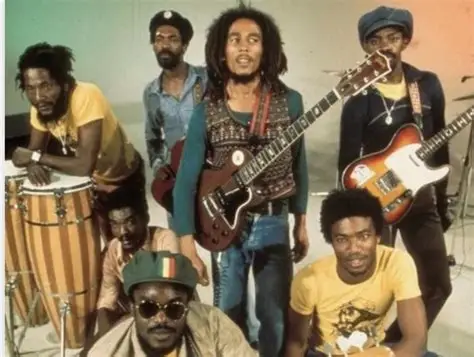
It was March 1962 and Studio 1 on Brenford Road was the heartbeat of Jamaican music. Every artist who wanted to make it in Kingston knew that if Oxone Dodd didn’t believe in you, your career was over before it started.
For three teenagers from Trenchtown, Bob Marlaey, Peter Tosh and Bunny Wailer, this was their shot at escaping the poverty and violence that surrounded them every single day.
But there was a problem. The Whalers weren’t equals. Not even close. Peter Tosh was six-foot tall, commanding and confident. When he walked into a room, people noticed. When he sang, people listened. He had the kind of presence that made you believe he was destined for greatness and Peter knew it.
Bob Marley at 16 was the quiet one dealing with trauma from being called white boy in Trenchtown because of his mixed heritage.
His white father had abandoned the family when Bob was just a child and his light skin made him an outsider in his own community. While Peter commanded attention, Bob faded into the background. The dynamic was clear from day one. Peter Tosh was the leader. Bob Marley would just tag along for the ride.
“Listen, Bob,” Peter told him weeks earlier during rehearsal in Joe Higs’s backyard. You’re good at writing little songs, but performing is not your thing. Stick to backup vocals and let me handle the front.”
Bob had nodded quietly, quatching the notebook where he wrote his songs. He never argued with Peter. He never argued with anyone. Growing up, as the white boy in a black neighbourhood had taught him to keep his head down and his mouth shut.
But inside that notebook was something nobody had seen. Songs Bob had been writing late at night by candlelight in his mother’s tiny shack. Songs about unity, love and freedom. Songs that felt too personal, too vulnerable to share with anyone, especially Peter, who probably would laugh.
On March 14, 1962, the Whalers got the call they’d been waiting for.
Oxone Dodd wanted them at Studio 1 the next morning at 9:00am sharp. The boys could barely sleep that night. This was everything they dreamed of. A real recording session at a real studio with a real producer. If this went well, they could actually become musicians.
Peter spent the night practising in front of a mirror, perfecting his performance. Bunny went over harmonies.
Bob sat alone with his notebook, writing one more song he’d never show anyone, One Love. March 15 started out to be the most important day of their lives. Then everything went wrong. At 7:00am, Peter woke up drenched in sweat. His head was pounding. His throat felt like sandpaper.
He tried to stand and immediately collapsed back onto his bed. His mother checked his temperature, 103°. Peter Tosh, the voice of the Whalers, was burning up with fever.
“You can’t go to the studio,” his mother said firmly. “You’re too sick. I have to go, Peter croaked out. This is our only chance.”
But by 8:00am, it was clear Peter couldn’t even stand up, let alone sing. His mother refused to let him leave. Bob and Bunny showed up at Studio 1 at 8:45, 15 minutes early, ready to make history. But Peter wasn’t with them.
“Where’s your lead singer?” Oxone Dodd asked, checking his watch. The producer was a busy man with a packed schedule. He didn’t have time for amateurs who couldn’t show up on time.
“He’s sick, sir,” Bunny explained nervously. “Fever. He tried to come.”
“I don’t care about excuses,” Oxone Dodd interrupted. “I’ve got this studio booked for exactly two hours, and I’ve got three other sessions today. Either you record something now or you go home and never come back.”
Bob felt his stomach drop. This was it.
There one shot and it was falling apart. “Can we reschedule?” Bunny asked hopefully. Oxone Dodd laughed, but there was no humour in it.
“Reschedule? You think I’m running a charity here? There are a hundred groups in Kingston who would kill for this slot.”
Bob and Bunny looked at each other in panic.
“One of you must be able to sing lead,” Oxone Dodd said impatiently.
“What about you?” He pointed at Bunny.
Bunny shook his head.
“I’m a harmony singer, sir. I’ve never done lead vocals,” he responded
Coxone turned to Bob, who was standing in the corner, clutching his notebook like a shield.
“Can you sing or are you just decoration?” he asked
Bob felt everyone in the studio looking at him. The engineers, the musicians, Oxone Dodd himself, all waiting for his answer.
“I…I…don’t think I’m ready,” he answered.
“Ready?” Oxone’s voice rose, “You think any of the greats were ready their first time? You either have it or you don’t.”
Bob felt paralysed. This was his worst nightmare. He’d spent his entire life being told he didn’t belong. Too light-skinned for the black kids, too poor for the white kids, too quiet to be a leader.
“I’m sorry,” Bob Marley posters
Maybe we should just
“What’s in the notebook?”
Bob instinctively pulled it closer to his chest.
“Nothing,” he said. “Just some things I wrote.”
“Show me.
“They’re not good enough. They’re just…
“Show me. With trembling hands, Bob opened it. Pages filled with lyrics, crossed out words, revised verses, little notes in the margins. Years of work he’d never shown anyone because he was sure it wasn’t good enough.
Coxone grabbed it and flipped through. His expression was unreadable. The studio fell completely silent except for the sound of pages turning. Finally, Coxone stopped on a page and looked up at Bob.
“You wrote all of this.”
Bob nodded.
“This song, One Love, Sing it.”
What? Bob’s eyes went wide.
“You heard me. Sing it right now. No music, no rehearsal, just you and your voice If it’s good, we record it. If it’s not, you both go home and I never want to see you again. You’ve got one chance. Make it count.
Bob felt like he might throw up. His hands were shaking so badly he could barely hold the notebook. Every insecurity he’d ever had was screaming at him to run out of the studio and never come back.
But then something clicked in his mind, a memory from childhood. An old Rostapharian man in Trenchtown who had found young Bob crying after being called white boy for the hundredth time. The old man had looked at him with kind eyes and said:
“You’re not on the white man’s side. You’re not on the black man’s side. You’re on God’s side. And God don’t care about skin colour. He cares about what’s in your heart.”
Bob took a deep breath. He thought about his mother working three jobs to keep food on the table. He thought about Peter lying in bed with a fever, trusting his friends to save their dream. He thought about every kid in Trenchtown who needed to believe that someone like them could make it out.
And he started to sing.
One Love,
One heart,
Let’s get together and feel all right.
His voice was shaky at first, barely more than a whisper. But something happened as he kept singing. The fear started to melt away. The shame about his skin colour, the doubt about his talent, the feeling of not being good enough – all of it began to fade.
The room transformed around him. It wasn’t a scary studio anymore. It was a message he needed to share with the world. A message about unity and love that transcended all the divisions that had made his life so hard:
Give thanks and praise to the Lord
And I will feel all right.
Bob’s voice grew stronger, more confident.
He stopped reading from the notebook. He closed his eyes and just felt the words. When he finished, the studio was dead silent. Bob opened his eyes, certain he’d failed, certain that Oxone Dodd was about to tell him to leave and never come back.
But Oxone Dodd was staring at him with an expression Bob had never seen on anyone’s face before.
There were tears in the producer’s eyes.
“How old are you?” Oxone Dodd asked quietly.
“16, sir?” Bob replied.
“16 years old. And you wrote that?” Oxone Dodd shook his head in disbelief. “That’s not just a song, boy. That’s a message from God himself.”
Bob felt his legs go weak. Had he heard that correctly?
Oxone Dodd turned to his engineers.
“We’re recording this right now. Cancel my next two sessions. This is more important.”
For the next hour, Bob Marley recorded One Love.
Oxone Dodd directed every note; every breath; every word. The shy teenager who had been standing in the corner was gone. In his place was an artist who had finally found his voice. When they finished, Oxone Dodd played back the recording.
Even Bob couldn’t believe what he was hearing. It sounded real, important, like something that could actually change people’s lives.
“This is going to be big,” Coxin said. “But I need to know something. Can you do this again or was this just a one-time thing?”
Bob looked at his notebook filled with dozens of songs he’d written but never shared. Songs about freedom, justice, redemption, and love. Years of messages he’d been too afraid to deliver.
“I can do it again,” Bob said.
And for the first time in his life, he actually believed it. That evening, Bob and Bunny went to Peter’s house. Peter was still sick, lying in bed, devastated he’d missed their moment.
“So Oxone Dodd sent us home?” Peter asked weakly.
“No,” Bunny said. Bob sang lead. Peter’s face darkened. Bob sang my part.
“It was my song from my notebook,” Bob said quietly.
“And it?” Peter asked sharply. “Did Coxin hate it?
Bob handed Peter a contract, a full recording deal from Oxone Dodd.
“He said it was the most important song he’d heard in 10 years,” Bob said.
Peter stared at the contract, then looked at Bob. Really looked at him for the first time since they’d formed the band.
“Play me the recording,” Peter requested.
They didn’t have it, so Bob sang it again in Peter’s bedroom. By the time he finished, Peter was sitting up. Fever forgotten. Staring at his bandmate like seeing him for the first time.
What Peter did next shocked everyone. He got out of bed, grabbed their practice microphone and handed it to Bob.
“This is yours now,” Peter said.
What? Bob didn’t understand. The microphone.
“You’re the voice of the Whalers, not me. I was wrong.”
Peter’s voice was thick with emotion.
“I’m loud and confident, but you have something real, something from the soul,” Peter told Bob. “You either have it or you don’t, and you have it. I’m not going anywhere,” Peter continued. “The Whalers are still the Whalers. But from now on, when people think of this group, they should think of you first because you earned it.”
That conversation in Peter’s bedroom marked the real birth of Bob Marley as the world would know him. Not the backup singer, not the white boy from Trenchtown, but Bob Marley, the voice of a generation.
One Love was released three months later. It wasn’t an instant hit, but it marked the beginning of something extraordinary. Over the years, Bob would write No Woman No Cry, Redemption Song, Get Up, Stand Up, and dozens of songs that changed music history.
- A Tell Media / Source: The way we were


About author