

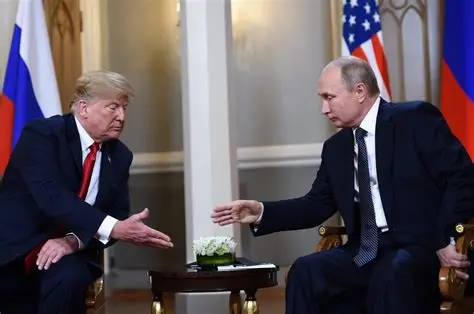
It is Donald Trump fully embracing as president the worldview he most succinctly expressed in his infamous Access Hollywood tape: “When you’re a star, they let you do it.”
Indeed nothing he has experienced in a decade on the world stage has disavowed him of that belief as he has repeatedly beaten and outfoxed the system and become the first convicted felon elected to the White House.
To watch the push for Greenland is to experience one of the wildest things that any country or head of state has done in the entire history of the modern world, dating back to the very creation of the nation-state era in 1648 with the Treaty of Westphalia.
It is hard, in fact, to find any geopolitical parallel. Countries and leaders have certainly made choices and mistakes that ended in ruin – there’s Napoleon setting out to invade Russia or the actions of the Austro-Hungarian Empire at the start of World War I – but it’s impossible to think of a single moment when a country so thoroughly set about consciously dismantling its core sources of national strength and influence.
For the 80 years since the end of World War II, the US model of innovation, trade and economic hegemony has been built on a foundation of six seemingly inviolable traditions and policies held steady across both Republican and Democratic administrations:
- easy access of immigrants to the US, particularly its unparalleled world-class schools and universities;
- rich and steady government support of higher education, medical research and laboratories;
- broad and ever-more-frictionless trade access to US markets and, reciprocally, a flow of US products to the rest of the world;
- a firm, unyielding, and unquestionable adherence to the rule of law at home that made the US a predictable and safe place to create, build, and do business at home; and
- a similarly firm, unyielding and unquestionable network of geopolitical alliances abroad that knitted together a security blanket that stretched around the entire globe, backed up by the most powerful and widest-ranging military ever seen in human history. All five of those pillars helped firm up and underpin another equally critical pillar:
- a politically independent and fiscally prudent monetary policy that established the US dollar as the world’s safest reserve currency. This made US Treasury bonds the savings bank for the entire world – for democracies and authoritarian regimes alike! – and made US banking networks and capital markets the place to be for any company looking for access to investors.
Surely presidents tinkered at the margins of this recipe – cutting here, investing there – and sometimes even fundamentally altered it, as Richard Nixon did when he took the US off the gold standard in 1971 and rewrote the era of the Bretton Woods economic model created in the wake of World War II. But even then, Nixon understood how the pillars reinforced one another and pointed the way to a future still led calmly and steadily by the United States.
Yes, surely due to a combination of missteps, from the disastrous imperialist adventures in Iraq to the 2008 financial collapse to miscalculating the rise of China, US power had already ebbed from its moral standing and unipolarity that it held at 8:46 am on Tuesday, September 11, 2001.
But a quarter century after that peak, day-in and day-out, the US still served as the anchor and foundation of world peace, power, and global institutions. (It’s worth noting, too, that after those 9/11 attacks, NATO rallied to America’s side, invoking its “Article 5” protections for the first and only time in its history, and Denmark was such a staunch partner that the tiny Nordic country suffered the third-highest per capita death toll fighting alongside the US in Afghanistan and Iraq.)
It is impossible to overstate the gift of security, wealth, opportunity and sheer innovation that these six foundational pillars of the US policy achieved for both the world beyond and Americans at home. To be clear, America’s eight-decade reign atop the world order was hardly without great human cost – felt most acutely by those on the far edges of the Cold War, from Vietnam and Cambodia to Africa and Latin America.
But scratch at almost any titanic achievement of humanity across the last 80 years in human history and you’ll see the traces of America’s six foundational policies, from the astounding achievements in human health and well-being to the decline of world poverty to the very invention of the internet. Pick almost any measure of business success and I can show you how that six-part recipe applied. To choose just one: All four of the world’s $4 trillion companies – Nvidia, Alphabet, Microsoft and Apple – saw immigrants or their children play a key role in their success.
And yet systematically over the past year – in ways that Putin or Xi couldn’t have dreamed we would do to ourselves – Donald Trump has undermined all six pillars. In recent weeks specifically, he has done lasting and irreparable damage to the rule of law, global alliances, and the independence of US monetary policy.
Just in the first three weeks of this year, we’ve seen estimates that US legal immigration will fall by as much as half; warnings that PhD programs are facing collapse after the administration’s year-long assault on science, higher education, and research; Europe and our closest trading partners readying billions in new tariffs on US trade; masked federal law enforcement, with all the hallmarks of a fascist secret police, occupying a major American city as the president launches probes of local and state political leaders who oppose him; and the chairman of the Federal Reserve hard-launching a dire warning about presidential pressure on the country’s monetary policy.
But it’s the international friendships where one can most clearly see the costs mounting in real time. Just look at the statements coming from that mountain redoubt of global capitalism at Davos: Canadian prime minister Mark Carney – the leader of our closest ally and largest trading partner, whose military is now modelling doing battle with the US across what has long been the world’s longest unguarded border – got a standing ovation for a speech in which he proclaimed, “Let me be clear: We are in the midst of a rupture, not a transition.” Or take European Commission president Ursula von der Leyen, who essentially called for independence from the United States.
This is the end of the world as we have known it for 80 years – all for reasons that will confound future political scientists and historians. There is no strategy behind this exercise in superpower suicide other than the president’s own narcissism, greed and his general frustration at never being respected by the elites whose favour he desires more than anything.
At one level, Trump’s January rampage highlights the collective failure of every institution, safeguard, check and balance that the United States thought it had in place to limit executive power gone berserk. But chief among these institutional collapses is the sheer cowardice of that narrow Republican Congress, which has failed the founders’ fundamental belief and trust that the legislative branch would protect its own powers and authorities from the executive branch and would act first to follow their oath of office to the Constitution and not as members of a president’s own party.
Putin and Xi must be astounded at their good fortune; in Davos, China is already pitching itself to Europe and the world beyond to help pick up the pieces of the American century. Putin, who has watched a generation’s blood and treasure ground up in the mud of Ukraine, is getting a reprieve at a moment when he least deserves it. He has spent his own quarter century in office saying that the “democratic West” is just as corrupt as his own authoritarianism – and now, day after day, Donald Trump is furnishing him with plenty of fresh evidence.
Through much of his first presidential term, conspiracy theorists wondered and tweeted that Trump must be a Russian agent; in this second term, we’ve come to an even more horrifying conclusion – one more embarrassing for the American voter and more damning for Trump in history’s final judgment: He’s doing all this by his own volition.
Historian Barbara Tuchman once famously pointed to the May 1910 grand funeral of England’s Edward VII – a fabulously colourful parade of mourning that brought together nine kings, seven queens and 40 more imperial and royal highnesses – as the high point and last gasp of that grand era of wealth and geopolitical dominance that had been 19-th century Europe, before it destroyed itself in the First World War and ceded control of the world to that upstart America across the pond.
Someday, similarly, we will tell our children about the month of January 2026 in world politics and they will not be able to fathom what we did to ourselves. Nor will they ever be able to contemplate what the United States once meant to the world beyond.
- A Tell Media report / Adapted from Wired agency


About author