


For years, technology companies have celebrated the rise of the “creator economy.” We are told that digital platforms empower individuals, democratize opportunity, and allow everyday people to build meaningful careers online. What is discussed far less – if at all – is what happens when those platforms fail the very people who depend on them.
I know, because it happened to me.
For more than five years, I built a legitimate career as a digital creator and business owner on Meta’s platforms. This was not casual or accidental. It required consistency, long hours, intellectual labour, emotional energy and the slow accumulation of trust with a global audience. Like many creators, my work spanned content creation, community engagement, brand building and revenue generation. My platforms were not hobbies; they were infrastructure.
Then, in a matter of seconds, that infrastructure collapsed.
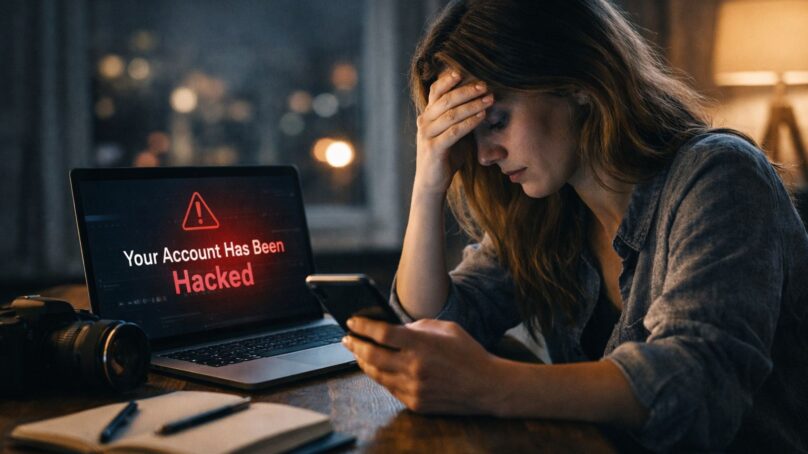
My accounts were hacked. In an instant, I lost access to my voice, my audience, my income stream, and the professional credibility I spent years building. But the hack itself – while devastating – was only the beginning of the damage.
What followed exposed a much deeper problem.
When creators are hacked, they do not simply lose logins; they lose livelihoods. Yet instead of receiving swift, human support, I encountered silence, delays and a system that appeared designed to exhaust rather than assist. I was repeatedly required to prove my own identity while watching my career disappear in real time. At no point did it feel as though the urgency of the situation – or its human cost – was understood.
Perhaps most damaging was the disbelief.
There is a particular kind of harm that occurs when someone is the victim of a cybercrime and is then treated as though they are not credible. Being hacked is disorienting and frightening. Being doubted while you are trying to recover what was taken adds an emotional burden that is difficult to describe. Anxiety, stress, grief, and helplessness become part of daily life. This is not a minor inconvenience; it is an emotional roller coaster that affects mental health, financial stability, and personal identity.
Meta Platforms positions itself as the backbone of the creator economy. Creators are frequently highlighted in marketing materials, earnings reports, and public statements as evidence of innovation and opportunity. Yet when something goes wrong – when creators are targeted by increasingly sophisticated cybercrime – the support structures simply do not match the scale of the risk.
There is no meaningful safety net.
There is limited access to real human intervention.
There is little accountability proportional to the damage caused.
The result is a system where creators bear all of the downside risk while platforms retain the upside.
This imbalance has consequences. When a platform fails to protect creators – or to respond effectively when protection fails – it sends a clear message: creators are replaceable. Their years of work, community building and economic contribution can be erased in seconds with little recourse and no guarantee of restoration.
As a direct result of my experience, I have made the difficult decision to step away from the digital creator industry as I have known it.
This decision was not made lightly. It reflects a sobering realisation: building a career on platforms that cannot reliably safeguard creators in moments of crisis is no longer sustainable. Trust, once broken at this scale, is difficult to rebuild.
My story is not unique. Countless creators – large and small –have faced similar situations, often in silence. Many lack the resources, visibility or stamina to speak publicly about what they endure. The cost is not just individual careers, but the long-term credibility of the creator economy itself.
If platforms like Meta wish to continue positioning themselves as essential infrastructure for modern work, then they must accept the responsibility that comes with that role. That means stronger preventative security, faster and more transparent recovery processes, and – most importantly –human-centred support when people are harmed.
Creators are not data points.
They are not disposable.
They are people whose livelihoods depend on the systems they are told to trust.
When those systems fail, accountability should not be optional.
Until meaningful change occurs, stories like mine will continue – and more creators will quietly walk away from an industry that promised opportunity but delivered instability.
That should concern us all.
- A Tell Media report / By Alycia Barnard / Digital Creator & Business Owner


About author