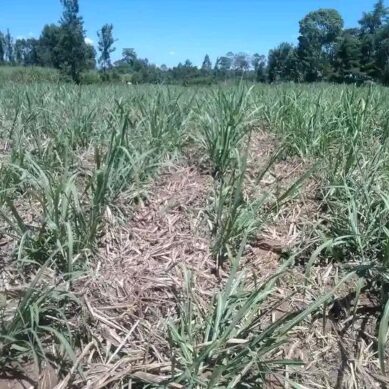




Unlike what was the case 20 years ago, currently towering fields of sugarcane stretch across fertile valleys, reshaping landscapes that were once dominated by maize and tea in Tinderet Sub County, Nandi County.
Once a marginal crop, sugarcane has gained momentum over the last decade, driven by promises of stable income and guaranteed markets.
However, this rush for cash crops comes with a growing concern; if not carefully managed, the expansion of sugarcane could undermine food security in a region that still relies heavily on subsistence farming.
The current estimates indicate that roughly 10,000 acres in Nandi County are now devoted to sugarcane cultivation, with Tinderet Sub-County accounting for a significant portion of this area. Investors planning a new sugar factory in the region see the acreage as a key supply base.
For smallholder farmers, the crop promises reliable returns, unlike maize and beans, which are prone to price fluctuations and post-harvest losses. However, the long maturity period of sugarcane and its dominance on prime agricultural land threatens to reduce the space available for food crops that sustain households.
Farmers in the area have mixed feelings about the shift. Samuel Kibet, a farmer in Chepsangor location, has converted part of his maize and sweet potato fields into sugarcane farm. While the income from cane helps cover school fees and household expenses, he worries about having sufficient food throughout the year.
Mary Jepchumba, another local farmer, has adopted a more diversified approach by intercropping cane with bananas, sweet potatoes and legumes to balance income generation with household food production.
Agricultural officers in the region acknowledge the dilemma. Sub-County Agricultural Officer Peter Sang points out that sugarcane is one of several commercial crops that can lift rural incomes, alongside tea, coffee, and horticultural produce.
“Cane brings cash, but it ties up land for a long season. If farmers dedicate too much land to it, household food security could be compromised,” he said.
County planning documents reinforce this view as they emphasise the need for integrated farming systems and strategic land use to ensure that food crops are not side-lined.
Nandi County government has implemented several measures to mitigate these risks. Extension officers are promoting intercropping techniques and crop rotation, encouraging farmers to maintain maize, beans, and fast-maturing crops alongside sugarcane.
Programmes that distribute drought-tolerant seeds and seedlings, such as sweet potatoes and bananas, aim to maintain continuous food production even as cane fields expand. The county is also investing in market support infrastructure including storage facilities and cooperative networks to reduce post-harvest losses and stabilise incomes for smallholder farmers.
From the industry perspective, the expansion of sugarcane is a potential economic boon. James Rotich, spokesperson for the proposed Tinderet Sugar Factory, explains that the plant will guarantee a market for local farmers and create jobs in milling and logistics.
The factory is designed to process 1,250 tonnes of cane per day, producing about 138 metric tonnes of sugar, while generating electricity from bagasse and producing by-products such as molasses for industrial use.
Rotich emphasises that responsible expansion is critical and that farmers must maintain food crops alongside cane to safeguard household nutrition.
The implications for food security are multifaceted. While income from sugarcane allows families to purchase food, invest in health and support education, over-reliance on cane could reduce the availability of staple crops locally, forcing households to buy maize and beans from external markets.
Experts stress that food security is not merely about having calories, but ensuring consistent access to nutritious foods. Over-dependence on a single cash crop, especially one that matures slowly, could increase vulnerability to price shocks, drought and other climate-related challenges.
However, county authorities are working to strike a balance. The sub-county agricultural office conducts training for farmers on integrated crop management, soil fertility preservation and climate-smart practices.
Strategic zoning policies aim to protect portions of land for food crops, while identifying areas suitable for sugarcane expansion. Non-governmental organisations and development partners also support these efforts through farmer cooperatives, technical training and initiatives that promote diversification and resilience.
Subsequently, farmers are beginning to see the value of these interventions.
Mary Jepchumba notes that by maintaining a mix of crops, she can feed her family throughout the year while benefiting from the income cane provides. On the other hand, Samuel Kibet agrees, acknowledging that careful planning is necessary to avoid a scenario, where money exists but food does not.
The story of sugarcane in in the region is ultimately a lesson in balance, illustrating how economic opportunity and food security can coexist, if expansion is carefully managed. On the contrary, an unchecked rush for cash crops can threaten local nutrition and stability.
As the green fields of cane continue to dominate the highlands, the future of food security in Nandi County will depend on how effectively farmers, authorities, and the sugar industry navigate the delicate trade-off between income and sustenance.
Through education, policy support and strategic land use planning, authorities hope to ensure that sugarcane becomes a source of prosperity without undermining the basic human need for food, a lesson that will resonate across Nandi County and beyond if the region is to thrive sustainably. A Tell Media / KNA report / By Sammy Mwibanda

About author