


Terrorism in Uganda is real and expanding but indifferent President Museveni thinks heavily armed police will address the evil
People don’t just become violent – either as terrorists or trouble shooters in all spheres of life. They only explode in out to pour their anger and frustrations out. Frequently the anger and frustrations result in mental collapse.

Uganda’s dependency syndrome: How President Museveni vacuum-cleaned 48m Ugandans, then twisted them into marionettes
Let’s encourage people to become independent minded rather than depend on others to think for them. If all thinking emanates from one person there is danger of such phenomenon sinking everyone in the abys of disaster and tragedy, which may last for ages.

Fracture within Ecowas and animosity with US provides ideal ground for terrorism in West Africa
Despite the military regimes of Mali, Burkina Faso and Niger forming an alliance of Sahel states to fight terrorism and to promote economic development, recent attacks with mass fatalities indicate that terrorist groups might already be taking advantage of the lack of a coordinated counter-terrorism strategy in the region.

Ugandans are so psychologically beaten that they believe China assembles plastic rice and eggs
One thing is true. If there can be fake rice and fake eggs, there can also be fake water melon, fake Avocado, fake banana, fake mango and fake everything which could find their way into supermarkets and markets as unscrupulous people try to maximise dishonest income from unaware customers. And there are unscrupulous people everywhere on the globe; not only in China.
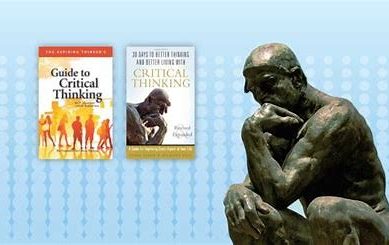
Why critical thinking and alternative analysis pursued by Ugandan academics are key to questioning existing orthodoxies in East Africa
At the end 2017 the staff of the CSGMC delivered a critical paper on Transboundary Water Governance for Inclusive Development and Environmental Sustainability in the Nile Basin at the first Nile Basin Discourse (NBD) Summit. The summit, organised by the NBD, was held Imperial Botanical Beach Hotel, Entebbe, Uganda on November 29-30, 2017.
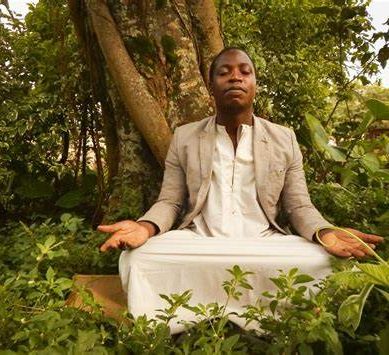
Religion in Uganda: When indigenous African God died, Ugandans hurriedly installed White and Arab Gods who they can’t access
Indigenous African spiritual beliefs are not bound by a written text, like Judaism, Christianity and Islam. Indigenous African religion is primarily an oral tradition and has never been fully codified; thus, it allows itself to more easily be amended and influenced by other religious ideas, religious wisdom, and by modern development.

Spiritual colonialism, neocolonialism, conquests: How globalisation turned Ugandans into marionettes and they embraced it gleefully
In Uganda these different colonialisms have been revamped under NRM rule, thereby reversing the independence and development of the country and enhancing the country’s entrenchment in the global debt trap, with the ruling now unable to tick without borrowing from the local and global money markets or attaching the country wealth and natural assets to the creditor countries.
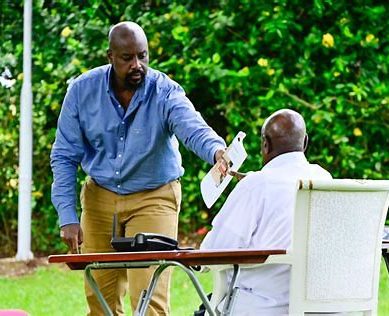
Political hereditary: Uganda is on the cusp of ‘megdel syndrome’ mirrored by inherited political deafness and blurred vision
Hereditary political leadership leads to nepotism and corruption as those in power may use their positions to favour family members, friends and allies rather than making decisions based on the greater good. This can erode trust in institutions and undermine the rule of law. We have seen this take centre-stage in Uganda even recently when the president of Uganda did not hesitate to write that the military courts will continues to try civilians in military courts.

Museveni’s intellectual pygmies: Talking politics in Uganda often feels like health hazard wrought by ideological bankruptcy
Our brains are oval and therefore multi dimensional. The number of dimensions is infinite, but we can mention the cultural, ethical, moral, social, economic, political, emotional, psychological, financial, intellectual, technical, scientific, environmental and ecological dimensions. When we say we have to develop as individuals, then development must be experienced along...

Uganda’s history of power grab and refugee-powered regimes stretches back to Tembezi dynasty and Kitara Kingdom
The Batembuzi are historically characterised as superhumans who were divine with creative powers and never died but merely disappeared in thin air or underground. The founder of the Batembuzi is said to have been Ruhanga considered to be a creator