
Why Uganda is likely to be ungovernable when President Museveni hands power to…most likely, his son
With so many war lords and the contradictory political messages of the Gang of Four and especially the propaganda of the NRM/A combined with the multiple fire powers, Uganda proved to be a very ungovernable country.
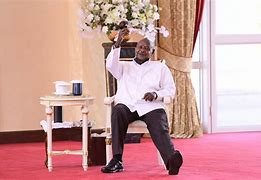
How Museveni’s white elephants ushered in economic hell Ugandans live in today since 1986
In Uganda, several banks have faced closure or significant issues, including Teefe Bank, International Credit Bank, Greenland Bank, the Co-operative Bank, National Bank of Commerce, Global Trust Bank and Crane Bank. It is significant to note that Uganda Commercial Bank was sold off under mysterious circumstances and there was a lot of financial bleeding before, during and after the sale

Days after Uganda deployed army to South Sudan allegations of ‘Museveni thieves’ annihilating civilians with chemicals, stealing minerals emerge
The EASF secretariat feels insufficiently consulted by the African Union, and some members of the EASF secretariat have also lamented the lack of investment and strategic thinking on behalf of the EASF member-states. While the AU confirms that the EASF is part and parcel of the African Standby Force, it has not sufficiently taken its 13 responsibilities to truly achieve the necessary cooperation.

Museveni’s military populism and Bobi Wine’s generational populism in robs Uganda of democracy
Uganda, community loyalty and ideological loyalty are being built through ideas such Saccos and programmes such as Bonna Baggagawale, Myooga, Operation Wealth Creation and Parish Development Model and also the so-called National Ideological School at Kyankwanzi.

Museveni’s militarism created indigenous culture vacuum in Uganda that’s deprived the Pearl of Africa a national character
Tibuhaburwa Museveni abolished the Ministry of Culture and Community Development and systematically devalued culture’s role in development. Although by policy his government valued conservation, the various biocultural landscapes of Uganda became degraded, especially by environmentally and ecologically empty development and invasive nomadic pastoralists, who only saw grass for their cattle and not the cultural value of the biocultural landscapes.
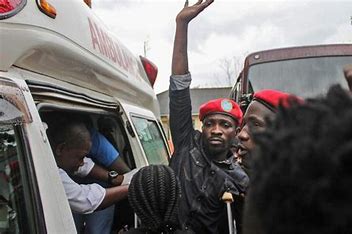
Uganda’s gun-mediated security: How Museveni’s militarised police feeds state terrorism in Great Lakes Region
In Uganda, it is more common to find military commanders commanding the police at different levels of the institution. When the commander-in-chief sources personnel for regional military policing, he is free to get them from the military and the police because the difference between military and police is blurred. It is also common to see ordinary policemen who are military men and women in police uniform.

Case of revolutions eating their children: How Museveni transitioned from a messianic figure to an ogre that devours Ugandans
It is almost 40 years now and President Tibuhaburwa Museveni shows no sign of letting go of the power that he believes is only his. We have seen some of the things that he said took him to the bush come back: killings, kidnappings, vote theft, beating and maiming of Ugandans, et cetera despite the fact that his army is far more disciplined, with more educated soldiers.

In Uganda politics and lies are idyllic bedfellows and for President Museveni it is an art that keeps him in power
If Ugandans have suffered anything adversely it is not guns or tear gas but falsehoods, half-truths and lies, especially in the executive, parliament and before, during and after elections. This suffering has gone on for a very long time and there seems to be no end to it.
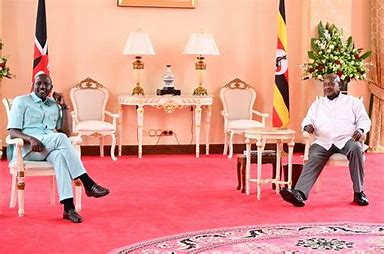
Militarised personalist parties: Why and how East Africa led by Uganda’s Museveni undermines democracy and Kenya’s Ruto is his understudy
Eastern Africa is rapidly turning into a supply chain of personalist parties with Ugandan President Yoweri Museveni, Rwanda’s President Paul Kagame, Ethiopia’s Ahmed, South Sudan’s Salva Kiir, Eritrea’s Isaias Afwerki and Kenya’s William Ruto making the cut.

Liberation Theology: Bigotry of Ugandan Church shows in failure to condemn poverty as a human rights abuse, promises of heavenly bliss
Pope Francis has incorporated aspects of liberation theology into his teachings, which is a progressive Catholic movement that advocates for social change. Pope Francis described his papal name as pointing to what he wants to emulate in Saint Francis of Assisi: to have a poor church for the poor, to always go out to the margins, and to show concern for the natural environment.
African Liberation Theology took root in South Africa long before Pope Francis ascended to the throne (e.g. Walshe, 1987). However, the most visible liberation theologist was not a Catholic but Anglican bishop Desmond Tutu, an Anglican bishop and the first Black Anglican Archbishop of Cape Town.