

President Museveni’s’ greatest feat in Uganda is creation of intellectual zombies to protect ‘elections without democracy’
People excluded from participation in the leadership and governance of their country are unlikely to acquire the necessary experience and skills in leadership and governance, let alone be interested in their country well enough to feel that they are adequately human and patriotic. No amount of forcing them to be patriotic will yield a patriotic population.

As Uganda hurtles towards a monarchanised military, there are strong signals a ‘soldier-king’ is being readied to take charge
The term monarchised military was introduced by scholar Paul Chambers, using the Thailand model. Chambers (2024) has recently explained the nexus between the monarchy and the military. Together they have dominated the Thai political landscape. Chambers also talks about the impact of the monarchised military on the lèse-majesté. Lèse-majesté, often translated as “insulting the monarchy,” is a crime against the dignity of a ruling head of state or the state itself. It’s a concept that’s been a part of legal systems in various countries, particularly those with monarchies or strong symbolism attached to the head of state, such as Uganda. Lèse-majesté laws can be enacted and evoked to detain and imprison activists and human rights defenders that may challenge the monarchised military.

Rest of the world is rich because Africa is poor and Africans like Ugandan President Museveni maintain the status quo
In Uganda President Tibuhaburwa Museveni has made poverty an everyday song. A year before presidential elections, he uses it as a political weapon against his opponents, reminding the vulnerable that he is solving their poverty situation through Myooga, Parish Development Models and Operation Wealth Creation, yet he is constantly, persistently and perennially poverty against them, sinking them further and further in the abyss of poverty
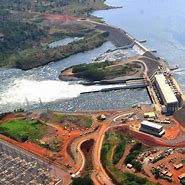
When infrastructure impedes environmental protection: How Uganda’s President Museveni stifles biodiversity
The environmental movement, which had done so well to combat forced development through resisting the erection of big unsustainable dams such as Bujagali Dam on the River Nile, became weakened.
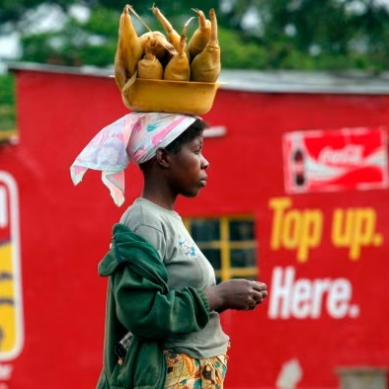
Africans should not fear Africa: We cannot make a plea to foreign investors while we channel our own capital elsewhere
The current acceleration of cuts should instead be seen as a wake-up call: we must look for solutions within the continent’s borders. When the “Africa 2063” initiative was set out by the African Union over a decade ago it was not a 50-year vision of an Africa dependent on aid, but one of a global powerhouse charting its own path. The responsibility for delivering this vision is ours.
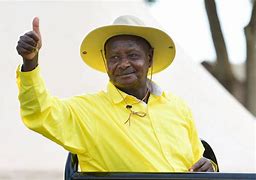
Museveni’s 40 years’ gift to Uganda: The Pearl of Africa is now an undisputed slave labour reservoir
Uganda has experienced 40 years of de-development and suppressed human potential and the right to development. Schemes such as Operation Wealth Creation, Parish Development Model and Myooga, which ultimately are tools of de-development are being cast as tools of development at the periphery. Fortunate for the rulers, most citizens are unable to perceive what is going on.

Uganda hurtling to self-annihilation for ignoring environmental pluralism
In Uganda we are witnessing environmental pluralism reduced by encouraging the spread of the grass-cow culture of the nomadic pastoral human energy system. Through what appeared to be tolerated by the National Resistance Movement Regime (NRM), members of this human energy system, some coming from as far as Rwanda, Tanzania and the Mulenge area of the Democratic Republic of Congo (DRC) are grabbing land everywhere, destroying our agroecological systems and natural ecosystems to establish gazing systems where nature supported settled peoples in relation to the natural environments
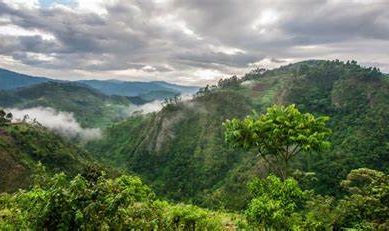
How Uganda is a classic case of environmental corruption polluting environmental democracy
Development should mean qualitative improvement in human rights, democracy and freedom of choice. When one says he or she is experiencing development, that person should be saying that today more than yesterday and tomorrow more than today, one is enjoying maximum progress in all the dimensions of human welfare”.
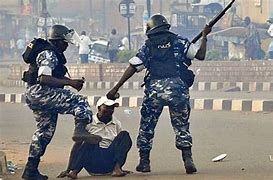
Why Museveni brutally enforces discriminatory laws and policies that repress rights of indigenous Ugandans
Violence initiated by policy-making can be categorised as “structural violence,” where policies unintentionally or intentionally create conditions that lead to harm or violence. This can manifest in various ways, including through policies that marginalise specific groups, perpetuate inequalities, or have unintended consequences that lead to conflict or violence.
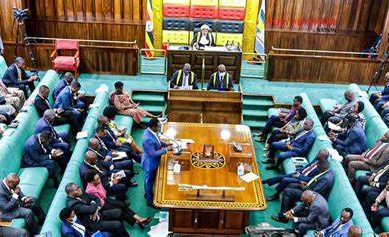
Uganda’s militarist politics: Why Museveni’s NRM system assigns lion’s share of budget to the army
In Nigeria and other former British colonies, officers governed like they fought battles – to them, politics was war by other means. Civilians were subjected to military-style discipline, which was indistinguishable from tyranny. Soldiers promised law and order, and they saw judges as allies in their mission to make society more like an army. But law was not the disciplinary tool soldiers thought it was.