

Companies owned by a long-time US government and military contractor have been operating several airplanes linking regional supply routes to the stronghold of a paramilitary force accused of genocide in Sudan, investigations have found.
To the outside world, Steven Shaulis, a 63-year-old US Army Special Forces veteran, is the head of the Singapore-based CADG, formerly known as Central Asia Development Group, a global firm that has held US and United Nations contracts for over 20 years.
Shaulis’ companies have earned at least $419 million from American taxpayers through military and foreign-aid projects, government records show.
Their work has included building infrastructure for US troops in Afghanistan, supplying them air-conditioning in Iraq and work on an airfield for the US Department of Defence in Kenya.
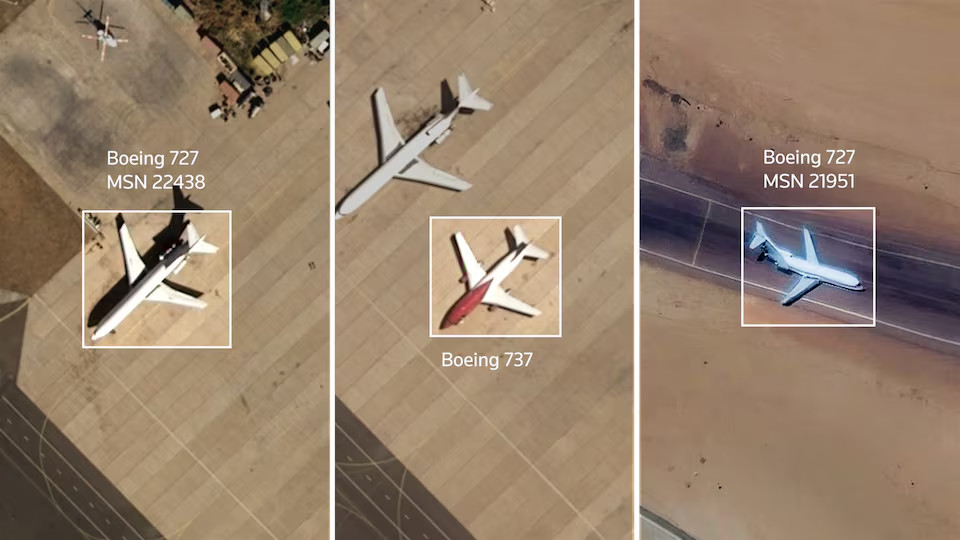
Behind the scenes, investigations found, Shaulis-controlled firms have operated at least three ageing Boeing aircraft flying to key logistics hubs used by the Rapid Support Forces, the Sudanese paramilitary group accused of atrocities in the Darfur region.
The United States, the European Union, the United Kingdom and the United Nations have sanctioned the RSF’s top commanders, along with more than two dozen people and companies accused of helping the paramilitary force procure weapons, equipment and mercenaries.
Investigations show the involvement of Shaulis’ companies in Sudan’s civil war for the first time. The news organisation found no evidence that Shaulis or any of his companies have been sanctioned or face allegations of wrongdoing from authorities.
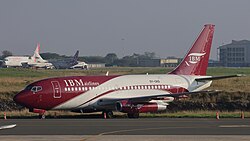
The trail leading to Shaulis starts with a mysterious Boeing 737 destroyed by Sudan’s military in May 2025 at the airport in Nyala, an RSF stronghold in Darfur. A source with direct knowledge revealed that 51 RSF fighters were among the 54 people killed in the strikes.
A pilot and ground engineer on board were employed by Occidental Support Services, a company wholly owned by Shaulis and registered in the United Arab Emirates, according to corporate and employment records reviewed for this report.
The investigations also identified two additional Boeing 727s tied to Shaulis firms that have moved from Brazil and the US since October 2024 to Chad, where they made flights to known supply hubs used by the RSF.
Much remains a mystery about the planes’ activities, including who pays for their operations and what they typically carry, beyond the RSF fighters in the one that was attacked. Shaulis declined to answer detailed questions from about his companies or the Boeing planes. The RSF and the Sudanese Armed Forces did not respond to queries.
The American businessman’s involvement adds to an expanding list of players drawn into the three-year-old civil war. Human rights groups, US lawmakers and UN experts have accused the United Arab Emirates of backing the RSF with weapons and mercenaries, fuelling conflict in one of Africa’s most remote and poorest regions.
The Gulf power says its involvement in Sudan is humanitarian. The Sudanese National Army, meanwhile, has received strong political backing and varying levels of military support from regional powers including Egypt, Turkey, Saudi Arabia and Qatar.
This report is based on a review of corporate records, aviation registries, sales and employment contracts, satellite imagery, flight tracking data, mobile-device location data and social media posts. Reuters also interviewed more than 40 people, including intelligence officials, diplomats, aviation executives as well as experts in weapons and regional politics.
Since the conflict erupted in 2023, the RSF has assembled a formidable arsenal and seized control of vast stretches of Sudan. To wage this war, the RSF has relied on sprawling supply lines running through neighbouring countries to deliver fuel, weapons and foreign fighters to its territory.
The Shaulis-operated Boeing planes provide a glimpse into the final legs of that chain, connecting air hubs in Chad, Libya and Somalia to RSF-controlled territory in Darfur.
Those hubs were critical during a major airlift to supply RSF fighters in Darfur as they conducted an 18-month siege of the city of al-Fashir, according to UN experts, intelligence officials, diplomats and military analysts. The supply operation started in February last year and continued through the fall of al-Fashir in October.
Flight tracking data, satellite imagery and an open-source video show that the three planes linked to Shaulis landed at least 16 times at three of these hubs – Bosaso, Somalia; Kufrah, Libya, which proved critical to the al-Fashir operation; and Nyala, Darfur’s largest city and the RSF’s most important military-and-logistics hub.
The planes were often based in N’Djamena, Chad, where satellite imagery captured them inside a military section of the capital city’s airport, access to which is controlled by Chad’s armed forces. Airports in these locations are regularly used by the RSF as supply hubs, according to UN experts, diplomats, regional political experts and human rights groups.
United Nations accused the RSF of genocide during its siege of al-Fashir, one of the war’s bloodiest episodes. Capturing the city cemented the RSF’s control over Darfur, a region roughly the size of France. The paramilitary group has roots in the government-backed “Janjaweed” militias accused of atrocities in Darfur including ethnic cleansing two decades ago.
Aiding the RSF could violate a range of US and UN sanctions, which prohibit knowingly providing services including transporting cargo, moving personnel and providing logistical support, sanctions experts said.
The government of the UAE and the US Department of Defence did not respond to questions for this story, nor did the authorities in charge of eastern Libya.
Chad’s Minister of Foreign Affairs Abdoulaye Sabre Fadoul said in a statement that Chad’s only involvement in Sudan’s war is through “diplomatic efforts to restore peace in that sister nation” and that its military infrastructure is used solely for the domestic operation of its defence forces.
Brahim Dadi, director general of Chad’s Civil Aviation Authority, said neither of the two Boeing 727s nor did the 737 have authorisation to operate from Chad. He added that the authority had not received formal applications to register the planes or issue certificates needed to land or fly within Chadian territory.
Sudan’s army and the paramilitary group RSF joined forces to overthrow autocrat Omar al-Bashir in 2019. The war started when leaders of the two camps fell out four years later over plans to integrate their military forces during a failed transition to civilian government. The death toll since is estimated in the hundreds of thousands.
Millions of Sudanese have been displaced, and the fighting has worsened famine and disease, creating what the UN calls the world’s worst humanitarian crisis. Like the RSF, Sudan’s army has been accused by UN investigators and human rights groups of war crimes, including indiscriminate attacks on civilians and summary executions.
Before his companies started operating planes out of Chad, Shaulis had established himself as a major player in military contracting through his logistics and aviation company, CADG. After leaving the US Army Special Forces, Shaulis began working on agricultural and development projects in Central Asia. He founded CADG in 2002, the year after the US-led invasion of Afghanistan.
CADG is registered in Singapore, has a 75,000-square-foot warehouse in Dubai, airbases in South Africa and Sudan, and has completed projects worth $800 million across Africa, Asia and the Middle East, according to its website. Its US government contracts in Africa included constructing buildings for USAID in Mozambique, water supply facilities for the US Air Force in Kenya and buildings for the US Army in Central African Republic, according to a review of government documents.
CADG companies have been paid more than $160 million for contracting work with UN agencies in the past two decades, according to a tally of UN figures. Both the UN and US government contracting figures are likely undercounts of the total value of work performed by Shaulis companies because of gaps in the records and challenges in finding every contract.
Stephane Dujarric, spokesman for the UN Secretary-General, confirmed CADG previously did some contracting work with the UN. But he said the UN was not aware of the planes or the operations mentioned in this story, and that CADG had not done any work for the UN in Sudan.
The attack on the first plane linked to Shaulis, the Boeing 737, marked a turning point in Sudan’s conflict, triggering a major escalation. Sudan’s military said it destroyed the 737 on May 3, 2025, because it was supplying the RSF.
The day after the attack, the RSF launched a barrage of retaliatory drone strikes on the army’s wartime capital, Port Sudan. The army-led government then cut diplomatic ties with the UAE, which it blamed for backing the drone strikes.
Reuters could identify the plane by its distinctive burgundy and white livery, a paint job dating to its earlier use as a commercial airliner. Hours before the plane was attacked, it was captured in a satellite image in the military section of N’Djamena International Airport in Chad. There, the 737 sat inside one of the most secure areas in the country, where Chad’s drones, airforce jets and even its presidential plane are regularly parked.
Hours later, the 737 landed at the RSF-controlled airport in the Darfur city of Nyala. A Western military analyst, citing informants, said it was the 737’s fourth trip to the small airport when it landed there at about 10 p.m. on May 2. Sudan’s military hit the plane with airstrikes about four hours later.
Chad’s armed forces did not respond to a request for comment about the presence of the Boeings in the military section of N’Djamena airport.
In addition to the 54 people killed, the source with direct knowledge said 57 injured passengers, including an unknown number of RSF fighters, were brought to the Sudan-Turkish hospital in Nyala. The military analyst said at least six senior RSF officers were among the dead.
- A Reuters report


About author