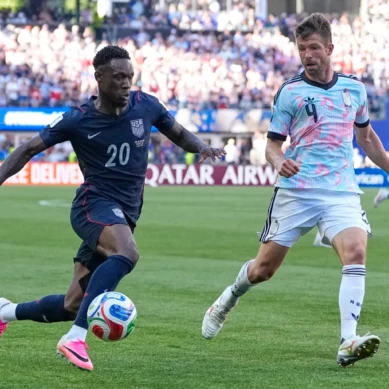

From debutant Cabo Verde’s fairy-tale run to traditional powerhouse Morocco’s unbeaten streak, African football has emerged as an increasingly formidable presence on the global stage.
Ten African teams entered the expanded FIFA World Cup. For the first time in the tournament’s history, 90 per cent of African teams advanced to the knockout stage. While only Morocco and Egypt remain in contention on the pitch, the 23rd World Cup has already sparked pride, hope and a sense of unity among 1.6 billion people across Africa and its diaspora.
On Cabo Verde’s 51st Independence Day, the Blue Sharks arrived at Nelson Mandela International Airport in Praia, where hundreds of supporters welcomed the national team home.
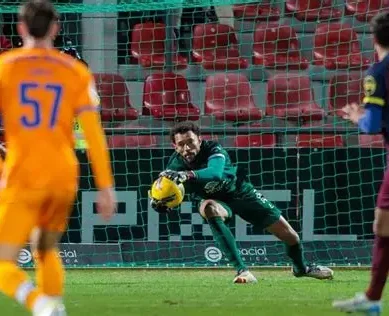
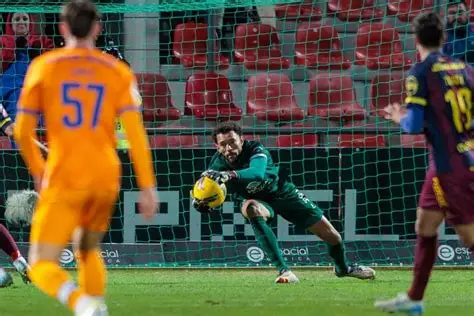
“A few years ago, Cabo Verde was little known beyond its borders. Today, thanks to football and the efforts of many people who have contributed to the national development, our country has gained far greater recognition worldwide,” said 40-year-old goalkeeper Vozinha.
With a population of just over 500,000, Cabo Verde is the second-least populous country to reach the World Cup, after Iceland at Russia 2018.
The Blue Sharks held Spain, Uruguay and Saudi Arabia to draws, finishing second in Group H to secure a defining knockout-stage berth.
Despite a 3-2 extra-time defeat to defending champion Argentina, the tiny Atlantic archipelago won worldwide admiration with its spirit. In his Independence Day address, Cabo Verde President Jose Maria Neves said the Blue Sharks’ campaign had boosted the country’s global profile and strengthened its presence in the world through sport.
Speaking ahead of Cabo Verde’s group-stage match against Uruguay, Neves described the team’s World Cup debut as a historic milestone.
“There are moments that redefine a country,” he said, adding that the Blue Sharks would remain a reference point in Cabo Verde’s national life over the next 50 years. Orlando Jorge Mascarenhas, head of the National Stadium Management Office under Cabo Verde’s Ministry of Sports, said the Blue Sharks not only lived up to national expectations but, in many ways, surpassed them.
“After that match (against Spain), the world began to see Cabo Verde in a different light,” he noted, highlighting that the Blue Sharks brought greater visibility to the country’s tourism, economy and national image.
Although their fairy-tale run came to an end, the Blue Sharks have inspired a new generation to dream bigger. At the Integrated Football Development School, one of Cabo Verde’s oldest youth football academies in the capital, President Pedro Bettencourt said that, after Cabo Verde reached the World Cup, parents began to see football differently.
“They realised that football can take their children to a higher level, beyond what is possible in Cabo Verde,” he said.
The 48-team tournament has also seen the Democratic Republic of the Congo (DRC), Egypt, South Africa and Cote d’Ivoire return to prominence following prolonged lean spells. Fifty-two years after their World Cup debut in 1974, the Leopards announced their comeback in style, holding Portugal to a draw and netting the country’s first World Cup goal.
Against the backdrop of persistent conflict in the country’s east and an ongoing Ebola outbreak, the DRC’s first qualification for the knockout stage offered a rare moment of national pride to a country long plagued by hardship.
“The north and the south. The east and the west. Congolese at home and those in the diaspora beat with one heart, united in the same passion and the same pride,” said President Felix Tshisekedi as the DRC marked its 66th anniversary of independence in late June.
“This is the image of the Congo that we must preserve and nurture – a united, ambitious, resilient Congo, determined to claim its rightful place among the countries.”
The Leopards suffered a heart-breaking 2-1 comeback defeat to England in the round of 32. Yet according to DRC sports analyst Ben Muhima, the team had every reason to leave the pitch with heads held high.
“The DRC produced one of its finest first-half performances in recent years,” Muhima said. “Their World Cup journey is expected to encourage more dual-nationality players, providing fresh impetus for its future development.”
Meanwhile, Egypt, Africa’s first World Cup participant in 1934, ended a 92-year wait for its maiden World Cup victory by defeating New Zealand 3-1 in the group stage. Cote d’Ivoire and South Africa, both making their World Cup returns after more than a decade, reached the knockout stage for the first time.
By eliminating co-host Canada 3-0, world No. 7 Morocco became the first African side to reach the FIFA World Cup quarterfinals in two straight editions. Back in the North African country, football fans toasted each goal with coffee and mint tea, packing neighbourhood cafes that served as their “second home.”
Yassine Khalil, a local university student, believes the sport has forged a community that transcends geographical, linguistic and social divides.
“Many players in Morocco’s 26-man World Cup roster were not born in Morocco but when the national anthem plays, they all place their hands over their hearts,” said Khalil. “Modern Morocco embraces the world, bringing its descendants across the globe back home.”
Kenya’s leading newspaper The Standard observed that Morocco made football a national strategic priority more than 15 years ago, investing in training centres and football academies while actively recruiting talented players of Moroccan descent holding French, Spanish or Dutch passports.
Bolstered by a rich pool of diaspora talent, football’s rise has extended well beyond North Africa, with strong teams now emerging across the continent. Kenya’s Daily Nation, one of East Africa’s most widely read newspapers, reported that several African teams, including DR Congo, Morocco, Algeria, Tunisia, Cabo Verde and Senegal, each fielded more than 10 foreign-born players at this year’s World Cup.
The knockout stage also exposed areas where African teams could still improve.
Former Kenya national team head coach Jacob Mulee underlined lapses in concentration and poor tactics, which he said explained why some African teams collapsed late in matches. Even so, Africa’s overall performance has left a lasting mark and fuelled expectations for the 2027 Africa Cup of Nations, to be co-hosted by Kenya, Tanzania and Uganda.
“The hard work and investments in youth football development, coaching, professional football leagues and football infrastructure in each of CAF’s 54 member associations and in the CAF competitions, is bearing fruit,” said CAF President Patrice Motsepe.
“The governance, transparency, management, financial and auditing best practices that have been introduced has attracted new sponsors and partners and these financial partnerships have contributed to the development and growth of African football,” he added.
- A Tell Media / Xinhua report s

About author