
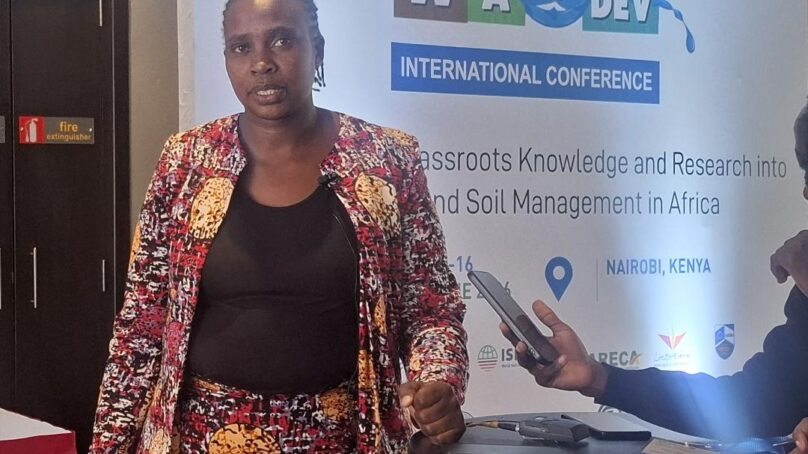
Soil and water scientists call for better resource management to raise agricultural output in Africa
Agriculture, climate and soil experts have called for urgent action to improve soil and water management, warning that rising climate pressures and increasing food demand are stretching Africa’s agricultural systems.
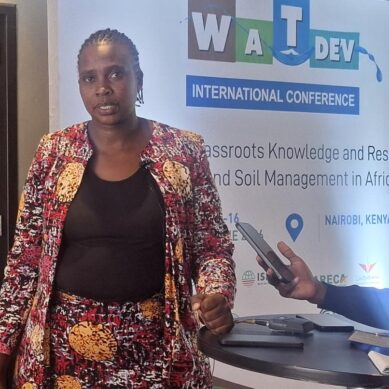
Speaking at the Climate Smart Water Management and Sustainable Development for Food and Agriculture in East Africa (WATDEV) International Conference, Sylvester Baguna, the Executive Director of the Association for Strengthening Agricultural Research in Eastern and Central Africa (ASARECA), said Africa has the potential to strengthen global food security but continues to face major setbacks from erratic rainfall, prolonged droughts, and soil degradation.
“With agriculture accounting for 70 per cent of global freshwater withdrawals and food demand projected to rise by 60 per cent by 2050, the challenge is immense. We cannot transform African agriculture without fundamentally transforming how we manage our water, soil and energy resources,” he said.
Baguna pointed the need for sustainable management of land, soil and water resources to build resilient agri-food systems capable of withstanding climate shocks.
Researcher Victor Ongoma from Mohammed VI Polytechnic University in Morocco warned that climate change is worsening droughts and floods across the continent, disrupting planting cycles and reducing yields. He noted that rising temperatures are likely to intensify drought conditions, while heavier rainfall events increase the risk of crop damage.
Ongoma explained that Africa’s rapid population growth is placing additional pressure on already strained natural resources, calling for policy reforms, technological innovation and market transformation to support sustainable food systems.
In Ethiopia, researchers are already dealing with these challenges on the ground and Tsigemariam Kasahun, a water and soil management specialist at the Water and Land Resources Centre (WLRC), said the country faces both economic water scarcity and severe soil degradation, with heavy rainfall causing topsoil loss, sedimentation in irrigation canals, and declining soil nutrients such as nitrogen, phosphorus, and potassium.
To address soil degradation, Kasahun said the WATDEV project, an EU-funded initiative aimed at increasing agricultural water efficiency and building resilience against climate change is promoting composting and vermicomposting as low-cost, farmer-led solutions.
The approach helps restore soil fertility, improve moisture retention in the root zone, and reduce reliance on costly synthetic fertilizers.
“Farmers can produce their own fertilizer from organic materials, produce organic crops, and hold their water in the root zone. The integrated water and nutrient problems are resolved through composting and agroforestry practices,” she said.
In Kenya, a doctorate research fellow Hellen Sang said water scarcity remains the biggest challenge in semi-arid regions, triggering soil erosion and lowering crop productivity.
Her work under the WATDEVE project has been focusing on improving water management practices at the Hola and Bura irrigation schemes in Tana River County.
“The main problem is management, how farmers manage the water and the farming practices they currently use. We need to introduce new farming systems and strengthen the associations that govern water use,” she said.
Sang also highlighted a major gap in soil testing among smallholder farmers, noting that many lack guidance on appropriate fertilizer use. The project is working with the Kenya Agricultural and Livestock Research Organization (KALRO) to improve access to affordable soil testing services.
The conference brought together researchers, government agencies, development partners and private sector stakeholders to explore innovative approaches to water, soil, and land management.
Outcomes from the forum are expected to inform policies and investments aimed at strengthening climate resilience, improving food security and promoting sustainable agriculture across Africa.
- A Tell Media / KNA report / By Mbuka Kabutu


About author