

The health systems handling Ebola outbreak in Democratic Republic of Congo (DRC) is facing a serious funding shortfalls as the numbers of affected persons rise to approximately 600.
Already due to the health funding deficit, 1.5 million people have lost access to primary healthcare, with 1,000 nutrition centres closing, along with medicine shortages and reduced outbreak response capacity.
CARE (DRC) personnel handling Ebola response and covering 22 health areas, each serving approximately 10,000 people is strained in its service delivery as health care workers and medical practitioners unable to handle the surging numbers due to lack of underfunding of the medical supplies.
To enable it scale up its response, CARE says it is in need of funding of $6 million for the next nine months.
The funding is set to bolster infection prevention and control in 50 priority health facilities across high-risk areas, train health-workers and strengthen surveillance in 12 high-risk health zones and also it will support 20,000 households with immediate hygiene supplies.
A $30 hygiene kit, including soap, chlorine, buckets, handwashing supplies, masks and basic protective items, can help protect an entire household and drastically reduce the spread of infection.
The underfunded health system has left the sector staring at a new threat as medical personnel grapple with containing the spread with very limited critical supplies.
It is now race against time as the sector strains to reach out to women and young girls infected in eastern Democratic Republic of the Congo struggling to live in dignity amid an extreme crisis, while simultaneously supporting overstretched frontline health workers.
The virus – and most dreaded outbreak (the third largest on record) – is driven by the Bundibugyo strain of Ebola, for which no approved vaccine or treatment exists with hopes of effective containment depending on rapid detection, infection prevention and community trust, hence any funding delay is an imminent life threatening and may lead to significant loss of life.
A nurse working at the Shari health facility in Bunia Tibaleka Bamutana has called out for urgent health facilities need support.
“Our health systems are in dire need of essential sustainable funding support to strengthen services and prevent further spread. Rumours and misinformation are also driving fear in communities already living under insecurity,” she added, warning that these conditions can also trigger further spreading of the disease.
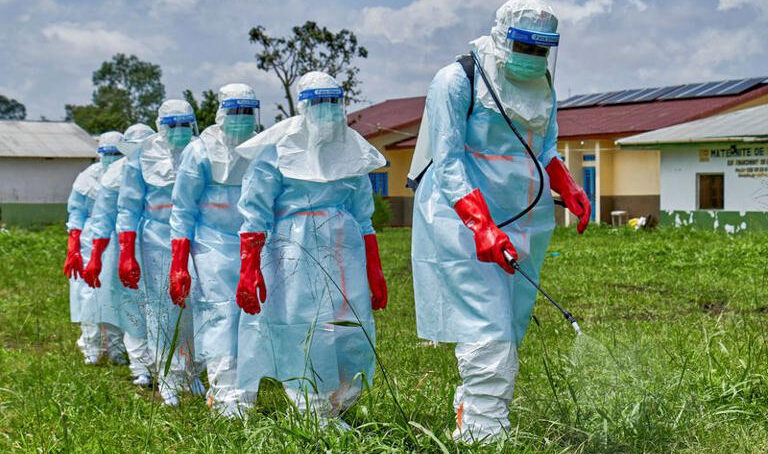
She said healthcare workers in DRC face severe supply shortages including personal protective equipment (PPE), hygiene supplies and diagnostic tools, significantly increasing their risk of infection and limiting their ability to respond effectively.
“With proper and timely funding, we will have a prepositioned stock and commence distributing critical supplies like personal protective equipment unfortunately from day one, we started with nothing and lost 10 days.
“Delayed delivery of supplies taking weeks to arrive from hubs in Nairobi and Kampala has seen the virus continue to spread,” says Dr Amadou Bocoum, CARE DRC Country Director.
Also the ongoing conflict in hard to reach insecure regions, including Djugu, Irumu and Mambasa has further complicated the delivery services as it takes several days of overland transport through difficult terrain to reach the areas further delaying lifesaving support to communities.”
Women have been cited as the most affected due to their active involvement with the patients, accounting for over 60 per cent of suspected Ebola cases outbreak, largely due to their roles as caregivers, food preparers, and active participants in traditional burial practices.
With the pandemic outbreak heat already hitting communities which already are struggling rebuilding themselves and their livelihoods after many years of conflict, displacement, and underfunded health services, the people are hard faced with few resources to cope with the current Ebola crisis.
Due to the conflict cases of gender-based violence (GBV), including sexual violence are rampant and being used as used as a weapon of war with support services collapsing.
Also much affected is the maternal healthcare as pregnant and lactating women face particularly grave risks such as miscarriage, complications and maternal death, and are often afraid to seek care or turned away due to infection fears.
According to the CARE DRC, aid cuts forced a 26 per cent budget reduction and the loss of a third of its national staff including those responsible for community mobilisation, health education and Ebola prevention, impairing emergency logistics at the worst possible moment.
The use of informal routes through the borders through DRC neighbouring states closed following fear of the virus spread has limited case detections and contact tracing as cross-border transmission has already been confirmed.
At the same time, rumours of the virus peddled by a parallel epidemic of health misinformation is severely undermining prevention efforts, delaying care-seeking, while weakening community cooperation.
To combat the misinformation there is need to equip the responders with basic protective equipment, hygiene kits, and resources to enable them handle the emergencies professionally.
To curb this misinformation spread, CARE is partnering directly with local leaders, women’s networks, and community volunteers, to dispel rumours, restore trust, and equip communities with the factual information needed to identify symptoms and seek care early.
“Protecting health workers means protecting communities. Their safety is essential to an effective and sustained outbreak response,” says Tina Flores, executive director of the frontline health workers coalition, a pioneering alliance of partners working in global health.
“Doctors, nurses, community health workers, ambulance drivers, health educators and countless others continue to work tirelessly to care for those affected while protecting communities from further spread,” Flores said.
As the virus continue to spread and claim lives, CARE is calling for a significant and immediate increase in financial and technical support to escalate the aid response.
The organisation called on the donors to step up and immediately increase both the volume and the quality of humanitarian funding to enable those bodies that are best placed, including local and women-led organizations, to reach out to the affected people on time to save lives.
The director warned that it needed the commitment and support of global organisations to come on board and help salvage the situation before the virus spreads beyond their handling capacity and management.
“Global health security is not a game of solitaire. Frontline workers cannot stop this virus alone without the tools they need and without coordinated global action, communities will pay the price,” said Robyn Savage, CARE roving humanitarian director. “Without urgent funding, lives will be lost.”
Since 1994, CARE has been working in the DRC initially responding to the massive refugee crisis in the East and currently it is operating in several provinces, including Ituri, North Kivu and South Kivu, providing life-saving humanitarian assistance and long-term development programs.
Already it has distributed hygiene kits to 20,000 to households in Ituri, eastern DRC to improve on their sanitation as well as protect their basic dignity besides mobilising both material resources and local communities to contain the spread.
- A Tell Media report / By Isaiah Wakhungu Andanje


About author