


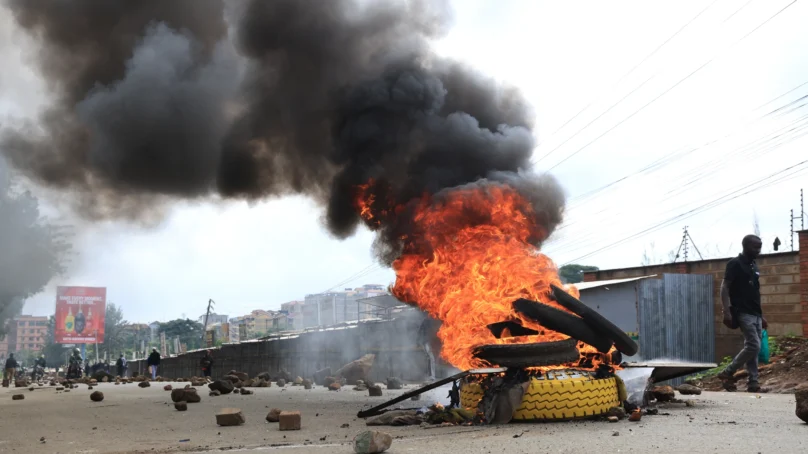
Kenya is – predictably – hurtling towards a bloody political season after five people were shot dead by police, more than 30 injured and over 300 arrested during protests against hefty fuel increases.
This is the third year running that the public in Kenya has revolted against high cost of living with Jubilee Party presidential aspirant Fred Matiang’i warning that the worst is yet to come 13 months to the 2027 General Election.
Other opposition leaders: Rigathi Gachagua, Edwin Sifuna, Justin Muturi, Martha Karua and Kalonzo Musyoka have already signalled intention to commemorate next month the third anniversary of Gen Z uprising that forced President Ruto into a broad-based government.
On Monday, transport was paralysed countrywide public service vehicles were withdrawn from the roads. Later in the evening, PSV operators vowed to stay away from the roads until the government lowered fuel cost by more than Ksh46 from Ksh242 that came into force last week.
In 2024 and 2025, Kenyan youth staged a revolt against what they viewed as punitive taxes, forced their way into parliament buildings and forced MPs to scamper to safety.
Attempts to march to State House – the seat of the government – was brutally repulsed by the state, which deployed the military to guard strategic installations as President William Ruto was forced from the public for a week.
In the 2024-25 riots by the youth und the banner Generation Z (Gen Z), some 80 people were killed, scores went into missing in what human rights organisation and other civil society groups described as “enforced disappearance” with the state bearing the blame.
Four people died and over 30 others were injured when police clashed with protesters in Kenya’s capital on Monday as a nationwide public transport strike kicked off to protest record fuel prices.
Interior Minister Kipchumba Murkomen also said 348 people were arrested and would be charged over their involvement in what he called violent illegal protests. He did not say how the four people were killed, but witnesses told local media that police in Nairobi had opened fire.
Commuters were stranded in many suburbs and the city centre was deserted as protesters burned tires on major roads and attacked motorists, setting at least two vehicles on fire.
Kenya’s fuel prices hit a record high on Friday, with the diesel price increasing by 23.5 per cent and gasoline by 8 per cent. The government attributed the previous price increase to the Iran war and its effects on energy supplies, but it reduced taxes to lessen the shock for consumers.
President Ruto, who has been out of the country, did not comment on the new increase or the protests.
The Kenya National Chamber of Commerce and Industry on Friday said the increased prices would affect all commodities and services. It also noted that Kenya’s price hike from April to May was much higher than the rise in global oil prices: “This points to the continued role of domestic cost build-up.”
France’s Macron unveils a $27 billion investment in Africa at a partnership summit in Kenya
Former deputy president Rigathi Gachagua, who joined the opposition after his impeachment in October 2024 over corruption allegations, blamed the sharp rise on corrupt businesspeople who want to increase profit margins.
He compared Kenya’s fuel prices to those in neighbouring landlocked countries that rely on Kenyan ports for importation of fuel, such as Uganda, where prices are lower.
- A Tell Media / AP report


About author