

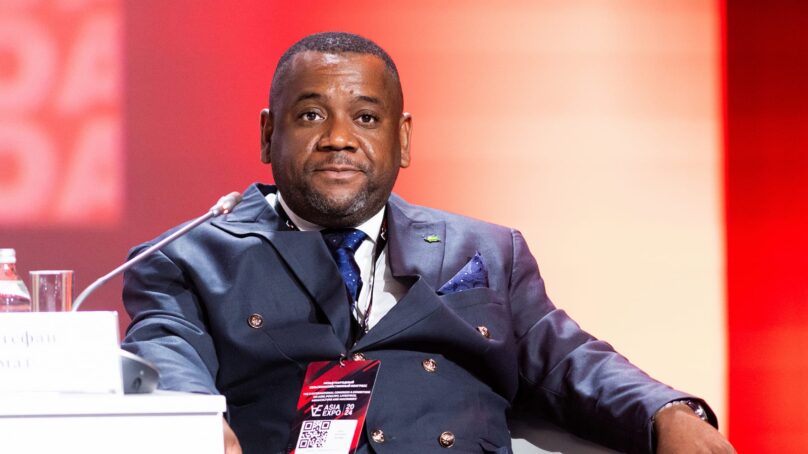
African Peace and Security Union diplomat Roll Stéphane Ngomat has called for lasting peace in Africa’s conflict-riddled regions in a fresh plea to regional bodies and states.
Roll Stephane, who is Chair of African Peace and Security Union (APSU) said that peace should be the topmost agenda on the continent ahead of trade, political and economic development to prosper.
“Before Africa focuses on trade and other aspects of development, I suggest that finding lasting peace in conflict-hit regions should be the foremost agenda of every meeting or forum on the continent,” Ngomat says.
Ngomat picked the conflict in the eastern Democratic Republic of Congo as that needs urgent attention by African countries. He says there has never been a better chance and time than now for sustainable peace to take hold in eastern Congo since the current phase of conflict began in the mid-1990s.
“Congo’s peace process should revolve around three key issues: democratic transformation in Congo; regional negotiations, mainly over economic and security issues and increased accountability for war criminals,” Ngomat points out.
The peace envoy says he believes that regional negotiations between countries undergoing conflict should focus on agreements on cross-border security, returning of refugees and conflict free economic integration.
Roll Stéphane Ngomat, a Gabonese and a career diplomat, has his built an unenviable profile around the realities on the African continent that is at crossroads of governance, peace, security and civic participation.
Over the years, he has been involved in initiatives related to conflict prevention, institution-building and security sector reforms. His experience in bodies associated with the African Union has enabled him to understand both the weaknesses and the potential of African states.
Above all, he has understood one essential truth: crises are not solved only in international conferences. They are resolved when institutions function properly, when young people find their place, when women take part in decision-making and when states have the means to act.
Such knowledge of the field gives him a rare advantage: the ability to speak about a practical Francophonie rooted in the real needs of the people.
Ngomat’s peace efforts have placed Libreville in a position to strengthen its influence in the Francophone world and entire continent, projecting the image of a country capable of offering a new vision on the international stage.
The peace envoy says that Africa finds itself at a pivotal juncture. While hosting some of the world’s fastest-growing economies and a vibrant, youthful population, Africa’s progress has been overshadowed by myriad security challenges such as deep rooted conflicts.
“Taking a panoramic view of the insurgencies in the Sahel to the catastrophic conflict in Sudan and the persistent instability in the Great Lakes Region, the threats are increasingly transnational, asymmetrical and complex,” he observes.
In his view, humanitarian consequences arising from conflicts are grave yet all this is happening at a time when traditional notions of state-centric security have increasingly proved insufficient to tackle the continent’s security challenges.
Peacekeeping has remained a key cornerstone of how multilateral efforts have continued to shore up peace in Africa. Various multilateral efforts have reinforced the idea that peacekeeping should go beyond the goal of simply maintaining a ceasefire.
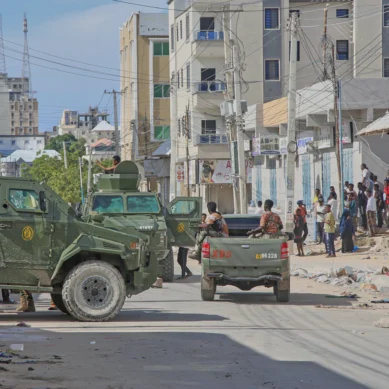
A good example is the African Union Support and Stabilisation Mission in Somalia, which demonstrates the shift towards peacekeeping missions that integrate military action with political reconciliation and humanitarian support. These missions are works-in progress, largely in part because they have satisfied the question of legitimacy and mandate – crucial to gaining the trust of the affected populations.
However, Ngomat believes that there is a need for adequate and predictable funding for the missions to operate at optimal levels.
Mediation, he suggests, is one of the most effective tools for long-term stability, is an area where African-led multilateralism has striven to achieve success in conflict resolution.
Through multilateralism, major complex crises are addressed – for instance, the quintet mechanism that comprises the AU, the Intergovernmental Authority on Development, the League of Arab States, the European Union (EU) and the United Nations (UN), has been working to resolve the crisis in Sudan.
- A Tell Media report / By Joseph Omollo


About author