
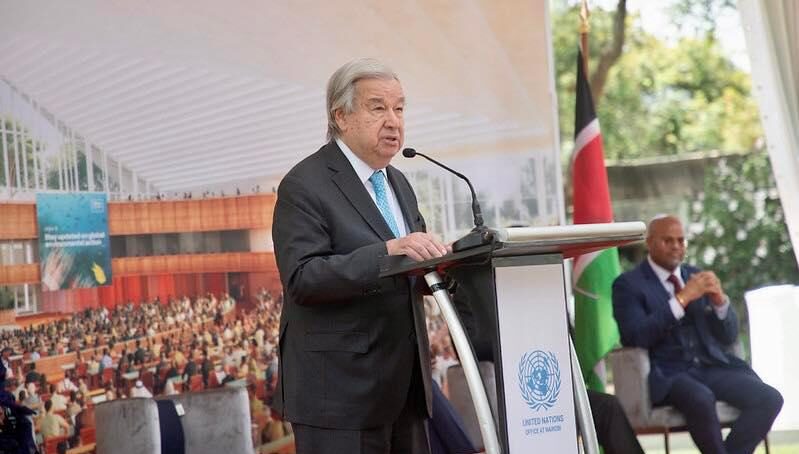
United Nations Secretary-General António Guterres has called for urgent reforms to global governance institutions to ensure Africa receives fair representation, financing and decision-making power in international affairs.
Speaking during a press conference at the United Nations Offices in Nairobi, Guterres said Africa’s development and growth is constrained by an unfair international system that denies the continent adequate representation in key global institutions.
“Africa must have a voice, representation and resources its people deserve,” Guterres said. “The continent has enormous potential, but that capability is being constrained by an unfair international system.”
The secretary-general said many African countries face high borrowing costs, inadequate climate financing and exclusion from major global decisions despite being heavily affected by global economic and security challenges. He called for reforms to the United Nations Security Council, noting that Africa remains without permanent representation despite being central to global peace and security discussions.
“We must correct this injustice,” Guterres said, adding that the current structure of the Security Council no longer reflected today’s geopolitical realities.
“A Security Council in which there are three European members, one Asian member and one North American member, with no African or Latin American permanent members does not correspond to the world of today,” he said.
Guterres noted that reforms would be difficult, but insisted they were necessary to improve the legitimacy and effectiveness of international institutions.
He said his message would also be presented at the Africa Forward Summit and later at the African Union-United Nations Annual Conference in Addis-Ababa.
During his visit, the Secretary-General presided over the inauguration of new office blocks and the ground-breaking ceremony for a new conference facility at the UN complex in Nairobi.
He described Nairobi as one of the UN’s “green centres of gravity” and reaffirmed the Organisation’s commitment to strengthening its presence in Africa.
“Nairobi is the only UN Headquarters in Africa,” Guterres said, noting that the expansion would transform the City into a major international conference and diplomatic hub.
He praised Kenya for its continued support to the UN, describing the country as a strategic partner in diplomacy, development, humanitarian action, and environmental leadership.
“We are moving staff into Nairobi and creating conditions to have here a true global centre,” he said.
The secretary-general noted that the new conference facility would become the third UN location globally capable of hosting meetings of the General Assembly and the Security Council after New York and Geneva.
He said the expansion would create economic opportunities for Kenyans through tourism, hospitality and international business activities linked to conferences and diplomatic engagements.
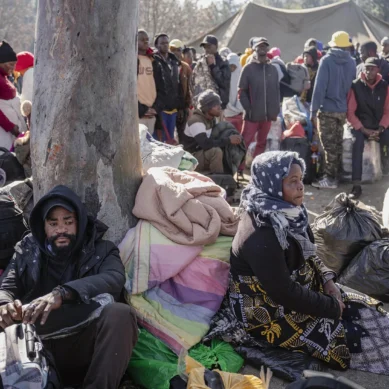
Guterres also addressed ongoing conflicts in Africa and expressed concerns over the humanitarian situation in Sudan, South Sudan, eastern Democratic Republic of Congo and the Sahel region. He condemned the continued violence in Sudan, warning that the use of drones and attacks on civilians were worsening the humanitarian situation.
“It is high time for an immediate cessation of hostilities, a sustainable ceasefire, and a Sudanese-led civilian democratic transition,” he said.
On South Sudan, he urged leaders to restore trust and fully implement the revitalised peace agreement, while in eastern DRC he called for an immediate and permanent ceasefire and respect for the country’s territorial integrity.
Guterres warned that terrorism, insecurity, climate change and poverty were deepening instability in the Sahel region.
“There are no military solutions to these conflicts,” he said, adding that peace required dialogue, trusted institutions and regional cooperation supported by the UN.
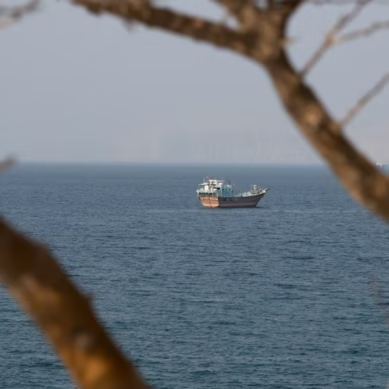
The secretary-general further expressed concern over the economic impact of tensions involving Iran and disruptions along the Strait of Hormuz, noting that rising fuel and fertiliser prices, were adversely affecting African economies.
“Countries already paying too much to borrow are forced to pay even more to import energy or fertilisers, move goods and feed people,” he said.
He noted that fertiliser prices had risen sharply during the planting season, increasing the risk of food insecurity in several countries.
“That is why de-escalation is urgent. The Strait of Hormuz must reopen fully and safely,” he said.
On media freedom, Guterres condemned the rising number of attacks and killings targeting journalists worldwide and called for accountability against perpetrators.
“We have more and more journalists being killed, while others continue suffering harassment, but there is no accountability,” he said.
He said the UN Human Rights Office had been mobilised to support efforts aimed at ensuring justice for crimes committed against journalists. A Tell Media / KNA report / By Nicholas Ochieng

About author