
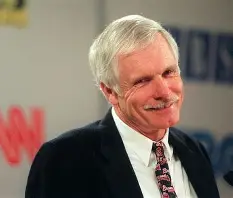
Some considered CNN the 16th member of the Security Council.
The end of the Cold War and the collapse of the Soviet Union in 1991 left the United States as the world’s sole superpower.
A year later, the two most globally visible political posts, of the US President and the UN Secretary General, were filled by Bill Clinton and Boutros Boutros Ghali. Both took office in January 1993, feeling empowered to enjoy greater freedom of action in a world with only one superpower.
But tensions began to develop between the two new leaders because the imperious Boutros Ghali, who the US had not wanted, turned out to be not very pliant on the issue of the use of force. The final straw came in April 1996 with a UN determination that the killing of 106 civilians through Israeli shelling of the UN compound in Qana in Israeli-occupied southern Lebanon was not accidental.
The US told Boutros Ghali that submitting that finding to the Security Council would result in his being ousted at the end of his first term in December. All the other 14 nations of the UN Security Council were firmly opposed to the UN chief’s ouster but that meant little to the US, given the new power it now wielded.
I saw this fascinating drama playing out up close as I was working with Mr Boutros Ghali on a UN books project that was very dear to this once professor and intellectual.
Into this unprecedented lethal US-UN breach had entered Ted Turner, the anti-war head of CNN who was an uncompromising champion of the United Nations, which he believed was the only durable key to peace and global détente.
He also thought providing more objective information via live television was essential, which is why he had launched CNN. He strongly supported Mr Boutros Ghali despite President Clinton’s and UN Ambassador Madeline Albright’s goal of removing him.
To strongly support the UN, Mr Turner donated an astonishing $1 billion, one third of his entire fortune, to the organization, and also helped establish the United Nations Foundation.
As UN Secretary General Antonio Guterres noted, this represented the largest individual philanthropic gift in history at the time. I am sure Mr Guterres wishes someone like Mr Turner was around to advocate for the UN, but I doubt if Ted Turner himself could achieve anything now.
There was, however, one positive outcome from this tawdry attempt to use raw power to silence the truth: the selection of Kofi Annan as the next UN secretary general, who transformed the United Nations in a way no other leader had. In the end, Mr Annan ironically also fell afoul of the Bush administration when he said on BBC that it had violated the UN Charter in invading Iraq in 2003 without Security Council authorization.
I got an early whiff of Mr Turner’s planned network in the late 1970s in Nairobi from Gary Streiker, a journalist who was passionate about Africa. He hoped that within the new network there would be a special unit for Africa based in Nairobi and said he would welcome my participation if that bore fruit. It sounded like a pipe dream.
But CNN soon got started in 1980 and in 1985 Gary was appointed its Africa correspondent based in Nairobi. But I had gone into exile in the US in 1982 and had ended up working at the United Nations in the communications area.
When I retired in 2003, I was startled to get a warm personal note from Mr Turner thanking me for my support in helping disseminate CNN’s work. I had met him only once briefly in the 1990s and had thanked him for his support for the UN and Mr Boutros Ghali. I doubt if I mentioned even my name. But that was the kind of person he was.
Ted Turner was a legendary, visionary upstart who founded CNN as a 24-hour international news operation. He revolutionised television news, banking on new satellite technology and upended the essentially formulaic daily morning and evening news programmes aired by the existing CBS, NBC and ABC national networks. All three usually focused essentially on the same basic news, from a common corporate perspective. Ted Turner was extremely critical of their fare.
“Ted Turner believed that part of the reason America had so many problems was because his fellow Americans were so ill-informed,” wrote former CNN journalist Lisa Napoli. He befriended Soviet leaders, Cuban President Fidel Castro and even defended the repressive conduct and killings in Tiananmen Square. The great Turner had, like many other remarkable people, loads of inexplicable contradictions.
Ted Turner said it was vital to always keep in mind the views of the other side if we want to create peace. Too many in the media now ensure the opposite: suppressing the views of the other side to win the argument. In fact some try to tar the other side with hate. I do believe that the way media reports these days is one of the principal causes for the anger and hatred in societies.
CNN’s round-the-clock news cycle dramatically changed how news was reported as well as how politics was conducted in the US. This extended also to how, and which, crises got the fullest attention from the UN Security Council.
It was from Shashi Tharoor, a friend who became UN Under-Secretary General for Communications and later India’s Minister of International Affairs, that I first heard the very clever conception of the CNN as the 16th member of the UN Security Council!
Now, of course, the US in particular has rendered the Security Council virtually irrelevant.
Mr Turner was on Time magazine’s cover in 1991 as Man of the Year for “influencing the dynamic of events and turning viewers in 150 countries into instant witnesses of history. CNN has matured from a cable curiosity to become an international service of inestimable importance.”
CNN had gotten a gigantic boost with its coverage of the first Iraq war in January 1991 as its correspondents Peter Arnett, Bernard Shaw and John Holliman were the only major western TV journalists in Baghdad. CNN became a household fixture around the world after that.
“I learn more from CNN than I do from the CIA,” President George H.W. Bush was widely quoted as saying at the time of the war.
A decade later I myself was in Baghdad as the chief UN spokesman soon after the US-UK invasion began in March 2003. On August 18, a terrorist bomb killed 22 colleagues including the UN Representative Sergio Vieira de Mello, my assistant Reham al Farra and many other dear friends including Rick Hooper and Nadia Younes. I survived miraculously with minor wounds.
After spending exhausting hours briefing journalists about the bombing, Jane Arraf, CNN bureau chief, asked me to spend the night in their al Rashid hotel quarters so that I would be spared having to go back and forth to my hotel. I was deeply touched.
Early the next day, I did an interview with CNN’s Larry King Live. The interview lasted only a couple of minutes, then he turned to Newsweek’s Colin Solloway. Larry King called the next day to apologise, saying it was a UN story and he had been wrong to spend more time with a US journalist. I was simply speechless.
I have other stories too which signify that Mr Turner’s convictions about peace and respect for humanity had been instilled in his staff.
One of the most astonishing things about Ted Turner’s very progressive views and perspectives was that he was essentially a Conservative Christian like President Ronald Reagan! Reagan was of course a major critic of the UN and caused mayhem with his funding cuts. CNN had to sue the administration and the three rival networks to gain inclusion in the White House press pool!
Politically, Turner was sort of the equivalent of the current Conservative Christian Tucker Carlson, an immensely popular news host with an America First agenda within MAGA. This bloc is the largest and most vocal opponent of the war on Iran and Israel’s destruction of Gaza. One of our topsy-turvy world’s many surprises!
Mainstream US is now essentially caught within a neo-liberal and neo-Conservative vise, both beholden to mega donors who fund Republicans and Democrats alike into supporting foreign wars. I wonder what Ted Turner thought of this awful mess.
Salim Lone was for many years a Director of Communications under UN Secretary General Kofi Annan and the chief spokesman for the United Nations in Iraq following the US-UK led invasion in 2003.
- A Tell Media report / By Salim Lone


About author