
Between 2007 and 2009, multiple tests on water in Kargi village where Amoco – an American oil drilling – company by stat agencies in Kenya and non-governmental organisation found that it was not meeting the World Health Organization recommended standards, according to court records.
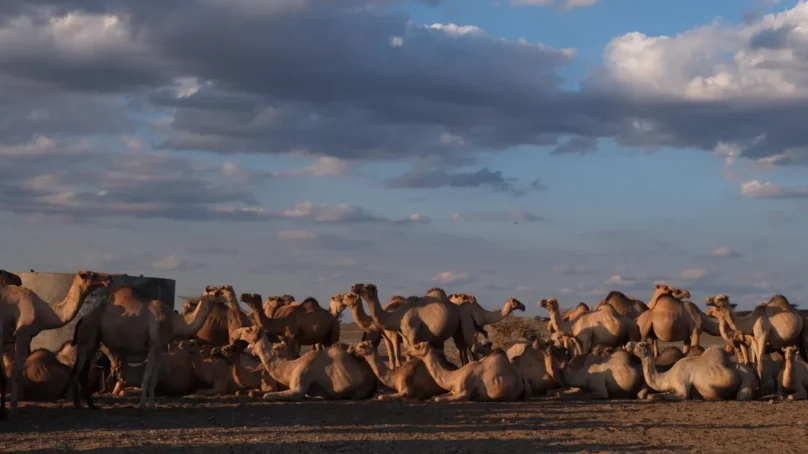
The Kenyan water resources authority declared that it was not safe for human consumption. A local non-profit found that high levels of nitrates and arsenic were in the water and they were the probable cause of the livestock deaths.
By then, people were dying.
In Kargi, where food is scarce, community members kept finding the white substance that Amoco left behind and decided to put it to use, packing it up and using it to cook. The area, littered with salt-like mounds, became so popular with residents that it was named kwa chumvi, loosely translated to “salt place.”
There are conflicting reports over what exactly the “salt” was. According to Kenyan court documents, the salt-like substance was actually two heavy drilling chemicals: barite and bentonite. Barite is a mineral used in large quantities to increase the density of drilling fluids, and bentonite, a clay-like substance often referred to as drilling mud, helps in carrying cuttings to the surface and stabilizing boreholes.
The chemicals can have “catastrophic effects” on the environment and people, said James Njuguna, an engineering professor at Robert Gordon University.
According to tests undertaken by Lundin, Amoco used “a white material that could pass for salt like substance,” but was “essentially a special clay material used to cool the drill bits.” It contained high levels of calcium, magnesium, sodium and electrical conductivity.
Between 2006 and 2009, records from the only health centre in Kargi, a village area with only 10,000 residents, registered 65 cancer-related deaths, which health workers said was largely throat cancer or a rate nearly three times higher than the national average, according to government reports.
“There are many orphans here. And yet, we still do not understand this disease.”
In 2008, Safi Mirkalkona’s sister died from stomach cancer just after giving birth, leaving behind the baby and four other small children. There was no medicine or treatment available, and she was advised to stay at home.
“There are many orphans here,” Mirkalkona says . “And yet, we still do not understand this disease.”
The same year, Joseph Lemasolai Lekuton, who represented Kargi and the surrounding area in Kenya’s national assembly, brought the issue to the Parliament.
“Strange diseases started occurring in the specific areas where oil was drilled,” he said. “I do not know how we can possibly explain the sudden emergence of cancer cases.”
“It is really embarrassing that we sit here and … years later people are still dying,” Lekuton continued in his speech. “We have a survey that has revealed shocking statistics of men and women who are ailing from throat cancer and many have died.”
But leaders, including in the energy ministry, were dismissive and said no connection had been found between oil exploration and cancer cases.
By 2009, a community member was dying of cancer every month, according to a local news report. The symptoms and deterioration of residents were similar.
The first was an inability to swallow meat. The patients were then referred for a biopsy, “but the majority prefer to go back home and wait to die,” the report said. Some tested positive for oesophageal cancer.
Years went by with no answers. In 2013, a documentary titled Desert of Death aired on Kenyan national television on throat and stomach cancer patients in the county, suggesting that waste left behind after failed oil prospecting had a connection to the disease.
The youngest cancer patient featured was three years old. The documentary drew countrywide attention, prompting further discussions in the government.
“I come from Kargi Village, and I have about 150 names of those who have died as a result of that disease,” Godana Hargura, senator of Marsabit, said in a government hearing in 2015. “The situation is so desperate.”
In Kargi, there is only one health centre serving the 10,000 residents. There is no doctor – just a clinical officer, a nurse and a nutritionist.
“People normally come too late. Most of the people are sick, but they don’t even know that they are sick,” said Abraham Situma, the clinical officer. “We really need more human resources.”
Situma often refers the cases to Marsabit County Hospital, a two-hour drive from Kargi. Following that, many patients are then referred to a hospital in Meru, over 300 miles away.
But, Situma said, most prefer to just stay in Kargi and pass away at home. So many people have died in their homes that they became labelled the “manyattas of death.”
In July 2024, separate from the court case, the community petitioned Kenya’s National Assembly to order a comprehensive and independent probe into cancer cases in the region. The community said they had documented close to 1,000 cancer-related fatalities in the last decade, all attributed to the consumption of contaminated water.
The fatalities were reported in Kargi and other surrounding areas, but only 100 families had the victims’ health records, because their culture dictated that the dead be buried with documents.
“I call it the social death of the environment,” said Adunbi, the University of Michigan professor. “The practice of extraction in many communities is literally sentencing people to a form of death, and there is no oversight on how many of these corporations have conducted their activities in these spaces.
Meanwhile, the case filed in 2020 by the Kargi residents remains ongoing and continuously delayed.
The petition detailed accusations against nine Kenyan and county governments – including the attorney-general; ministries of environment, water and sanitation; as well as the National Oil Corporation of Kenya – of being accountable for failing to ensure that Amoco caused little damage to the environment; disposed of waste oil, salt water, and refuse; and did not cause fluids or substance to escape to the environment.
“The untold pain, suffering and hopelessness is exemplified by the rampant deaths that take place in the manyattas without the residents of Marsabit County having access to medical care, the long distance the resident have to travel seeking medical care and lack of financial capacity to carry the burden of the cancer scourge,” the petition reads.
There were also plans to sue BP, but it has proved to be too legally complex, according to John Mwariri, acting executive director of Kituo Cha Sheria, the Kenyan legal aid group leading the case. The company had also long diverted its interest away from the Marsabit region into more fruitful areas in countries like Angola, Egypt and Algeria.
In Kargi, the community has lost hope of getting answers. In his manyatta, Galnahgalle, the village elder, awaits the same fate as his mother.
“I keep being told to go home as there is no treatment,” he said. “Amoco should come and explain what they did here.”
- A Tell Media report / by Georgia Gee and Nelly Madegwa / Source: The Intercept


About author