


Barely 15 months to the next presidential election in Kenya, voters in the East African nation is already bracing for a replay of 2007 bloody post-election violence with communities and civil society groups in the capital Nairobi lining up events to advocate for peace and inter-ethnic co-existence.
The urgency and necessity for political and inter-ethnic tolerance went a notch higher following months of relentless mudslinging among the political class that has resorted to invectives as a mode of vote canvassing.
President Willim Ruto and the opposition have been trading barbs, which in recent weeks have degenerated to baseness as the antagonists have sought advantage in the political arena.
Notably, there exists a partial vacuum since July 2015 when then President Uhuru Kenyatta and Deputy President William Ruto abolished civil education in the countdown to the 2017 presidential election.
Fearing the worst as Kenyans prepare for the 2027 polls, civil societies led by youth and women groups in Dagoretti North Sub-County have launched a campaign to educate voters on the importance of shunning election violence, especially in neighbourhoods considered ethnic flashpoints Nairobi.
The civic education campaign coincides with rising political rhetoric, which religious and civil society leaders describe as inflammatory 15 months to the August 2027 General Election.
President Ruto who will be seeking a second term, has been on the receiving for vulgarity in his response to potential rivals who condemn him as corrupt, tribal and clueless. In response Ruto has repeatedly referred to critics variously as fools, idiots, illiterates or murderers to the chagrin of the entire nation.
The president has resorted to invectives – which he is dispensing with abandon – as he relentlessly pushes back on criticism about the excess of his administration. During his ours of western Kenya last week, the president vowed to use at least one per cent of his time in public addresses to serve out vitriol in a tit-for-tat trade.
His opponents often remind him that constitutionally, he is the symbol of the national unity and the standard bearer of morality that should define the good and the bad in the nation. However, the president seems to have embraced vulgarity, which has openly defended.
During Idd-ul-Fitr party he hosted for Muslims to mark end of Ramadhan at Kisumu State House on March 20, 2026, he vowed not to back down.
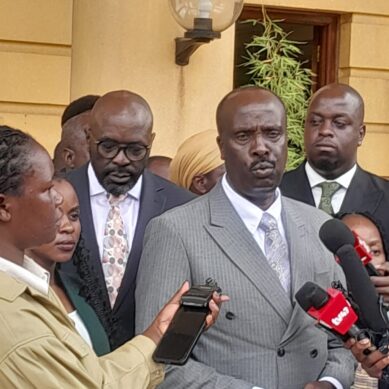
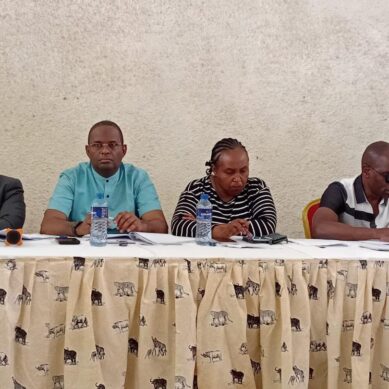
Speaking during a peace initiative forum at Community Relations Foundation (CRF) offices in Kawangware in Nairobi, CRF Women Chair Sarah Makokha appealed to Independent Electoral and Boundaries Commission (IEBC) to start engaging directly with voters before the situation that is building up gets out of hand.
The organisation is chaired by Simon Karanja.
Ms Makokha said IEBC’s continued silence over the unpalatable language the political class is using in rallies – including churches and mosques – is a recipe for violence and bloodbath in the countdown to 2027. She said that, Kawangware being among most crowded informal settlements in Nairobi, it is “always a hotspot during elections.”
Since the restoration of political pluralism in 1992, the informal settlement that straddles four constituencies – Westlands, Dagoretti North, Dagoretti South and Kibra, has predictably been theatre of politically triggered inter-ethnic violence.
Against this backdrop, there is growing apprehension that the 2027 presidential election will be bloody, hence the early preparations to forestall political events and utterances that can inflame ethnic passions and violence.
Makokha recalled that residents of the informal settlement often bear the brunt of political and ethnic violence in the form of looting and brining of house as a result of ethnic hate. She explained, “Amani Daima initiative drive will women leaders and youth become peace ambassadors.”
The leader outlined the group’s agenda as peace walk, public barazas (rallies or meetings) and peace concerts as part of a broader initiative to drive inter-ethnic and political tolerance.
In a forum that also attracted representatives from war-torn countries – South Sudan and Democratic Republic of the Congo (DRC) – the youths were told to actively participate in public barazas and participate in peace forums.
Director of the CBO Martin Maqio appealed to other sub-counties in Nairobi to start similar initiatives, while Police Inspector Joshua Mwao promised to work with CRF to ensure ethnic and political tolerance.
The police officer assured the organisation of security during their rallies. In addition, he assured, every opinion will count without fear of retribution as long as it steers clear of hate.
ÇRF Communication and Public Relations Officer Kathoka Gerald Kyalo called on the youth to participate constructively in national discourse. Mr Kyalo urged residents to register for the Kawangware Peace Walk planned for April 30 in Dagoretti North Sub-County.
Renowned Communication Expert John Muthungu explained to residents why they must live in peace: “Where there’s peace, there’s safety, violence destroys lives.”
Muthungu who was among invited speakers said, “Peace preserves families and the future. Peace builds strong families. Children grow better in peaceful homes and communities. A peaceful home raises responsible and focused generations.”
- A Tell Media report / By John Ashihundu


About author