


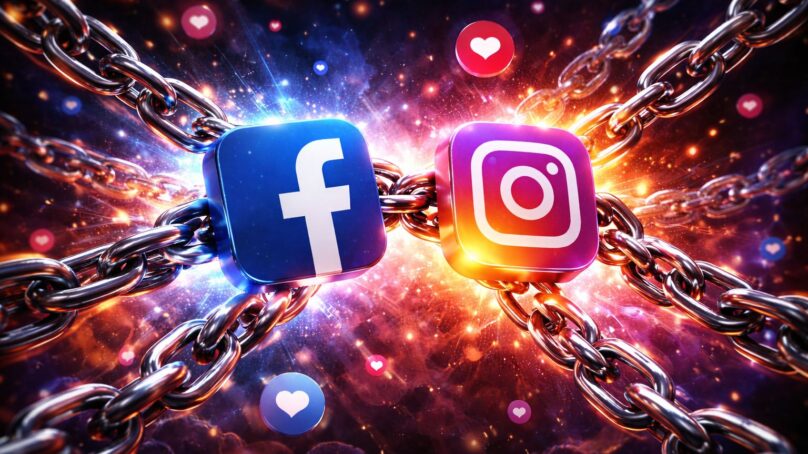
In today’s society, social media is not merely a pastime or a convenience – it is infrastructure. It is how businesses operate, how families communicate, how movements are born, and how reputations are built.
For millions of entrepreneurs, creators, journalists and small business owners, social platforms are the modern storefront, résumé and public square all rolled into one. When access to those platforms is abruptly taken away, the impact is not just technical. It is personal. It is economic. And for many, it is profoundly dehumanising.
Being hacked is a violation. It is an invasion of privacy, identity and livelihood. Yet for those who fall victim to sophisticated cyberattacks, the ordeal rarely ends when the breach is discovered. In many cases, that is when the real struggle begins – especially when the very platforms meant to protect users respond with silence, automation or punitive action.
The experience follows a cruel paradox: the victim becomes the suspect.
After a hack, users often find themselves locked out of their own accounts – accounts that may represent years or decades of work. Entire digital histories disappear overnight: professional connections, family photos, customer communications, business pages, advertising accounts, and verified profiles. What remains is confusion, panic, and a desperate attempt to reach a human being on the other side of a system designed to scale – but not to listen.
Instead of support, many are met with automated responses. Forms generate ticket numbers but no follow-up. Appeals vanish into digital voids. Some users receive messages stating they have violated community standards, despite having done nothing wrong. Others are informed – without explanation – that their accounts are permanently disabled. The implication is devastating: you are guilty, and you must prove your innocence to an algorithm that does not hear pleas or understand context.
This reversal of justice – where the harmed party is treated as the offender – cuts deeply. It strips people of dignity at a moment when they are already vulnerable.
For entrepreneurs and digital professionals, the consequences are severe and immediate. Social media accounts are not hobbies; they are business assets. They generate leads, host client communications, store advertising data, and serve as the primary channel to customers.
When those accounts are shut down, revenue can stop instantly. Contracts are jeopardised. Employees are affected. Trust is eroded – not because of wrongdoing, but because of a system failure.
Creators and public figures face a different but equally damaging, burden. When accounts go dark without explanation, rumours fill the silence. Audiences speculate. Credibility is questioned. The lack of transparency fuels doubt: What did they do? Why were they removed? The platform’s silence becomes a tacit accusation.
And all the while, the hacked individual is left to navigate an opaque process with no timeline, no advocate and no meaningful recourse.
What makes this experience especially dehumanising is the absence of proportional response. A hacker may gain access through methods far beyond a user’s control – SIM swapping, phishing campaigns, data breaches or malware. Yet the response from platforms often treats these incidents as user failures rather than criminal acts. Accounts are disabled “for safety” but the safety provided is one-sided. The user is removed, isolated and left powerless, while the attacker moves on.
There is also an emotional toll rarely acknowledged in corporate statements. Being hacked and not believed produces a unique form of psychological distress. It is the feeling of screaming into the wind. Of explaining the same story repeatedly with no acknowledgment. Of watching your digital identity – your work, your voice, your community – be erased by automated enforcement while you are denied the opportunity to speak.
For many, social media is intertwined with personal identity. Parents document their children’s milestones. Families preserve memories. Survivors share stories. Activists build movements. When those spaces vanish, it feels like erasure – not just of data but of existence. The message received is chilling: You do not matter enough for a human response.
Large technology companies often cite scale as the reason for automation. Billions of users, millions of daily reports. The numbers are staggering. But scale does not absolve responsibility. When platforms position themselves as essential public infrastructure – when they profit from advertising, commerce, and personal data – they assume an obligation to protect users with fairness, transparency, and humanity.
What is missing is accountability with compassion.
There is no clear escalation path for victims of hacking. No guaranteed human review for cases involving verified identity theft or criminal intrusion. No real-time communication when livelihoods are at stake. Users are told to be patient, to submit another form, to wait. Days turn into weeks. Weeks into months. In the meantime, lives and businesses unravel.
The irony is painful: technology that connects the world can leave an individual utterly alone.
This issue is not isolated. It is systemic. Journalists, small business owners, elected officials, non-profit leaders and everyday citizens have reported similar experiences. Entire networks erased without explanation. Years of work gone in seconds. Appeals denied with form letters. Silence where dialogue should exist.
At its core, this is a question of power. Platforms hold extraordinary control over digital identity, yet offer little due process when that control is exercised. There is no presumption of innocence. No transparent evidence. No meaningful right to appeal. In any other context – banking, utilities, telecommunications – such practices would provoke regulatory scrutiny. But in the digital realm, users are often left with no choice but to accept it.
Being hacked is traumatic. Being disbelieved afterward compounds the harm.
It is time to acknowledge that social media platforms are no longer optional tools; they are foundational systems. With that status comes responsibility – not just to shareholders, but to the human beings whose lives are increasingly dependent on these digital spaces.
Victims of hacking deserve more than automated replies. They deserve clarity. They deserve access to real support. They deserve to be treated as people – not problems to be filtered out by code.
Until platforms build systems that recognise humanity alongside security, stories like these will continue to surface. And each one serves as a warning: in a world where digital presence equals participation, erasure without due process is not just a technical failure – it is a moral one.
Because in the end, the most damaging part of being hacked is not the breach itself. It is being punished for a crime you did not commit – and being denied the chance to be heard.
- A Tell Media / By Alycia Bernard – Co-Founder and Director of US Doors Direct


About author