

Uganda’s post-colonial development trajectory has been shaped by a modernisation paradigm that prioritises Western-style economic growth and technological advancement. However, this approach has yielded mixed results, with many communities experiencing increased poverty, inequality and cultural disintegration.
The imposition of external development models has ignored local contexts, ignored community needs, and perpetuated dependency.
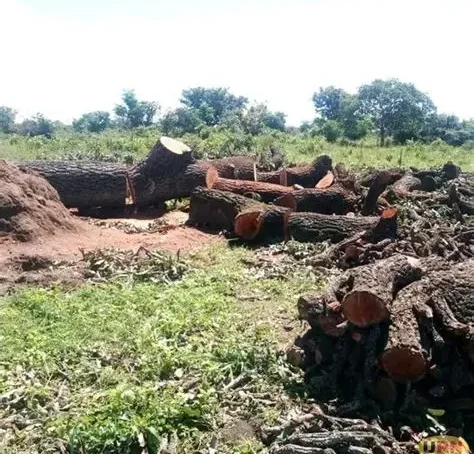
For instance, large-scale agricultural projects and extractive industries have led to land grabs, displacement and environmental degradation. These projects often prioritise short-term gains over long-term sustainability, leaving communities to bear the social and environmental costs. The result is a development narrative that is at odds with Uganda’s rich cultural heritage and diverse ecosystems.
The country’s agro-ecological systems, which have sustained communities for generations, are under threat. The promotion of industrial agriculture and monoculture farming has led to soil degradation, water pollution, and loss of biodiversity. This not only undermines food security but also erodes the cultural knowledge and practices that underpin Uganda’s agricultural heritage. With the global climate crisis exacerbating these challenges the future of food security in Uganda hangs in the balance.
It is time to acknowledge the limitations of imposed modernisation and explore alternative approaches that prioritise community-led growth, cultural preservation and environmental sustainability.
Uganda’s cultural institutions such as the Buganda Kingdom and the Acholi cultural leaders, have historically played a vital role in promoting community cohesion and sustainable development. These institutions possess valuable knowledge and practices that can inform endogenous development approaches.
By recognising and empowering cultural institutions, Uganda can tap into local wisdom and promote community-led growth. One promising approach is Community Ecological Governance (CEG), a framework that enables local communities to manage and govern their natural resources sustainably. CEG recognizes the interconnectedness of people, culture, and nature, promoting a holistic approach to agro-ecological management.
In practice, CEG involves decentralizing decision-making and empowering local communities to make choices about their environment. This can include initiatives like community-led conservation of wetlands and forests, collaborative management of water resources, and promotion of traditional agricultural practices that prioritize agroecology and soil conservation.
By embracing CEG, Uganda can safeguard its agro-ecological systems and promote sustainable development that benefits both people and the planet, ensuring food security and cultural preservation for future generations.
Uganda’s diverse regions offer valuable lessons in endogenous development and Community ecological governance. Let’s explore a few examples:
- In Busoga, community-led initiatives have revived traditional agricultural practices, promoting agroecology and improving food security.
- In Karamoja, cultural institutions are playing a key role in promoting peace and sustainable natural resource management.
- The Rwenzori region has seen successful community-led conservation efforts, protecting biodiversity and supporting local livelihoods.
These case studies demonstrate the potential of endogenous development and CEG in promoting sustainable development and community empowerment.
Constitutional reforms and policy implications
Uganda’s development trajectory requires constitutional reforms that recognise and empower cultural institutions, decentralise decision-making and promote community-led growth. Article 246 of the Constitution provides a framework for traditional institutions to play a role in development but implementation remains a challenge.
A key step is dissolving centralised political power structures that hinder traditional-cultural institutions from exercising decision-making authority. Without this, cultural institutions remain marginalized in development planning. To fully realize endogenous development, Uganda needs policies that:
- Devolve power to local governments and cultural institutions
- Recognise community rights to natural resources
- Support community-led conservation and agroecology initiatives
- Integrate traditional knowledge into development planning
Conclusion and recommendations
Uganda’s development challenges require a paradigm shift towards endogenous development, prioritising cultural institutions, community-led growth and ecological sustainability. By embracing Community Ecological Governance and devolving power to local communities, Uganda can promote sustainable development, food security, and cultural preservation.
However, a significant threat looms: the constitutionally-created indigenous group called Banyarwanda, which is grabbing land, destroying natural resources and undermining the cultural institutions of Uganda’s natural indigenous groups. To address this, a new Constitution is needed to expunge Banyarwanda from amongst the recognised indigenous groups, protecting the rights and futures of Uganda’s original communities.
Key recommendations
- Recognise and empower cultural institutions in decision-making
- Devolve power to local governments and communities
- Support community-led conservation and agroecology initiatives
- Integrate traditional knowledge into development planning
- Review and amend the Constitution to address the Banyarwanda issue and protect indigenous rights.
For God and my country.
- A Tell report / By Oweyegha-Afunaduula / Environmental Historian and Conservationist Centre for Critical Thinking and Alternative Analysis (CCTAA), Seeta, Mukono, Uganda.
About the Centre for Critical Thinking and Alternative Analysis (CCTAA)
The CCTAA was innovated by Hyuha Mukwanason, Oweyegha-Afunaduula and Mahir Balunywa in 2019 to the rising decline in the capacity of graduates in Uganda and beyond to engage in critical thinking and reason coherently besides excellence in academics and academic production. The three scholars were convinced that after academic achievement the world outside the ivory tower needed graduates that can think critically and reason coherently towards making society and the environment better for human gratification. They reasoned between themselves and reached the conclusion that disciplinary education did not only narrow the thinking and reasoning of those exposed to it but restricted the opportunity to excel in critical thinking and reasoning, which are the ultimate aim of education. They were dismayed by the truism that the products of disciplinary education find it difficult to tick outside the boundaries of their disciplines; that when they provide solutions to problems that do not recognise the artificial boundaries between knowledges, their solutions become the new problems. They decided that the answer was a new and different medium of learning and innovating, which they characterised as “The Centre for Critical Thinking and Alternative Analysis” (CCTAA).


About author