

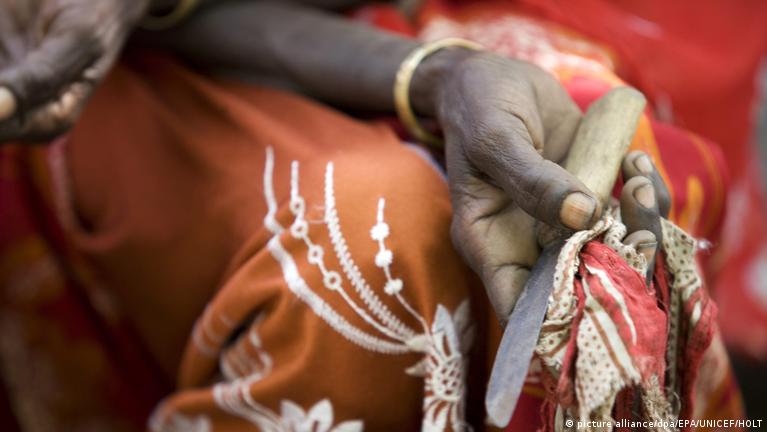
Female Genital Mutilation (FGM) is yet again making the headlines in Central Rift Region despite efforts by state agencies and stakeholders to eradicate it.
The red flag has been raised over the growing number of married women opting for the cut in Mauche Ward in Njoro Sub-County in Nakuru. The focus is shifting from young girls as primary targets to married women – some who already children.
Startled by the new development, the teaching fraternity from Koilonget Mixed Secondary School, Community Health Promoters (CHP), village elders and two community based organisations namely ‘Let’s talk about it initiative’ and ‘Soar Kenya Foundation’ rolled out a three-day outreach program aimed at sensitizing residents on dangers of clinging to age cultural practices that are harmful to women and girls.
Ms Sheila Cheruiyot, a teacher at Koilonget Mixed Secondary School, observed that the recent FGM statistics in Mauche Ward were grim and disclosed that this year over 100 individuals have undergone FGM in the region.
Ms Cheruiyot stated during the outreach programme that brought together over 400 participants including learners, their parents, the religious fraternity, law enforcement agencies and community leaders that it was unfortunate that a significant proportion of those who have undergone the outlawed rite are married women or young mothers.
“They have been forced to undergo the rite in order to be acceptable in a society where married but uncircumcised women are frowned upon even by womenfolk. With that tag they feel inadequate and lacking a sense of belonging,” the teacher explained.
Female genital mutilation (FGM) is outlawed in Kenya. The country has a robust legal framework, primarily through the Prohibition of Female Genital Mutilation Act, 2011, which criminalises the practice.
While noting that such stigmatisation pushes them to undergo the cut in order to fit in, Ms Cheruiyot called on men to stand up for women and girls, adding that FGM will end if they go not demean those who have not been cut and communities should be educated to know that a man is okay with marrying a woman who has not undergo FGM.
The teacher lamented that most of the schoolgirls who were forced to undergo the harmful practice were between 10 and 18 years old. She expressed regret that some parents and communities believe child marriage and FGM to be a way of protecting girls from pre-marital sex and secure a safer future for their daughters.
In reality, she added, they are both violations of girls’ rights which have devastating consequences for their health, education and safety.
“They both make girls more likely to drop out of school, and face violence, health problems and experience complications during pregnancy,” the teacher said.
Let’s Talk About It Initiative Executive Director Chepkirui Ruto indicated that the rite violates the rights of women and girls to health, security and physical integrity, freedom from torture and cruelty, inhuman or degrading treatment and their right to life when the procedure results in death.
FGM, Ms Ruto added, also perpetuates cycles of inequality, discrimination and oppression in our communities.
According to the executive director, the financial cost of healthcare for women living with conditions caused by FGM puts a significant strain on health systems and budgets and that the negative health outcomes of FGM hamper women’s and girls’ ability to meaningfully participate in society, negatively impacting on their productivity and entrenching further the cycle of poverty and inequality that drives the practice.
The outreach program vouched for the empowerment of girls and women while ensuring adequate services and response for those affected and at risk of FGM to accelerate an end to the practice through provision of integrated services linked to health, education and economic empowerment as well as the strengthening of community surveillance and policing mechanisms.
Ms Ruto noted that as Kenya continues to introduce more comprehensive anti-FGM laws and policies, cross-border FGM has emerged as a new trend among practicing communities to evade prosecution.
She cited a study by the anti-FGM Board and the United Nations Population Fund (UNFPA), which shows that the border areas of Kenya, Ethiopia, Somalia, Tanzania and Uganda have a higher FGM prevalence rate than the national averages.
FGM was officially recognised as a form of violence against women and a violation of human rights in the 1993 Declaration on the Elimination of Violence against Women.
According to the World Health Organization, over 200 million girls and women have undergone female genital mutilation (FGM) in 30 countries in Africa, the Middle East and Asia where FGM is practised. This is a big number of women undergoing a practice that is not only outdated but also barbaric and inhuman.
If the current trends continue, a worrying 15 million additional girls between ages 15 and 19 will be at the risk of undergoing FGM by 2030.
Ilchamus, Pokot and Tugen communities in Baringo County and Kipsigis, Tugen, Maasai, Somali and Kisii in Kenya practise the retrogressive culture.
John Kirui, a village elder noted that involving men and boys in the anti-female genital mutilation movement is a crucial strategy, as they can be powerful agents of change in their communities. Efforts, he said, need to focus on shifting harmful gender norms, raising awareness of FGM’s impacts, and empowering men to become advocates for abandonment of the practice.
He said this is possible through community dialogue and education where awareness-raising activities, workshops and community dialogues are organised addressing men separately or with women.
This, he noted, is key to educating men and boys on the severe health, psychological and social harms of FGM. This helps demystify myths and break the taboos on discussing FGM’s effects, including on sexual intimacy and childbirth.
“Emphasising men’s important role as fathers who can protect their daughters and as husbands whose wives suffer complications from FGM can be a powerful entry point for engagement. Interventions must employ a gender-transformative approach that challenges rigid gender stereotypes and promotes positive masculinity rooted in respect and equality. This involves helping men understand that supporting women’s autonomy enhances family well-being,” he affirmed.
Soar Kenya Foundation Director James Yegon stated that female genital mutilation is internationally recognised as an outdated and harmful practice that should be discarded. He condemned it as a violation of the human rights of girls and women, with no health benefits and severe, lifelong physical and psychological consequences.
The practice explained Mr Yegon can lead to immediate and long-term physical complications, including severe pain, excessive bleeding, infections (such as tetanus or HIV due to non-sterile tools), urinary problems, cysts, infertility and life-threatening complications during childbirth.
“It is internationally recognised as a form of gender-based violence and an extreme form of discrimination against women and girls. It violates the right to health, security, physical integrity and the right to be free from cruel, inhuman, or degrading treatment,” he said.
Community Health Promoter Beatrice Chaintoik pointed out that FGM can be highly traumatising, leading to lifelong psychological issues such as depression, anxiety, post-traumatic stress disorder (PTSD), and a loss of trust in caregivers.
“FGM often forces girls out of school, leads to child marriage and teenage pregnancy and can extend poverty within families. Women who have undergone FGM may face social isolation and rejection if complications arise, which contradicts the stated goal of social harmony often cited by practicing communities,” said Ms Chaintoik.
According to Angela Cherono, a form two student at AIC Girls Elgeyo Marakwet, ending female genital FGM is critical to allowing girls the right to education as the practice is a major barrier to educational attainment and a violation of human rights.
She observed that the physical pain, infections and long-term health complications (like issues with menstruation and childbirth) resulting from FGM can lead to significant time missed from school. She added that the psychological impact, including anxiety and depression, further interferes with a girl’s ability to concentrate and succeed in school.
“In many communities, FGM is viewed as a rite of passage to womanhood and a precursor to child marriage. Once married, girls are expected to take on domestic responsibilities, which typically ends third pursuit of formal education,” Cherono explained.
She adds that education is a powerful tool for changing attitudes adding that girls and women with higher levels of education are significantly more likely to oppose FGM for themselves and their daughters.
Ms Cherono said Integrating human rights and FGM awareness into school curricula can empower girls to speak out and challenge harmful norms.
- A Tell Media / KNA report /By Jane Ngugi and Dennis Rasto


About author