



Kenya is determined to shed cat-and-mouth relationship with the media and embrace it as the fourth arm of government after the executive, legislature and judiciary.
To bring the media on board as a key player in the country’s economic, social and political the department of information and broadcasting says it is developing comprehensive reforms that will sustain by investment in grassroots journalism to ensure long-term goals are achieved.
Secretary Information and Broadcasting Temesi Mukani says the policy push to modernise legislation, strengthen institutional frameworks and provide practical support for journalists at national and grassroots levels is irreversible.
Mr Temesi noted that media reforms are a critical to enhancing democracy, civic engagement and an enabler of the free flow of information.
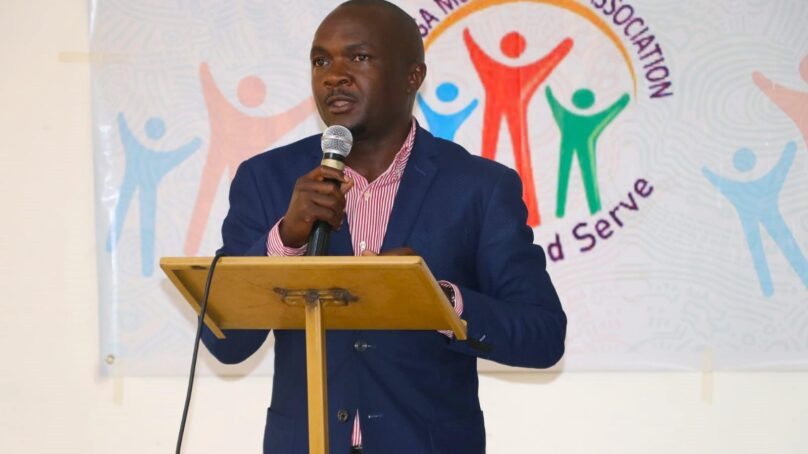
The information secretary spoke in Kerugoya Town on Wednesday during the launch of Kirinyaga Media Queens Association. He pointed out that the fact that the media sector remains a key pillar in national development and a vital tool for holding government accountable, shaping public opinion and fostering an informed citizenry.
“The media is the backbone of democracy. Without accurate, timely and reliable reporting, citizens cannot make informed decisions. Strengthening our media sector is not optional; it is a national imperative,” Temesi noted.
He noted that journalists who work in rural areas often face unique challenges, including limited access to resources, exposure and training opportunities. He observed that the challenges limit their capacity to report effectively, adding that the government reform agenda will address the challenges to ensure that Kenyan journalists are sufficiently equipped to work in the rapidly evolving media landscape.
The information secretary announced that the government is planning to convene a national conference on media sustainability that will bring together broadcasters, print and digital publishers, content creators, policymakers, civil society experts and academia for robust deliberations on the challenges facing the sector, explore innovative business models for revenue generation, and chart a pathway for long-term sector resilience.
“Globally, the media industry is undergoing unprecedented transformation. Audiences are increasingly consuming news digitally, advertising revenues in the legacy media have declined and content production has become decentralised. Kenya must position itself ahead of these changes, to ensure our media sector thrives,” Temesi said.
He said the conference will focus on identifying strategies to strengthen journalism professionally and financially, while exploring opportunities for collaboration among media houses – both locally and internationally – by fostering dialogue between stakeholders. He said the ministry intends to create an ecosystem in which media practitioners can innovate, adapt and prosper despite changing consumption patterns.
He observed that the central pillar of the government’s strategy is the revitalisation of the Kenya News Agency (KNA), which Temesi described as the backbone of government communication.
Temesi acknowledged that the agency’s operations have been limited by chronic understaffing, outdated infrastructure and inadequate digital tools, undermining its capacity to deliver timely and accurate information to the public.
“The revamp of KNA is not simply an institutional upgrade. It is about ensuring that reliable information reaches every corner of Kenya and that grassroots journalists have the tools they need to contribute meaningfully to the national discourse,” Temesi said.
Temesi said streamlining KNA involves recruitment of additional personnel, equipping offices with modern digital reporting tools and redesigning workflow to allow faster dissemination of news on multimedia platforms.
He noted that, once implemented, the interventions will significantly enhance the reach, efficiency and quality of county-level reporting, empowering journalists to deliver information that informs development, governance, and public policy.
Temesi explained that the envisaged reforms will incorporate the Kenya Broadcasting Corporation (KBC), which he described as a “sleeping giant” with untapped potential.
The Information Secretary pointed out that guided by the State-Owned Enterprises Law, the government plans to restructure KBC into two distinct yet complementary arms: a public broadcasting division funded by the government and tasked with delivering national interest programming and serving as a trusted source of information for citizens.
The commercial division will be designed to generate revenue and compete with private broadcasters while maintaining professional standards and operational efficiency. He noted that the current single-structure model funded exclusively by the national government has led to operational challenges, limiting competitiveness, innovation and efficiency.
Temesi explained that the new structure, will allow KBC to leverage its dual mandate to provide both public service broadcasting and commercially viable content, ultimately strengthening the institution and ensuring its sustainability.
“Our aim is to transform KBC from a dormant institution into a vibrant, dynamic and competitive media house that serves the public interest, while contributing to the creative economy,” Temesi said.
He noted that in line with the government’s youth empowerment agenda, the ministry plans to expand the Studio Mashinani programme in all counties.
The initiative, he said, is designed to give young creatives, access to professional production studios, technical training, mentorship and guidance in digital content creation.
“Studio Mashinani is more than an entertainment project; it is a platform to develop skills, nurture talent and create real career pathways in media production, film and digital storytelling,” Temesi said.
He added that providing such opportunities in rural counties is crucial for ensuring that youth across the country can participate in the creative economy and contribute to local development.
The programme, he said, will foster innovation, equip young people with practical skills and open avenues for income generation through media and digital content production.
By investing in youth, Temesi added, the government hopes to cultivate a generation of media practitioners who are technologically savvy, professionally trained and ready to meet the demands of the modern media landscape.
He acknowledged the growing threat of online bullying, cyber harassment and digital misinformation targeting journalists and citizens alike, particularly in counties. He told his audience that the government is developing policies and digital safety frameworks to protect media practitioners and safeguard public trust in information.
“Online bullying is becoming a significant challenge in our counties. Journalists are increasingly exposed to intimidation, harassment and false narratives designed to undermine their work. It is critical that we protect our practitioners and ensure they can report freely without threats, fear or intimidation,” he said.
The Information Secretary urged journalists to communicate promptly with the relevant agencies whenever they face harassment or threats, noting that timely reporting allows authorities to respond effectively.
“Do not suffer in silence. Engage the appropriate institutions to guarantee your safety and the integrity of your work,” he advised.
Temesi called on journalists to focus on monetising their content and exploring specialised reporting areas that attract funding, grants and international support.
He encouraged practitioners to engage deeply in beats such as climate change, environmental conservation, agriculture, health, technology and food security, which he noted, not only have high public interest, but also present opportunities for professional growth and sustainable income generation.
“Journalists should focus on stories that are impactful, can attract support from local and international organisations, and create sustainable income streams. Specialised reporting not only professionalises the work, but also amplifies the social and economic relevance of journalism,” he said.
Temesi urged media practitioners to monitor calls for proposals, fellowships and grants, and leverage digital platforms, to showcase content to wider audiences.
“Innovation in reporting, combined with strategic engagement in high-impact topics will strengthen both the sustainability and credibility of journalism in Kenya,” he added.
He noted that the rapid technological advancements have exposed gaps and overlaps in Kenya’s media laws, saying the ministry is reviewing the Media Council Act, Communications Authority Act, and Access to Information Act, among other regulations, to harmonise them, eliminate inconsistencies, and ensure they reflect contemporary realities.
The Information Secretary said that the ministry is also finalising a National Communication Policy, which is expected to be presented to the cabinet to transform the Kenya Institute of Mass Communication into the Kenya Institute of Communication to expand its mandate.
“Technology has transformed how stories are told, how news is consumed and how information spreads. Updating our legal frameworks, is necessary to protect journalists, citizens, and the integrity of public information,” he said.
The transformation, he said, will include clearer broadcast licensing processes, enhanced digital safety measures and modernised guidelines for ethical reporting in the digital age. Temesi said that they will also provide journalists with the clarity and protection needed to innovate, experiment and adopt new technologies in their work.
“To support journalists outside major urban centres, the government is establishing county media hubs, equipped with modern tools, high-speed internet, and collaborative workspaces. These hubs will serve as centres for professional development, multimedia storytelling, and innovation in news production,” he said.
Temesi reaffirmed the government’s commitment to ensuring the welfare, safety and professional development of journalists, saying collaboration between the national government, county administrations and media associations is crucial in creating an environment where practitioners feel safe, respected and empowered.
“A strong, independent and well-supported media is essential for democracy, governance and national development. The ministry will continue working closely with all stakeholders to uphold these values and provide the resources, legal protections and platforms that journalists need to succeed,” he said.
He stressed that the government recognises the vital role journalists play in shaping public discourse, exposing governance gaps, and promoting accountability. Protecting and empowering journalists, he said, is not just a professional obligation, but a national priority.
Bancy Lole, Chair of the newly formed Kirinyaga Media Queens Association, expressed gratitude to the Information, Communications and Digital Economy Ministry for its continued support to journalists, especially women working in rural regions.
She noted that women journalists often face challenges unique to their gender, ranging from safety concerns, balancing work and family responsibilities, limited upward mobility and sometimes discrimination in newsroom assignments.
“As women in journalism, we navigate a landscape that demands resilience. This association will provide a platform for us to learn, support each other and grow professionally,” she said.
Ms Lole said the association will focus on training, mentorship, charity initiatives and partnerships with both the national and county governments to improve the welfare of its members.
She also encouraged fellow journalists to remain committed to continuous learning, especially in an era where digital tools are reshaping the profession.
- A Tell Media / KNA report / By David Wandeto


About author