
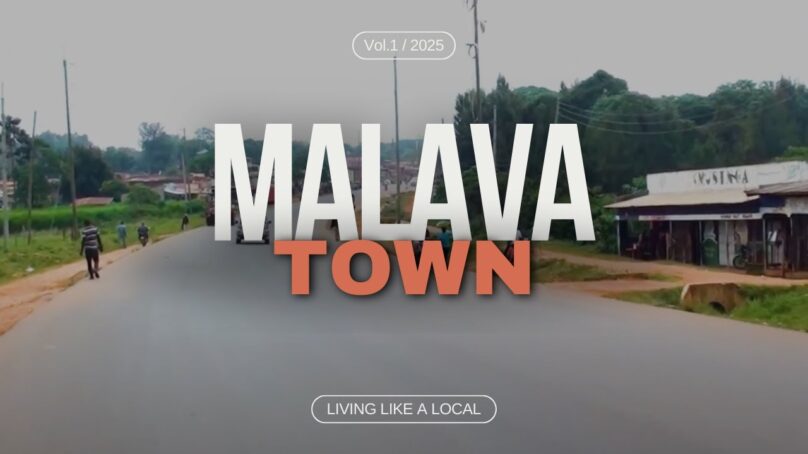
The recent by-elections in Malava in Kakamega County has brought to the fore a historical, cultural and sociological issue that many people did not know: it is has been the melting pot of cultures for centuries.
In the Kenyan context, other than major urban settlements like Kakamega, Bungoma and Webuye, Malava, home to the Kabras – a Luhyia subethnic – has the makings of a ‘united nations’ in the cultural and economic sense of the expression.
For context, Wikipedia says, “A nation is a type of social organisation where a collective identity, a national identity, has emerged from a combination of shared features across a given population, such as language, history, ethnicity, culture, territory or society. Some nations are constructed around ethnicity while others are bound by political constitutions.”
Sociologist Anthony D. Smith defines nations, “as cultural-political communities that have become conscious of their autonomy, unity and particular interests,” while Black’s Law Dictionary defines nation “as a community of people inhabiting a defined territory and organised under an independent government.”
The consensus among scholars is that nations are socially constructed, historically contingent, organisationally flexible and a distinctly modern phenomenon. It is also “a body of people having a common descent, history, culture or language but without a separate or politically independent territory; an indigenous people or confederation of indigenous peoples.”
Malava fits into the description of a confederation of indigenous people.
Some early settlers in the area trace Malava’s name to Maraba in Kalenjin, which means a place of iron ore and the people who lived there many years ago are called Kapmarabaek in Nandi, Baringo and Laikipia.
Linking Malava to Maraba is a bit stretched – linguistically. On the basis of articulatory phonetics (traditional method of describing speech sounds in terms of the movements of the vocal organs that produce them), the Kabras articulate phonetic trills and fricatives very clearly and therefore cannot commute /l/ to /r/ and vice versa. However, like many other Luhyia subtribes and Bantus in general, they tend to experience – often swapping – sounds such as /b/ and /p/; /k/ and /g/; / /tʃ/ and /dʒ/.
I was surprised that Malava has a large population of Maasai people who have been living there for eons, although they have now lost their aboriginal language. Add this to a high concentration of Luos and the by-product is ethnic hotchpotch cultures of diverse foreign extractions among the Kabras of the larger Luhyia sub-nation.
In Mumias area, there are also a lot of Maasai, Luo, Nubi, Kalenjin and Swahili. These are great rivers of blood flowing in the veins of Wanga people. A unique area in Kenya indeed. Same applies to Malava.
Nabongo Netia, a distant cousin of Isingoma Labongo Rukidi of Uganda is said to have employed 10,000 Maasai mercenaries or warriors to protect his kingdom against the Kager people who were a constant threat to his reign in western Kenya. This may explain the presence of Kabras clans with a Maasai connection among the Luhyia from Malava all the way to Busia and as far as Entororo (Tororo) in Uganda.
In fact the father of Laibon Mbatiany is said to have died in Malava and that the last Maasai speaker, Mzee ole Kisero, a patriarch in Kaliwa, South Teso, died last month. Maasai live in Kaliwa to date.
The most famous Maasai clan among the Luhyia is Abakhabi, which has produced greats like Hon Amos Wako and former cabinet minister Philip Masinde. As the name suggests, Abakhabi means Iloikop Maasai also called Kwavi – a name also found among the Kikuyu (Nyokabi , Wokabi), Kalenjin) Kipkwobek, Taita and Chagga (Akobi) etc.
Other Maasai clans among the Wanga include Abashimuli, Abamuli, Basimisi and Abakhusia. I also suspect Abakhone and Abasamo of Budalangi may have originated from Maasailand. Bamwende is also a Maasai clan, whose members now speak pure Wanga Luhyia sub-dialect. The Masindet family in Kabras are also Maasai domiciled in Samitsi area, speak flawless speak Lukabras (Kabras dialect of the Luhyia).
As one enters Malava you hear of places Kivaywan (Kibaiywa), Chevaywa (Cheboiywo), Kaburengu, Chimoi or Jimoi (Kimoi) and Chebwai. These are Kalenjin names that either were adopted and ‘nativised’ as a result of incongruent articulatory phonetics like Chimoi from Kimoi, Kivaywa and Chevaywa from Chebaywa, Chebwai and Kaprengu. There is Tande, which is a Maasai name, Chemuche, Chegulo and Kimang’eti. Others are such as Kakoi (Kapkoi) and Chimooroni (Kapchemiron).
The Luos also have a big presence in Malava. They live in Lubao in Lurambi and Shimalavandu and go by the names Aluru, Kuku, Lubanga, Jougenya, Jokisamo and Joyimbo of Okumu in South Kabras.
There is documented evidence that Alego-Usonga clans of the Luo in Siaya trace their roots to Basonje clan of Kabras. In fact, Usonga clan have petitioned the state to recognise them as one of the Luhyia subtribes as a result of their genetic connection to Basonje. Others are in Mumias and Matungu though no longer speak Dholuo but local Luhyia dialects of their hosts.
Names like Kaikai, Soita, Sambu, Sunkuli (Sunguti) are shared by Luhyia and Maasai, a clear testimony of their past interaction. World 800 metres David Rudisha is said to have roots in Bamakangala clan of South Kabras. Former Minister Julius Sunkuli’s great grandfather is said to have been a sub-chief in Shanderema, South Kabras, during colonial era. It is not surprising that Sunkuli speaks fluent Kabras.
The Maasai also live in Ikolomani, the Abashimuli clan I have mentioned not forgetting the Abakimwei (my own clan among the Luhyia of Webuye also called Bakimwei among the Abugusi.
My maternal grandmother’s clan, Kibetu is what Abakibetu in Luhyia is. This is the clan of Lena Moi, the late wife of late President Moi.
The Kasagam clan of the Luo and Luhyia is what is Kapsogomo among the Kalenjin and (Pharaoh) Khasegemwey among the ancient Egyptians, their totem being the hawk or eagle.
Historian Gideon Were in his book, East Africa through a Thousand Years and A History of the Abaluhyia of Western Kenya: C.1500–1930, did not mention such historical perspectives that would have enriched his works.
- A Tell Media report / By John Libamira


About author