


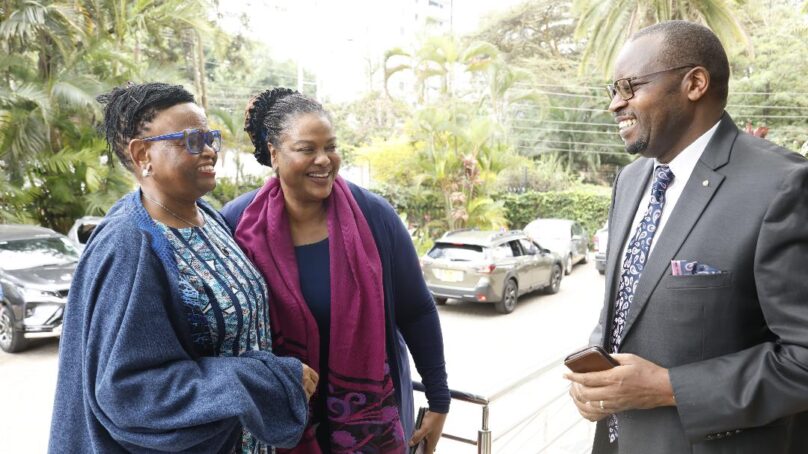
Chief Justice Martha Koome has called for stronger and socially grounded approaches to family justice, calling for reforms that recognise the lived realities of Kenyan families affected by unregistered customary marriages under the Marriage Act, 2014.
She delivered the remarks during the Milimani Family Division’s inaugural Inns of Court Conference held in Nairobi.
In her keynote address titled, “The Marriage Act 2014: Effects of Unregistered Customary Marriages in Family Disputes”, the chief justice commended the Milimani Family Division, judges and the Bar–Bench Committee for pioneering an innovative forum for jurisprudential dialogue.
She called on the Kenya Judiciary Academy to replicate the model in other divisions of the High Court.
Reflecting on Kenya’s journey in family justice, the chief justice noted that family disputes were once handled as ordinary civil cases, often before judicial officers without specialised training in the psychosocial complexities of custody, domestic violence and matrimonial matters.
The establishment of the Family Division in 2000, she said, marked a critical shift toward a jurisprudence that heals and protects vulnerable persons.
Koome highlighted achievements under the Social Transformation Through Access to Justice (STAJ) framework that include the establishment of the first dedicated magistrates’ family court in 2023. The court has significantly enhanced access and efficiency, handling nearly 6,000 filings in 2024 alone and finalising over 3,000 of them.
She underlined the essential role of specialised family courts in addressing domestic violence, child protection and gender-based vulnerabilities through trauma-informed processes and coordination with social services.
The chief justice noted further that the challenges posed by unregistered customary marriages are real and far-reaching.
She cited cases of widows being denied inheritance and children whose identity and security are jeopardised due to lack of formal marriage registration. While the Marriage Act, 2014, harmonised Kenya’s diverse marriage systems, its six-month registration requirement, she observed, often clashes with cultural practices, geographical barriers, poverty, and limited public awareness.
“A rigid insistence on formal registration risks marginalising the very people the law intended to protect,” she said, calling for a contextual, socially just approach to implementing the Act.
The Chief Justice reaffirmed the importance of Bar-Bench Committees and Court Users Committees (CUCs) in maintaining responsive justice systems and encouraged greater collaboration.
She said the judiciary is committed to multi-door justice, citing the success of court-annexed mediation and the potential of the Alternative Justice Systems (AJS) framework in resolving family disputes efficiently and respectfully.
Justice Koome reminded participants that behind each family file lies a human story. She urged continued commitment to compassionate, timely and accessible justice for all Kenyan families, pledging her full support for ongoing reforms.
Topics under discussion during the conference covered the background and key features of the Marriage Act, 2014, as well as constitutional concerns around marriages that are not registered or recognised. Speakers compared how marriage registration is handled in other countries and shared perspectives from magistrates and judges.
The panellists, comprising members of the family division’s bar and bench, undertook a detailed examination of Supreme Court rulings on customary marriages. They analysed the impact of non-recognition on succession and matrimonial property rights, while also reflecting on the broader challenges and opportunities associated with implementing marriage registration.
Participants assessed the progress achieved since the enactment of the Marriage Act and identified persisting gaps within family law.
- A Tell Media / KNA report / By Joseph Ng’ang’a


About author